Day Eight, First Stop: Chateau Suduiraut

Today we visited the region of Sauternes – I think Christina was looking forward to this day of our trip more than any other.  My wife used to like to share an occasional glass of port with me, until she discovered Sauternes.  While Christina still does like a nice port, she absolutely loves Sauternes, hence we don’t have as much port as we used to!
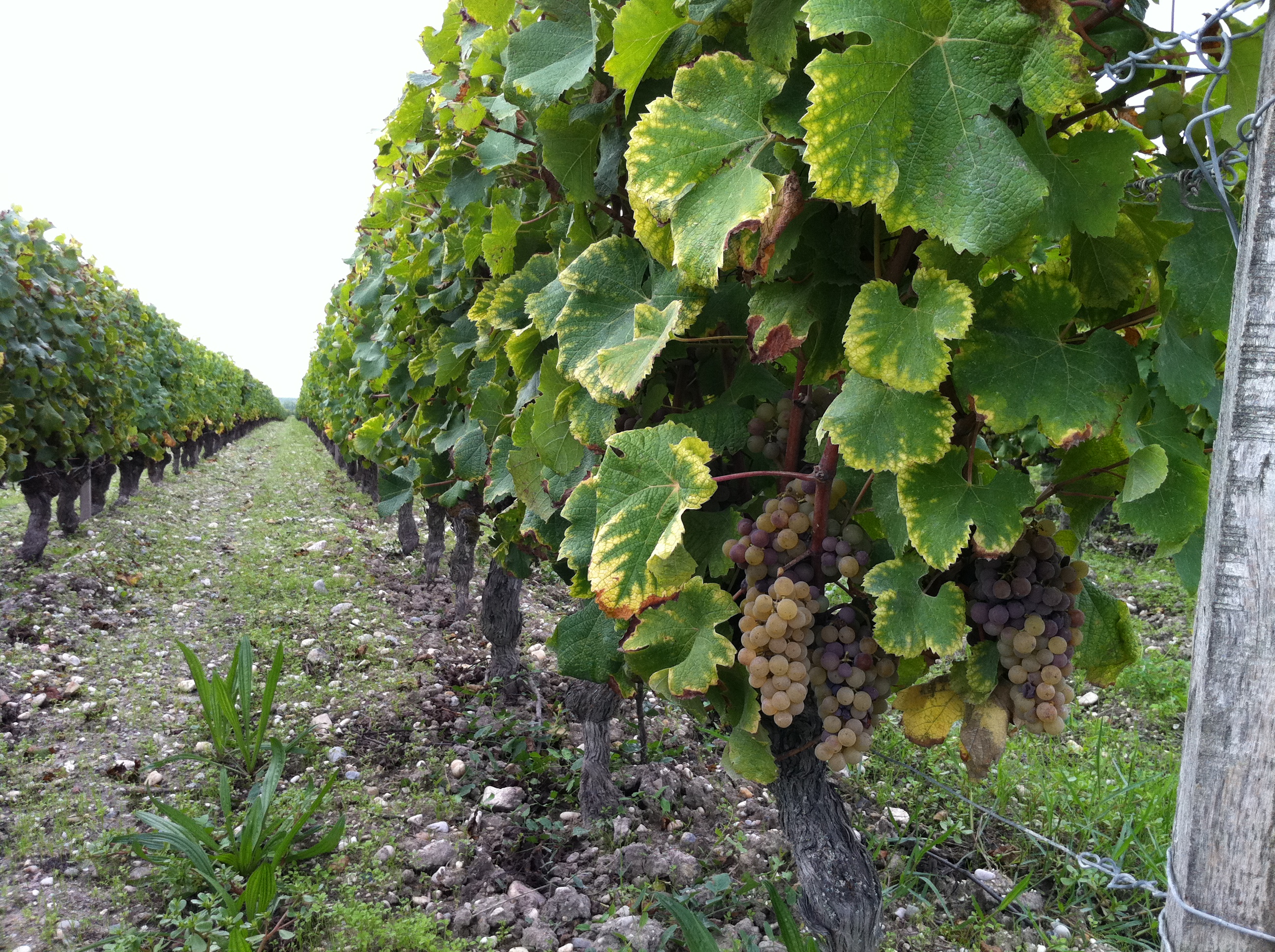
Sauternes at last!
Sauternes at last!

Our first stop was at the venerable Chateau Suduiraut.  The estate was named Chateau Suduiraut in 1580 with the marriage of Nicole d’Allard to Leonard de Suduiraut.  The Chateau was looted and burned down in the Fronde insurrection of the 1640’s and then rebuilt in the late 17th century.  Chateau Suduiraut was classified as a Premier Cru in the 1855 classification.  Chateau Suduiraut was purchased in 1992 by the AXA Millesimes global investment and insurance company group.   AXA Millesimes is headed up by Christian Seely and the company also owns  other properties, such as Chateau Pichon Baron in Pauillac.

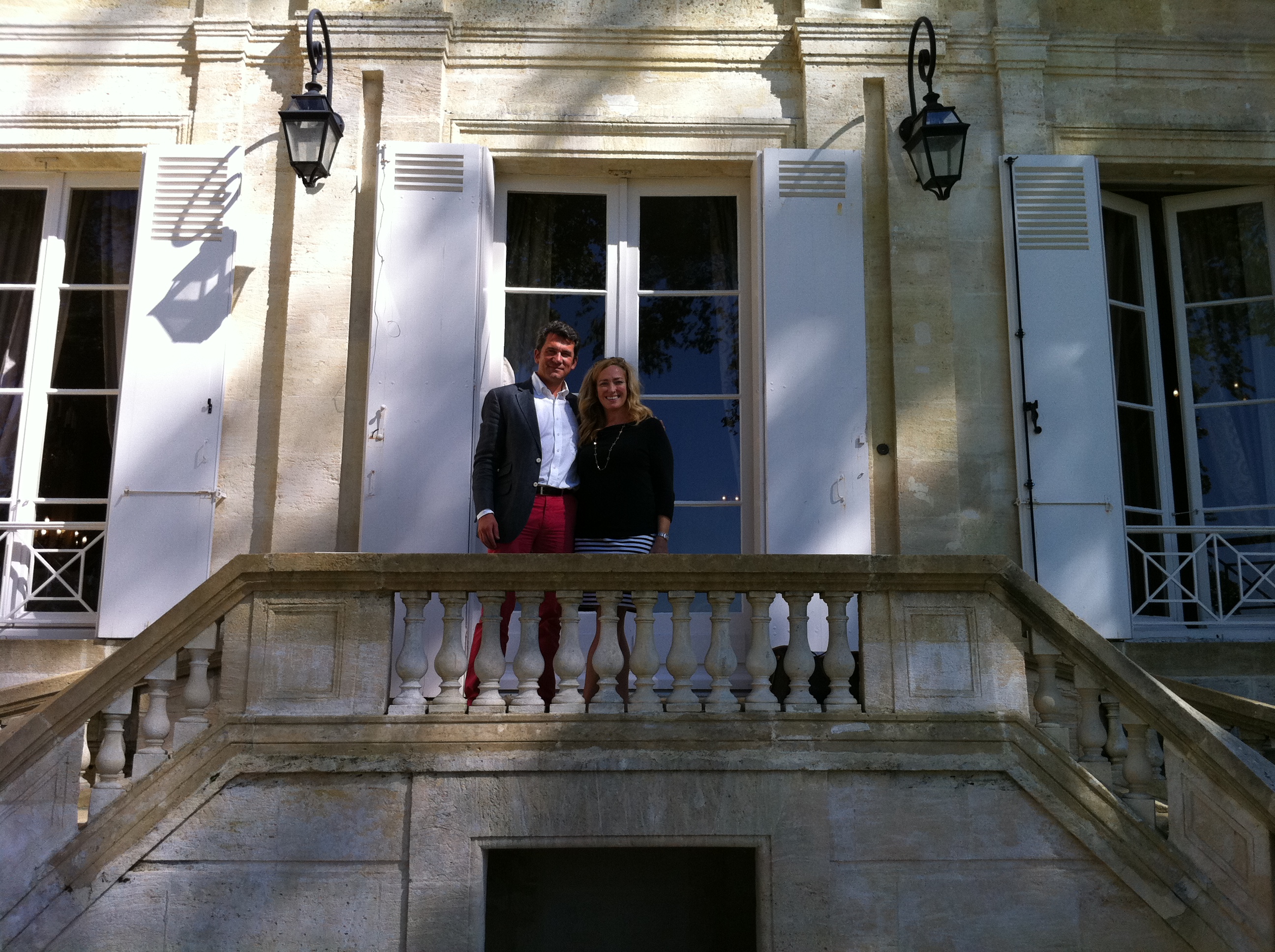
Christina Watt at the beautiful Chateau Suduiraut.
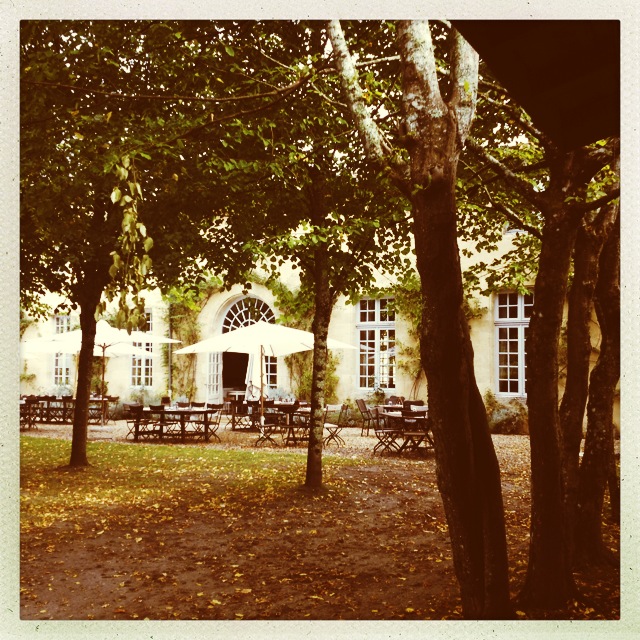
The grounds were very pretty - there was a lunch being set for a special event.
The grounds were very pretty – there was a lunch being set for a special event.
An interior courtyard.

The wines of Sauternes and Barsac (just to the north) are made from Semillon and Sauvignon Blanc, but there are a few Chateau that add a little Muscadelle to some of their wines.  Chateau Suduiraut is a blend of 90% Semillon and 10% Sauvignon Blanc.  The wines can age for decades and even a 100 years in the great vintages.  What makes the wines of Sauternes and Barsac so special is what they call “noble rot”.  Noble rot is a fungus called Botrytis Cinerea, which is present on the undeveloped fruit after flowering.  If the season is damp, then the Botrytis fungus develops into grey rot, which makes the grapes unusable.  If there are damp mornings followed by hot days, the Botrytis fungus develops into noble rot.  The noble rot shrivels the grapes, by reducing the amount of water in them and concentrating the flesh and sugars.  It is this noble rot that gives the wines of Sauternes and Barsac their great sweetness balanced by wonderful acidity.

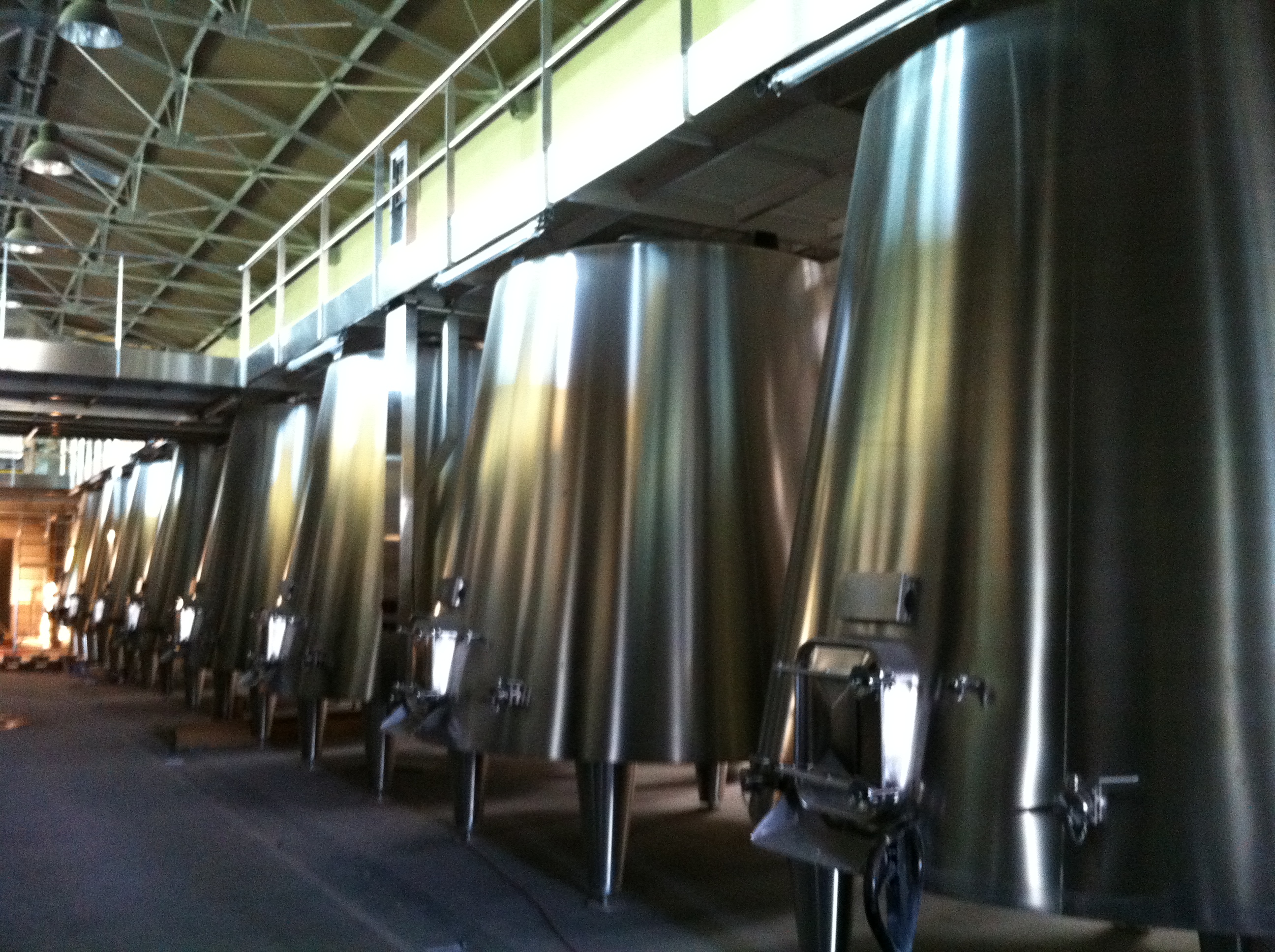
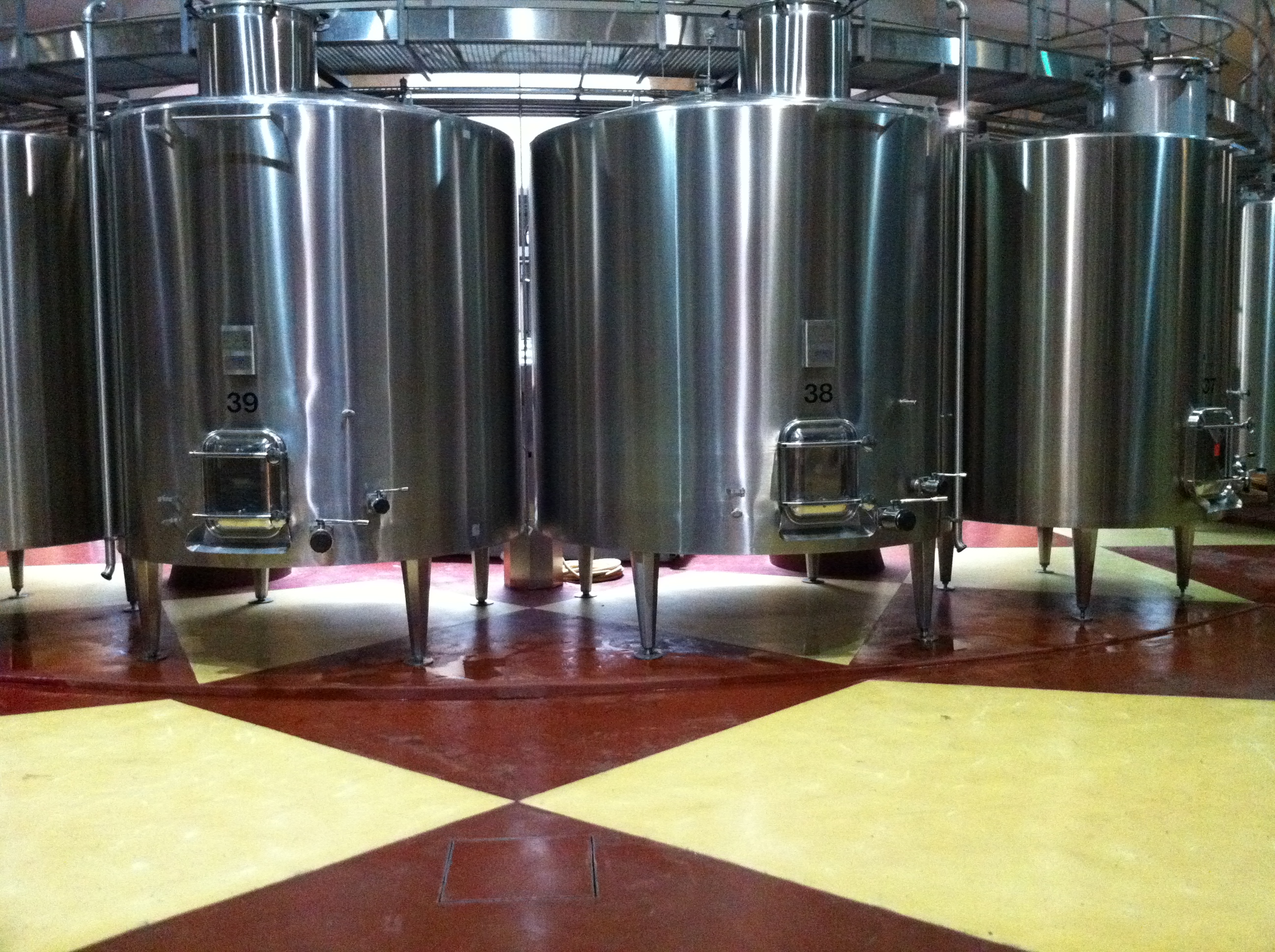
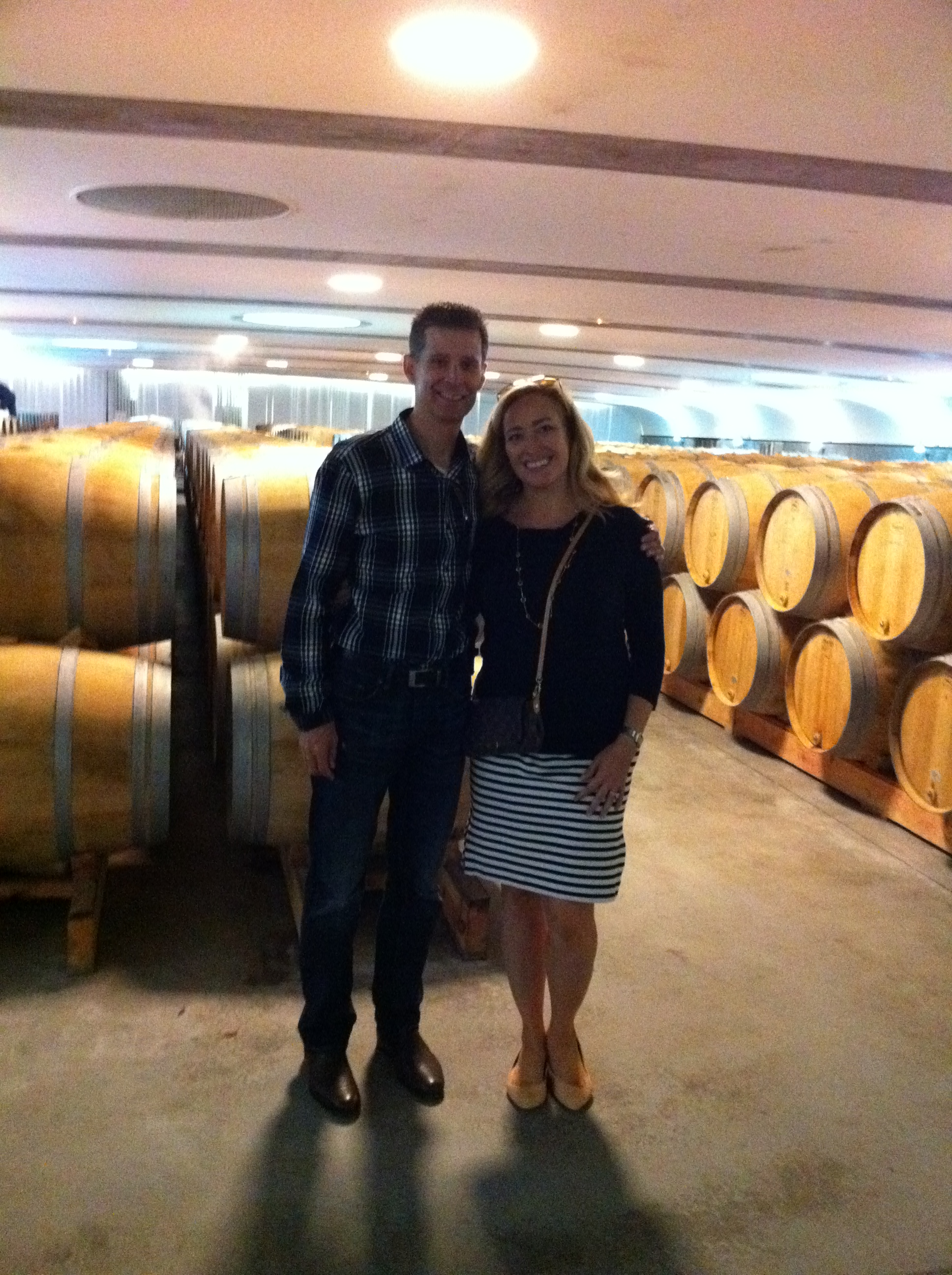
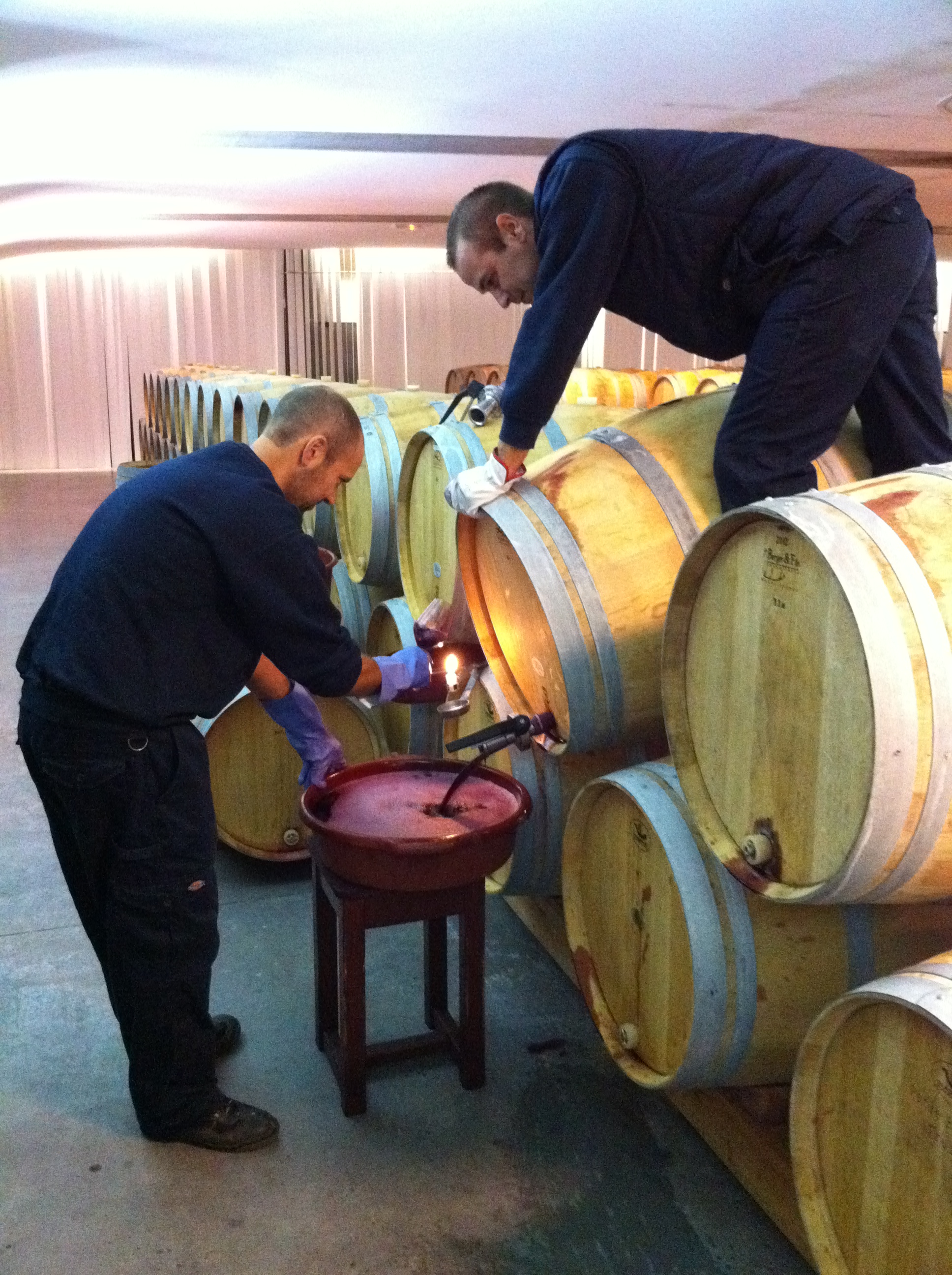
Chateau Suduiraut is a beautiful estate of 92 hectares in the middle of the Sauternes region.  Our knowledgable guide, Camille, showed us around the estate.  Chateau Suduiraut uses traditional wine making practices and stainless steel vats for their wines, which are aged for 18-24 months in French oak barrels.  The estate will pick through the vineyard up to 5 times during harvest, to keep pace with the development of Botrytis and ensure the optimal quality of the grapes.  It is this painstaking attention to detail that makes the wines of Chateau Suduiraut so wonderful – and what makes a good sauternes a very special treat.

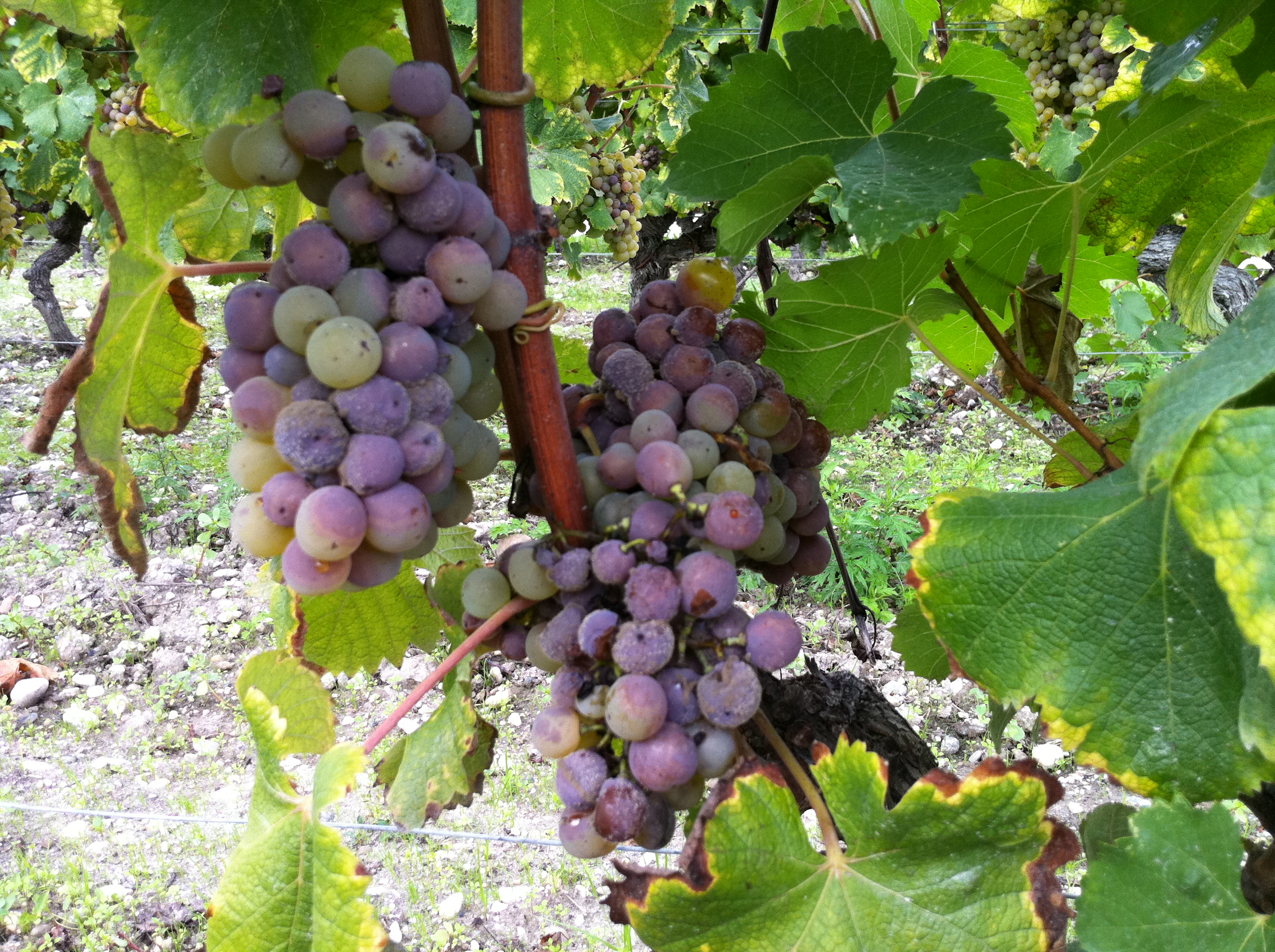
The progress of the grapes.  From here...
The progress of the grapes. From here…
To here...
To here…
To here, getting ready for harvest with the appearance of noble rot.
To here - ready for harvest.
You can easily see why they have to pick in cycles, waiting for the grapes to mature.

The wines that we tasted at the estate were:

2006 Castelnau de Suduiraut – This is the second label for Chateau Suduiraut.  Sweet and spicy nose of pineapple and white fruit.  In the mouth, spicy pineapple combine with sweet white peaches and good acidity.  Finishes with a nice long balanced sweet fruit finish.

2006 Chateau Suduiraut – Complex subtle nose of white fruits and a hint of pineapple.  Very creamy and smooth in the mouth, very delicate.  This wine feels lighter in weight in the mouth than the 2nd label does, but is much more complex and very fresh tasting.  The sweet white peaches and pears combine with young pineapple flavors.  The wine has very good acidity and there is a noticeable spiciness from the botrytis on the very long sweet white fruit filled finish.  This is an excellent Suduiraut, and one to look for.

1989 Chateau Suduiraut – Wonderful nose of peaches, ripe pineapple and orange peel.  Smooth in the mouth with yellow peaches, pineapple, spicy honey and good acidity.  Nice long complex spicy fruit filled finish.

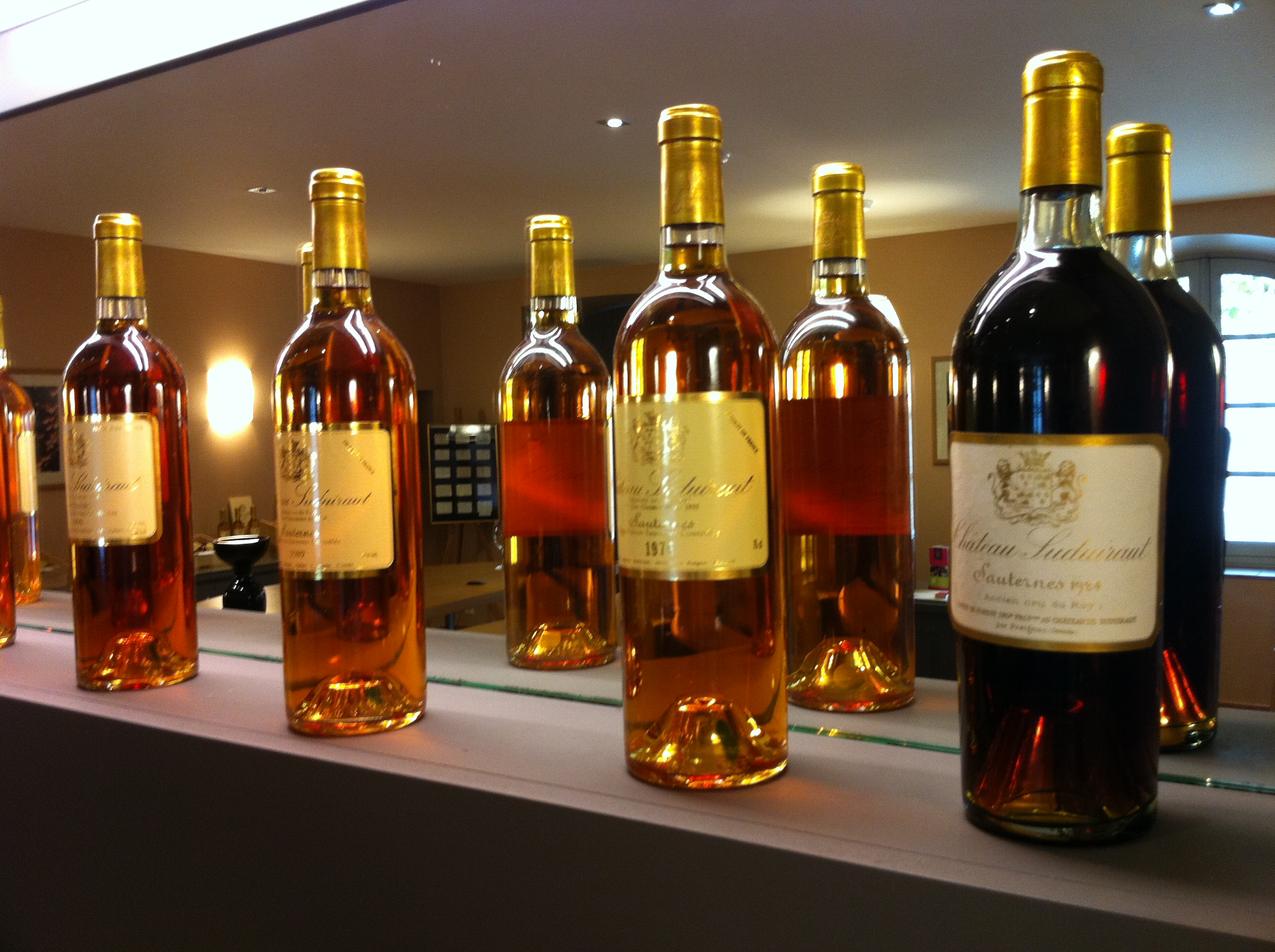
A spectacular display of Sauternes.
A few fun vintages.
A few fun vintages.

Chateau Suduiraut makes some of the very best wines in Sauternes.  If you are a fan of the wines from the Sauternes and Barsac region or just dessert wines in general, I would highly encourage you to try the wines of Chateau Suduiraut.  These wines are wonderful drunk young after realease, but will develop so much more complexity with age if you can keep your hands off of them.  (The only way I can keep my wife’s hands off of them is to bury them in the cellar!)  I am very happy to have quite a bit of Suduiraut in the cellar – when she figures it out, Christina will be too.

From our at home tasting experience, I can also tell you that the 2001 Suduiraut is absolutely off the charts and will be one of the very best dessert wines that most people have ever had, definitely a wine to hunt for.  2009 is also stellar vintage for Sauternes and Barsac.  If you like dessert wines, this is a vintage to buy by the case.  The 2009’s have sweet fruit, great acidity and they will age a very long time (many decades), but the 2001 Suduiraut will age gracefully longer than anyone who is able to read this blog.  It really is that good…

Speaking of good, we ventured next into the little town of Sauternes, which was truly, just great!

Wouldn't it be fun to drive off in one of these cars from the estate??
Wouldn’t it be fun to drive off in one of these cars from the estate??

Day Seven Dinner: Where the Wheels Fell off the Wagon

Authored by Christina

By now you may be wondering – just how long is this Bordeaux tour??  It was 12 days, so we’re more than halfway done recapping our visits (thank goodness, right?) – and we have the fabulous town of Sauternes coming up next.

So far, all had gone remarkably well on our tour.  But we were confronted with an unusual circumstance this evening – we didn’t have dinner scheduled anywhere.

After eating so much heavy food  (I’m normally gluten and dairy-free), I really was craving something light.  We were heading in the direction of Bordeaux city as we went back to our hotel that evening, so we asked Nicolas Glumineau of Pichon Lalande at lunch that day for a dinner recommendation.  I threw out sushi, and he threw me a look – apparently that was asking for a lot in Bordeaux.

Then he remembered a Japanese restaurant in town very near where we had stayed the previous weekend.  He couldn’t remember the name, but he sketched out a little map on the back of his business card, and we thought it looked simple enough.

We made our way back to Bordeaux easily enough and found parking without fuss. As we drove through town, I saw a small restaurant on the corner very near where we had originally stayed, advertising sushi.  We decided it could be the back-up plan.

We followed the little map as best we could, but the best thing we could find was the store Badie – no sushi, but a store of all champagne – Bob thought he’d died and gone to heaven.  The concept appeared to be well done – a store with champagne on one side of the street, and another store with Bordeaux wines on the other side of the street.  We skidded to a halt in front of the well-done windows – just as they were about to close.  We decided the trip back into town was worth it just to discover this little concept.

The store-front of the Badie Champagne shop at closing time.  The Bordeaux wine shop was directly across the street.
The store-front of the Badie Champagne shop at closing time. The Badie wine shop was directly across the street.

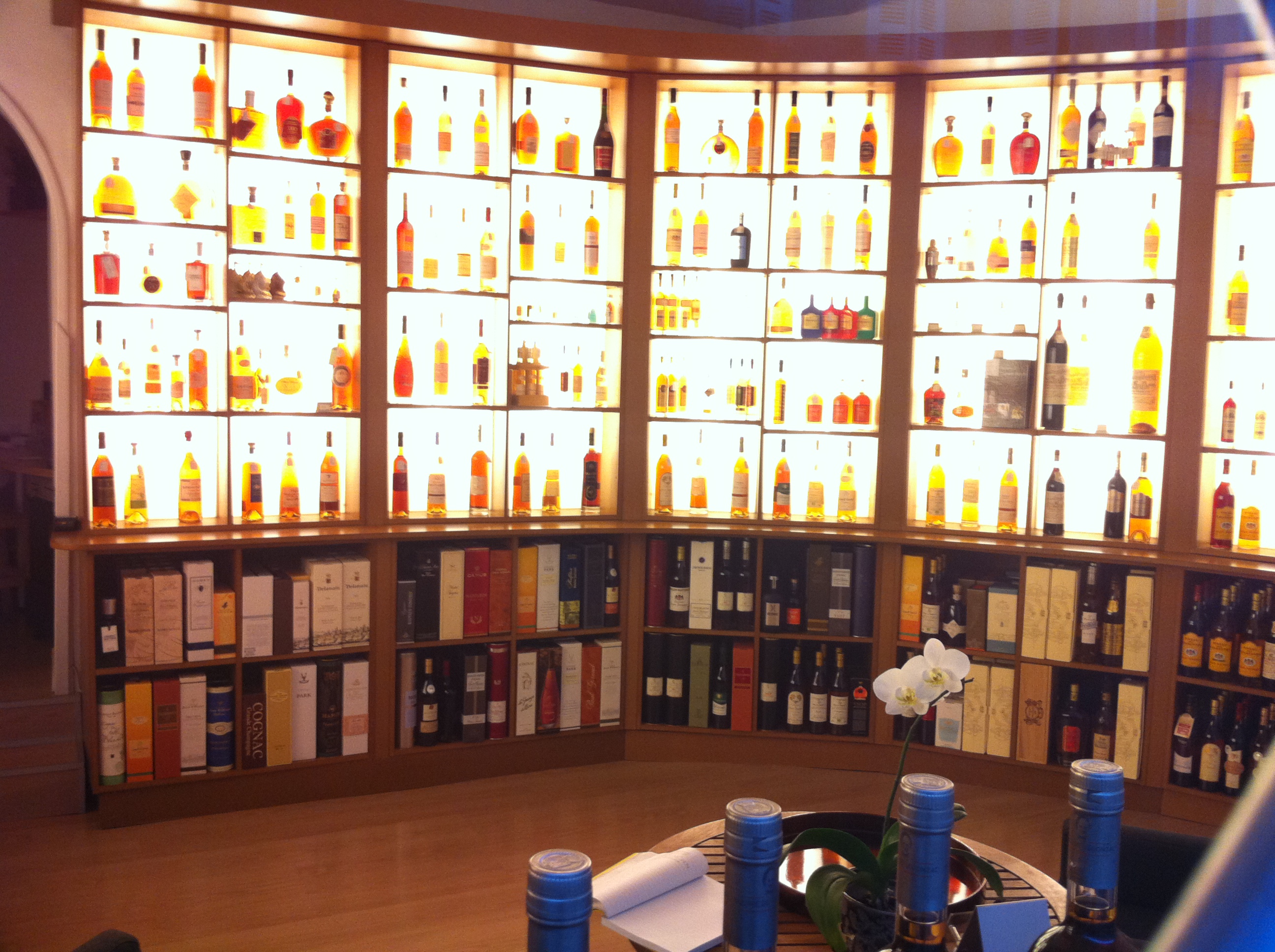
We also discovered another engaging store-front, this time, a display of armagnacs and cognacs – which were actually very popular in the region.  Bob is always wondering why more stores and bars don”t make better use of lighting – I wish the picture was better – the whole store was glowing amber.

A cognac shop in Bordeaux.
An Armagnac & cognac shop in Bordeaux. The background appears light here, but in reality it’s a great amber color.

But try as we might, we could not discover that Japanese restaurant.  So off to Plan B.  To be honest, we knew when we walked in that we should walk out of this little restaurant, but we were so hungry, and at the very least, this place looked like it would be quick.  It was the Bordeaux version of the Japanese conveyor-belt sushi restaurant, not so far off from what I had been asking for.  The execution of the concept was so poorly done though, machine-made rolls, dried-out rice, fishy-smelling sushi – it was disappointing to settle in for a bad meal, but we were so hungry, we gave up and braved it.

Naturally, we don’t have any good wine recommendations coming out of this dinner experience, but we more than made up for it the next day in Sauternes, and we keep wondering if Seattle needs a champagne shop like Badie…

Day Seven, Second Stop: Lunch at Chateau Pichon Longueville Comtesse de Lalande

We were looking forward to visiting Chateau Pichon Longueville Comtesse de Lalande in Pauillac, because a friend of ours, Nicolas Glumineau, is the new General Manager and Winemaker.  We have gotten to know Nicolas over a six-year period from a Bordeaux dinner that is held every year in Seattle, where he represented Chateau Montrose.  In late 2012, Nicolas left Chateau Montrose, where he was Technical Director, to run Pichon Lalande.  Clearly, it is a great opportunity for him – but not without its challenges.

Nicolas Glumineau and Christina Watt at Chateau Pichon Lalande.

Upon arrival, we were surprised to see just how much work they had done on the construction project.  They were in the process of building an entirely new state-of-the-art vat room, barrel room and winemaking facility, and harvest was looming large, just as they were putting the finishing touches on things.  In fact, we had planned our trip thinking that we would be touring during harvest, but it was turning out to be a very late season this year.

The impressive new vat room.
The work in progress, with harvest coming any minute...
The work in progress, with harvest coming any minute…

We had to laugh as Nicolas toured us around, when we marveled at his luck with the timing of the harvest, he simply replied, “it was in the contract!”  The new vat room is an impressive site – in fact, I found it to be easily on par with Cos d’Estournel, which everyone throughout the region raved about as being a technical marvel.  It was clear that Pichon Lalande had decided to reinvest a huge amount of money into their winemaking facility, to join the ranks of the elite few Chateaux in Bordeaux that combine the world’s best technology, with the traditional wine making practices and expertise.   The build-out has been estimated at roughly $21 million –  I cannot wait to taste the future wines that will be made at Pichon Lalande.

As we walked through the construction site, we stood in a gallery off to the side of the vat room that overlooked not only the vineyards below, but looked down on Chateau Latour.  Not a bad view for the planned events that will take place in the space in the future.

An upstairs view of the vat room.  We failed to get pictures of the view out the windows from here, but it was impressive.
An upstairs view of the vat room. We failed to get pictures of the view out the windows from here, but it was impressive.

Nicolas was a very charming host, and we couldn’t have appreciated the time he spent with us any more if we tried.  In the midst of what was clearly a very busy time for him, he took the time to welcome us with a wonderful lunch, spirited conversation about the region and some really spectacular wines.

For lunch we enjoyed:

2010 Pichon Lalande – Dark blackberry fruit on the nose.  In the mouth, deep dark velvety blackberry fruit fills every millimeter of your mouth.  The wine has excellent acidity and very fine tannins that lead to a beautifully long sweet dark fruit finish that doesn’t want to end.  All I can say is, wow!  This wine has so much going on, I cannot wait to see how it evolves over the decades to come.  In ten years, once the secondary characteristics start to show, the complexity of this wine is going to be a really show-stopper.  Pichon Lalande has knocked it out of the park with their 2010 Grand Vin and I have no doubt that it will still be drinking well 40-50 years from now.  This is definitely a wine to look for.

2003 Pichon Lalande – A warm, dark fruit nose.  In the mouth, it tastes like a warm deep dark blackberry fruit pie, with just a hint of alcohol.  Decent acidity and mostly resolved fine tannins are making this wine drink well now, with a nice long dark fruit finish.  This wine will not age like the 2010, but it is a pleasure to drink now and over the next decade or so.

1996 Pichon Lalande – This is a deep dark red color with a garnet rim.  The nose of spicy red and black fruit just soars from the glass, you could smell it just sitting on the table in front of you.  In the mouth, the sweet red and black fruit flavors are very complex with baking spices, tobacco, cedar and a slight green pepper note.  The wine has very good acidity keeping everything lively in the mouth, but at the same time is very smooth.  The very fine tannins are mostly resolved and the wine has a very long complex spicy/sweet dark fruit finish.  The 1996 is an absolutely beautiful wine today and will continue to age gracefully for the next two decades.  As stunning as the 1996 Pichon Lalande is though, I think it will be ultimately surpassed by the 2010.  If I had to describe the wines of Pichon Lalande with one word, it would be elegance.

Pichon Lalande at night.

Time flew by at lunch – before we knew it, it was time to head out the door to Chateau Palmer.  The food, wine and company was so good, we were loathe to leave, though we knew that the show was far from over for Nicolas, who still had much more work to do!  We know that Nicolas will do great things at Pichon Lalande and we hope to come back to visit him again soon.

Day Seven, First Stop: Chateau Pichon-Longueville Baron

Chateau Pichon-Longueville Baron in Pauillac was our first stop this morning and very highly anticipated. We had driven by the estate a few times at this point, and it is by far one of the most spectacular Chateaux in the region.  We even stopped on the way back to our hotel one night after dinner to take pictures.

Chateau Pichon Baron by night.
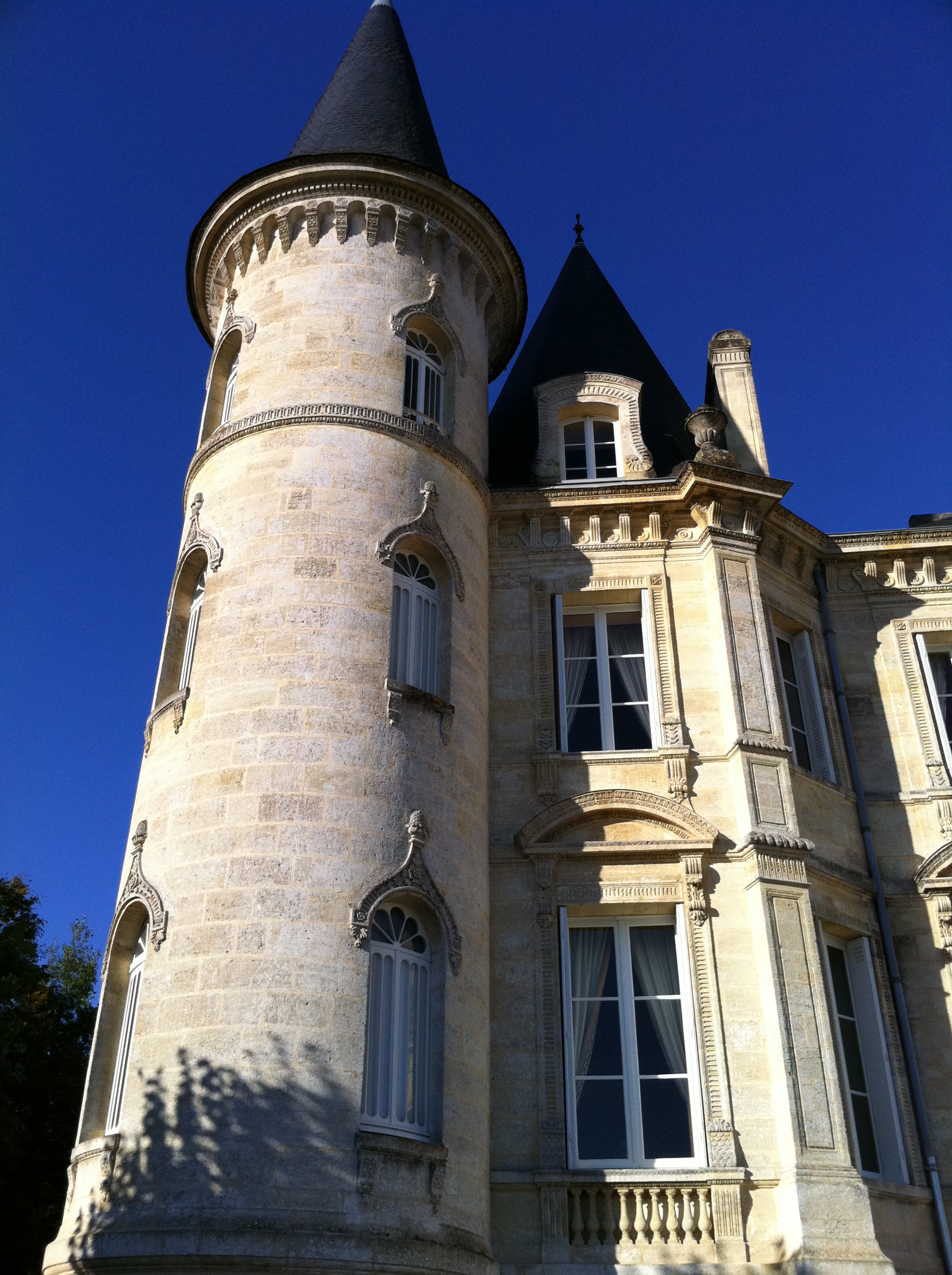
The captivating chateau.
The captivating Chateau Pichon Baron.

Pichon Baron was one of a small group of Bordeaux wines that is responsible for making me fall in love with the wines of Bordeaux.  Pichon Baron has been one of my long time favorites from Bordeaux, starting with their 1988 vintage.  Both the 1989 and 1990 wines from Pichon Baron are drinking very well at this point, with the 1989 even still being a little young in my opinion.  The wines from Pichon Baron are big, powerful Cabernet-dominant wines with big meaty fruit flavors.  The wines of Pichon Baron are not known for being feminine or delicate, but with age you will get a lot of delicate secondary flavors to go with the big masculine fruit.  I have always loved the wines of Pichon Baron and it is not by chance that we have more Pichon Baron in the cellar than any other producer in Bordeaux.

The barrel room sits beneath this structure - and the water!
The barrel room sits beneath this structure – and the water!

Our guide explained to us that Pichon Baron was once part of a larger estate, owned by Pierre de Rauzan, along with Château Pichon Longueville Comtesse de Lalande, the estate directly across the street. In 1850 the estate was divided into the two current Pichon estates. In 1987 the estate was purchased by French insurance company AXA. The property is currently managed by Englishman Christian Seely.

The vat room.
The vat room.

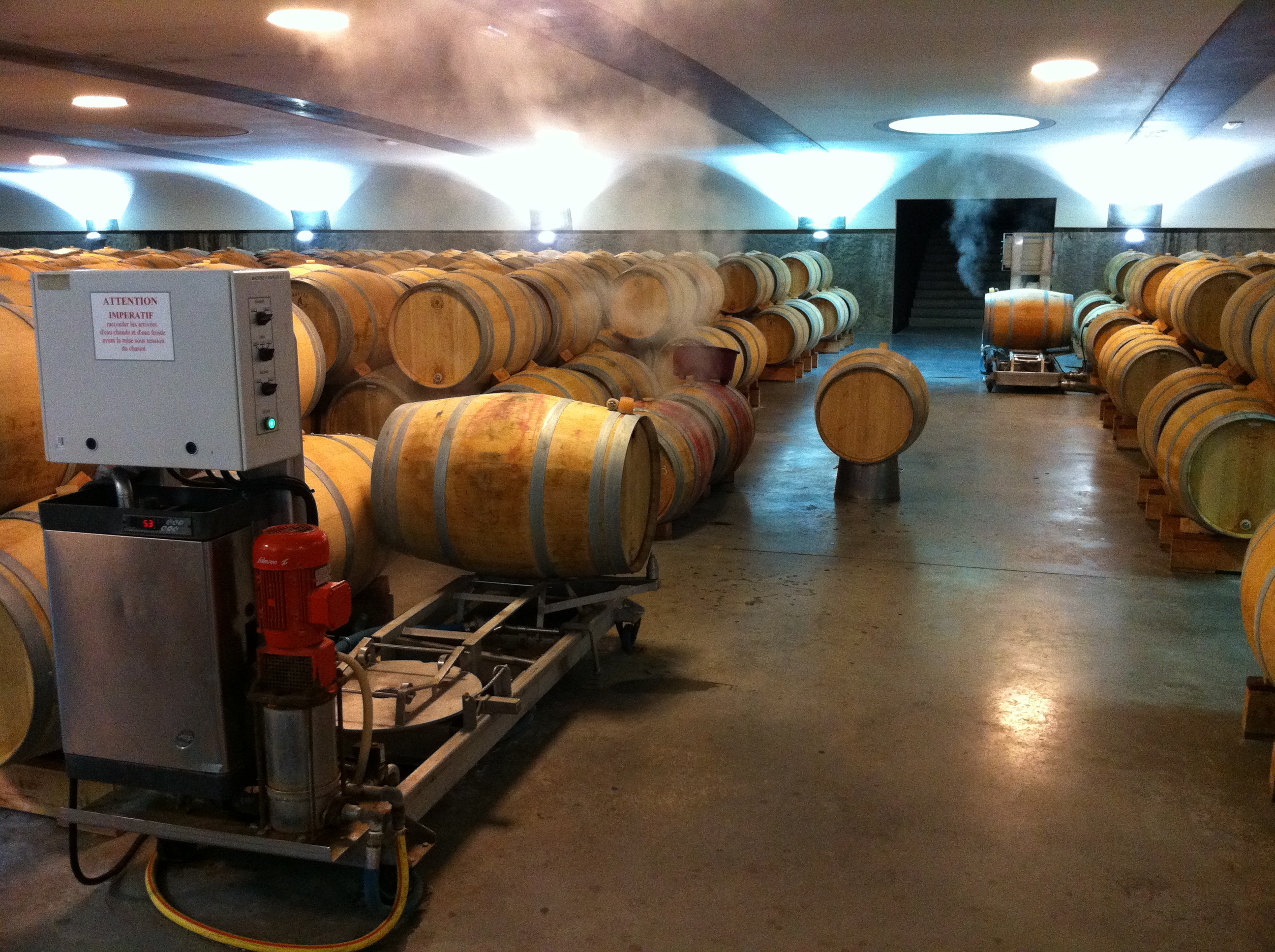
When we were in the barrel room, we saw something we had only heard about but hadn’t seen yet.  There were workers that were fining the wine in the barrels, which consists of adding egg whites in order to facilitate the removal of particles of matter from the wine.  We also saw they were cleaning empty barrels to prepare them for wine by burning sulfur in them – not a smell you want to spend a whole lot of time around, we assure you.

Bob and Christina Watt in the barrel room.
The laborious process of fining the wines.
Can you see the sulfur haze?
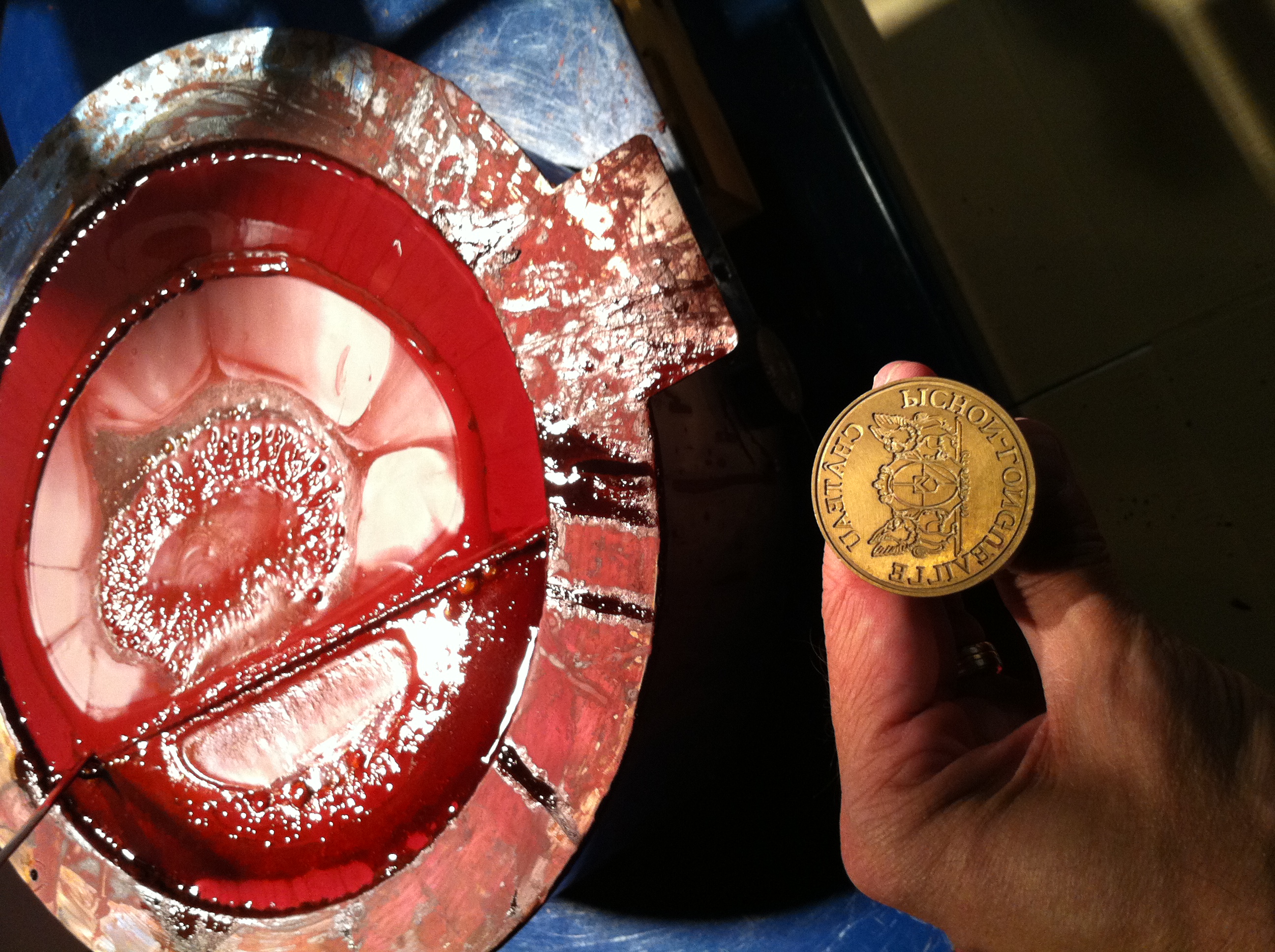
The wax and seal.
The wax and seal. Would’ve made a nice souvenir…

Here are the wines we tried in their tasting room:

2008 Pibran – Fruity nose, red and black fruit in the mouth, decent acid, medium-light in body and medium fruit finish.  A nice inexpensive Bordeaux red wine.

2008 Les Tourelles de Longueville – Nice nose of sweet dark fruit, well rounded in the mouth with dark red bing cherries, good acidity, nice medium-fine tannin and a medium-long dark fruit finish.  This is a very nice second wine that is drinking well now but will age very well over the next decade.

2008 Pichon Baron – Beautiful spicy sweet dark fruit nose.  In the mouth, very dark sweet blackberries with a hint of dark bing cherries combined with baking spices, very good acidity keeping everything lively.  Full bodied and lots of sweet fine tannins leading to a very nice black current and spicy blackberry long finish.  This is an absolutely beautiful wine that is starting to show some nice complexity, but is still a baby.  The 2008 Pichon Baron should start drinking well in another five years, but will age for two decades without even trying.  The prices for both the 2009 and 2010 Pichon Baron are significantly higher than the 2008 and for good reason, but the 2008 is a relative bargain by comparison of quality/price.  The 2008 Pichon Baron is a wine to look out for and I am very glad that I have it resting in my cellar.

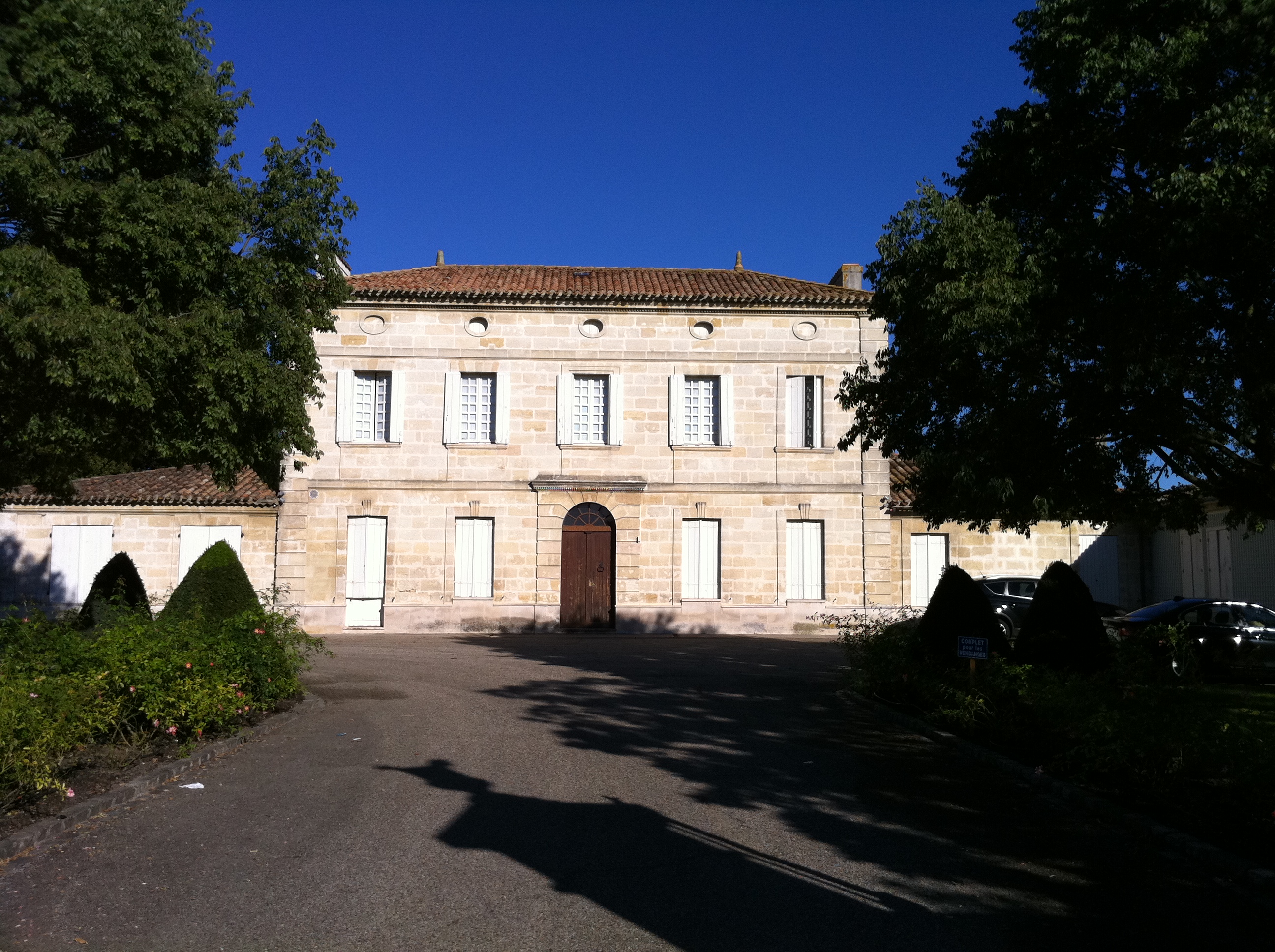
Another view.
Another view.
And another.
And another.

It was a beautiful day, and we snapped a few more photos outside, before heading just across the street for a tour and lunch at Château Pichon Longueville Comtesse de Lalande…

Day Six, Second Stop: Chateau Pape-Clement

We appeared to be on a theme for the day, with scheduled visits to Chateau Haut Brion, Chateau Pape-Clement and Chateau Domaine de Chevalier, all of which are well known for producing excellent whites in addition to their reds.

Chateau Pape-Clement.

Chateau Pape Clement in Pessac was named after one of it’s previous owners, Pope Clement V.  The story goes that Bertrand de Goth was appointed Archbishop of Bordeaux in 1299.  With this appointment, he received the Pessac vineyard as a gift, formerly known as the “de La Mothe” vineyard.  In 1305 the Cardinals elected Bertrand de Goth as their new Pope and he adopted the name Pope Clement V.  From 1305 to 1309 Pope Clement V continued to managed his vineyard, but when his papal duties became too much, he donated the property to the Archbishop of Bordeaux, Arnaud de Canteloup.  While Pape Clement was under the management of the Archbishop, modernism and technical progress made it a pioneering estate.  Chateau Pape Clement is known to be one the first estates to plant the vines in rows, versus having the vines scattered around the property.  The estate of Pape Clement was purchased in 1858 by Jean-Baptiste Clerc, a Bordeaux wine merchant, who also built the Chateau on the property.  In the 1980’s, an entrepreneur by the name of Bernard Magrez took over the Chateau and built the international reputation for the Grand Cru Classe, Chateau Pape Clement.

Bordeaux 2013 2807

Chateau Pape Clement has 57 hectares of red grape vines (60% Cabernet Sauvignon, 40% Merlot) and 3 hectares of white grape vines (45% Sauvignon Blanc, 45% Semillon, 10% Muscadelle).  The destemming of the grapes is done entirely by hand, berry by berry, which is very labor intensive.  At Pape Clement, the red wines are fermented in traditional large wooden vats and aged in French oak barrels (70-100% new) for 18-20 months.  The white wines are fermented entirely in French oak barrels for 12 months.

The influence of the church was seen throughout the estate.
The vat room.
The vat room.
Bob and Christina in the barrel room.

The cellar was interesting in that it was done in the style of a chapel, and actually had a small chapel inside it.  There was also a fairly new structure on the property, a beautiful glass reception hall, that Christina was completely captivated by.

Inside the cellar.
Inside the cellar.
These would be fun to crack open...
These would be fun to crack open…
A fairly new structure on the estate.
A fairly new structure on the estate.  Once again, Christina was ready to plan a party.
The tasting room was also ornate.

The wines we tasted were:

2009 Clos Haut Peyraguet – a combination of ripe melon and lemon with lots of spices and good acidity.  Full bodied and a very long fruit filled finish.

2007 Pape Clement – Beautiful spicy black fruit filled nose.  Full bodied sweet dark fruit in the mouth, good acidity and fine tannins on the long finish.  This is a beautiful wine that is starting to drink well and is already showing some secondary characteristics.  The 2007 Pape Clement will be a great wine to drink, while you wait for the 2005, 2008, 2009, and 2010 to mature.

2010 Fombrauge (from Saint-Emilion – made from Sauvignon blanc, Semillon and Sauvignon Gris) – Very clean, fresh white fruit and spices, very good acid keeping everything lively. Medium bodied, with white peach, ripe pear and a hint of pineapple on the long fresh finish.  This is an absolutely beautiful summer white to be drinking overlooking the vineyards, and we went through a couple bottles of it on our trip.

Before our final stop of the day, we stopped to check into our next hotel, the beautiful les Sources de Caudalie.  We can’t wait to tell you more about it…

Day Six, First Stop: Chateau Haut Brion

We tore out of our beautiful apartment on Monday morning and wound our way through town to our first destination. I was very much looking forward to visiting this Chateau, and was actually surprised to find it nestled just on the outskirts of town.

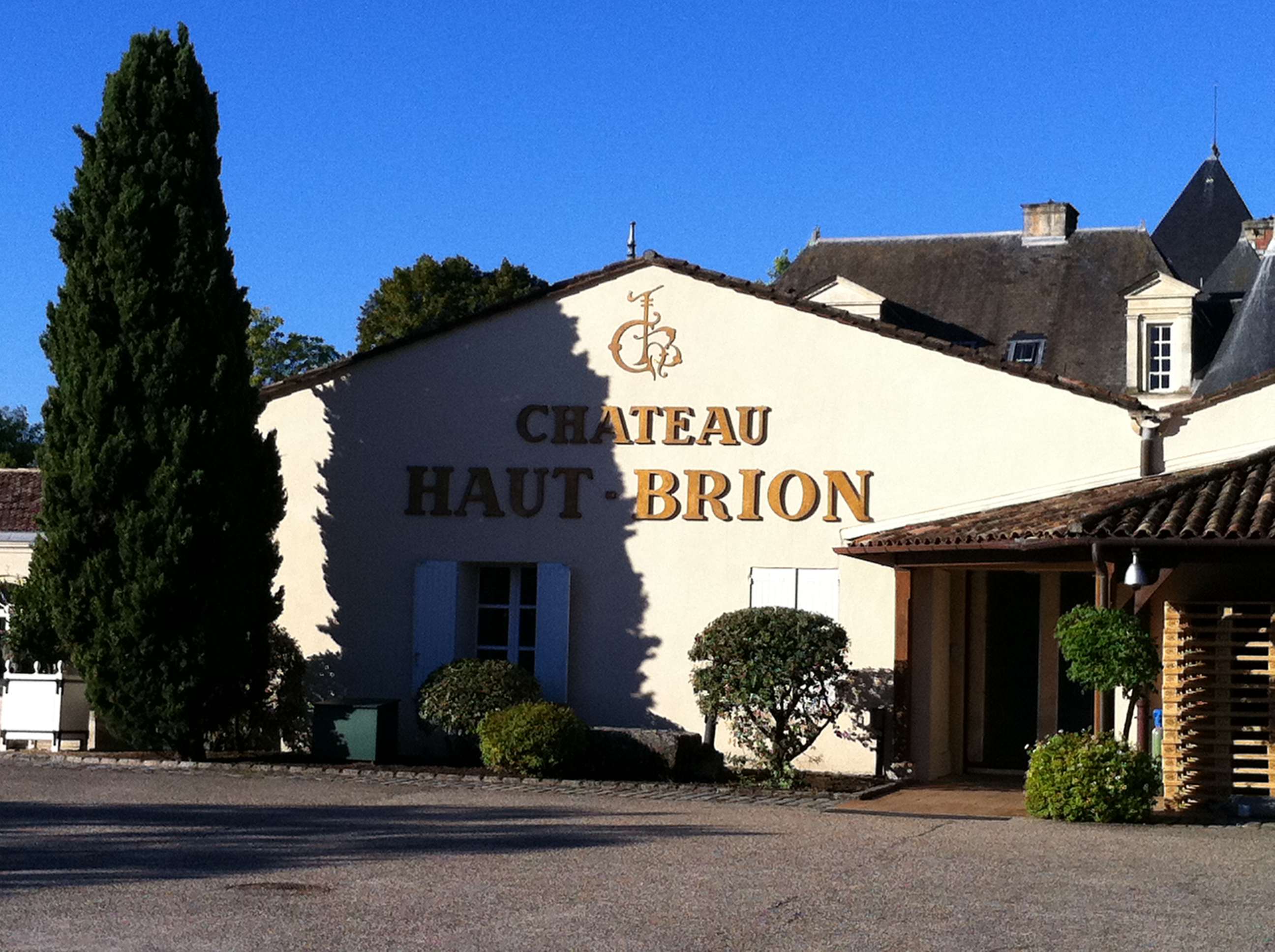
Chateau Haut Brion.
Chateau Haut Brion.
Bob and Christina Watt at Chateau Haut Brion.

Out of all the First Growth Chateaux in Bordeaux, the wines of Chateau Haut Brion in Pessac-Leognan are some of my favorites.  I feel the wines of Ch. Haut Brion are more singular and unique in style than the other First Growths, it is also more geographically separated than the others as well.

We were first greeted by our wonderful hostess, Barbara, and we started things off with a short film about the history of the Chateau.  Chateau Haut Brion is the oldest of the First Growths from the 1855 classification and the vineyards were fully planted a century before the other First Growths.  Jean de Pontac married Jeanne de Bellon in 1525, from which part of the land of Haut Brion was brought in as a dowry.  Jean de Pontac bought the title to the Domaine of Haut Brion in 1533 and built the stone Chateau in 1549.  There is even evidence that the first vines planted around the property of Haut Brion date back to the first century A.D.  Chateau Haut Brion and neighboring Chateau La Mission Haut Brion are both owned by the Dillon family.  Clarence Dillon, an American financier, first purchased Ch. Haut Brion in 1935.  Today, Prince Robert of Luxembourg is President of Domaine Clarence Dillon and the fourth generation of the Dillon family to manage this First Growth Estate.

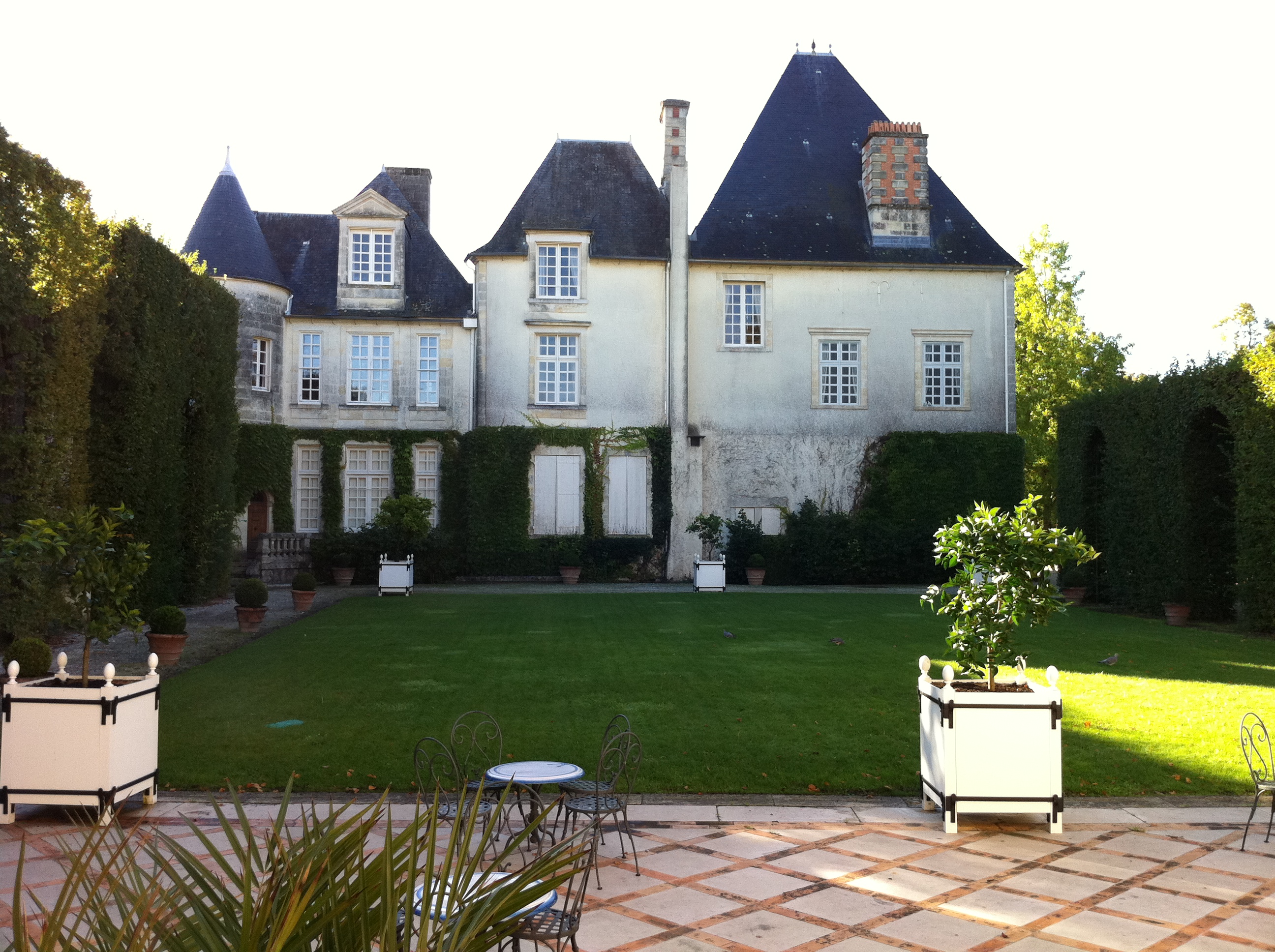
The beautiful estate.
A building on the estate.

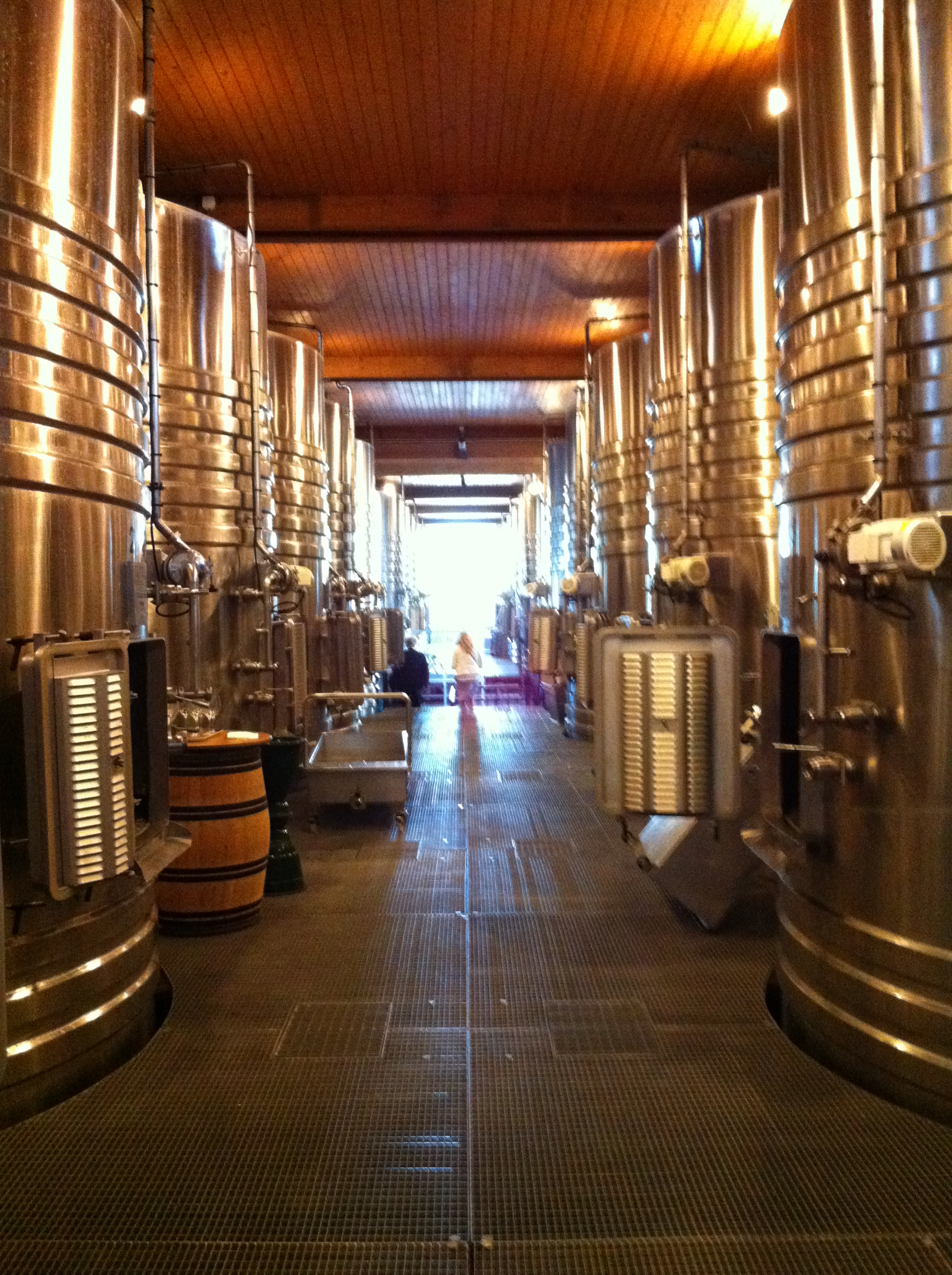
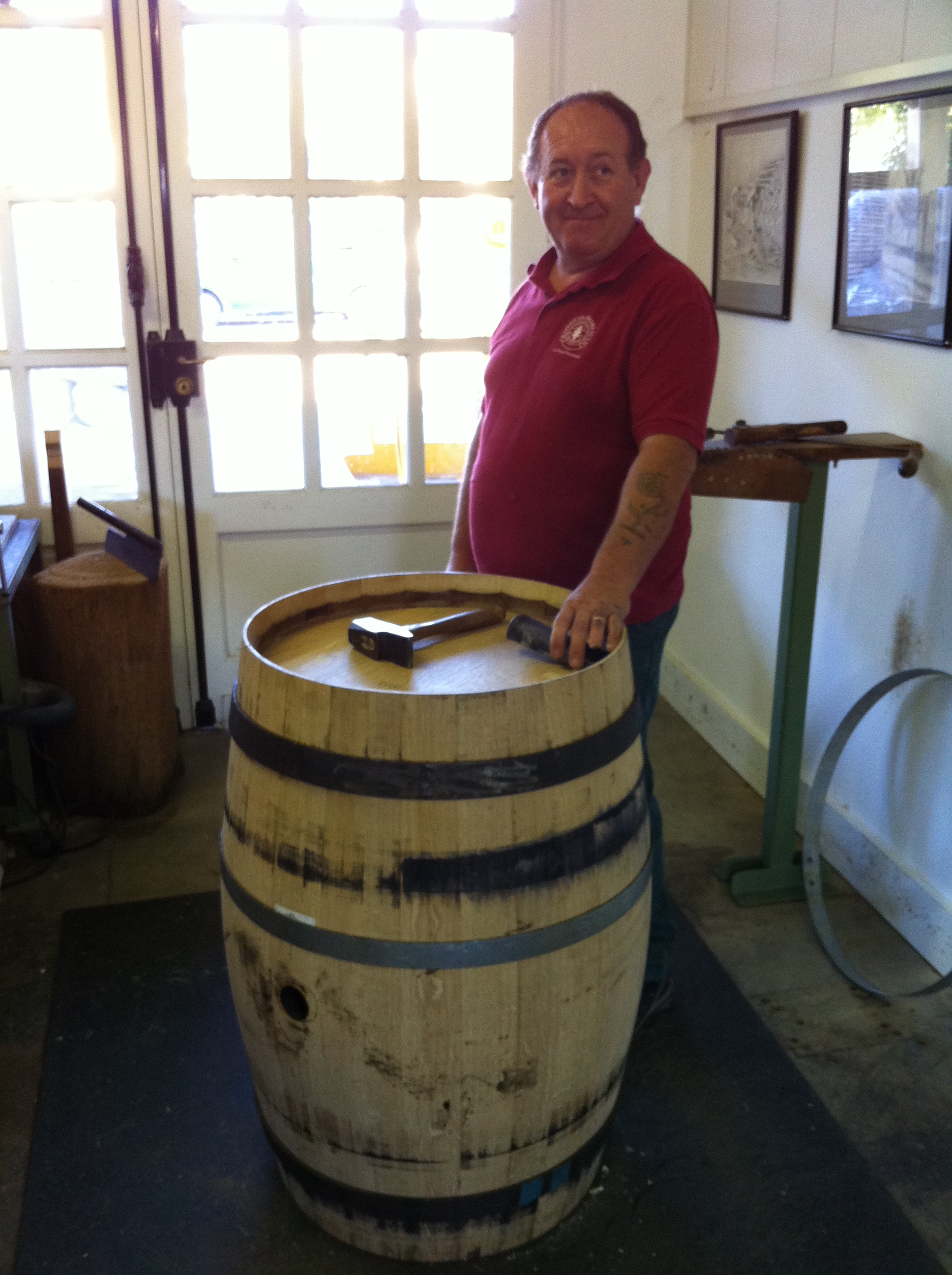
After the film, Barbara gave us a tour around the Chateau.  Haut Brion makes great Bordeaux wines by combining the use of modern technology with their traditional winemaking.  Haut Brion uses large stainless steel vats that are split into two compartments each (one above and one below), so they can ferment two separate grape lots in one large cylindrical vat. Three generations of the Delmas family have been making the wines for the estate in turn since 1923, with Jean-Phillipe Delmas as the General Manager today.  Haut Brion is also one of the very few Chateaux that has their own fulltime cooper making French oak barrels.  This Monday morning the cooper was already hard at work making barrels and the smell of French oak filled the air.

The vats.
The beautiful vat room.
It was fun to see the cooper at work.
The cellar.
The cellar.

We walked around the property a bit on the way to our tasting, it was just beautiful.  The second we set foot in the orangery, Christina exclaimed that she wished she could throw a party there.  I’m certain that it has housed many a distinguished event.

Another part of the chateau.
The grounds.
The grounds.
More of the property.
I can't remember what this room was original - I think perhaps a cellar room, but it looks like it could host a killer party now.
The former orangery is used today as a tasting room and looks like it could host a great party now.
Bordeaux 2013 188
Another view of the room.
If only...
The smallest bottles are regular 750ml bottles.  I think the larger bottles would look good in my cellar!

It was a little early to start the serious tasting, but we were up for the challenge.  We were able to taste the 2007 vintages of La Mission Haut Brion and Haut Brion.  Here are my notes:

2007 La Mission Haut Brion – Absolutely beautiful floral nose of red/black fruits and spices, very delicate.  In the mouth the wine is medium-full bodied with a core of black fruit flavors complicated with baking spices.  There is very good acidity with fine tannins following through to a very nice long sweet fruit filled finish.  It is almost like lace in the way that it is very detailed and delicate.  This is a beautiful wine that is all about the subtle details.

2007 Haut Brion – Bigger, darker black fruit nose with huge spice.  Full bodied ripe blackberry fruit combined with loads of baking spices, gravel and burning embers.  The wine has very good acidity, extremely fine but noticeable tannins and a beautifully long spicy fruit finish.  This is an absolutely gorgeous wine that is drinking well now, but will age gracefully over the next decade or even two.  The 2007 Haut Brion will be a great wine to drink while you are waiting for the 2000, 2005 and 2006 vintages to come to maturity.

Next up, Chateau Pape-Clement…

17th Annual Champagne Tasting

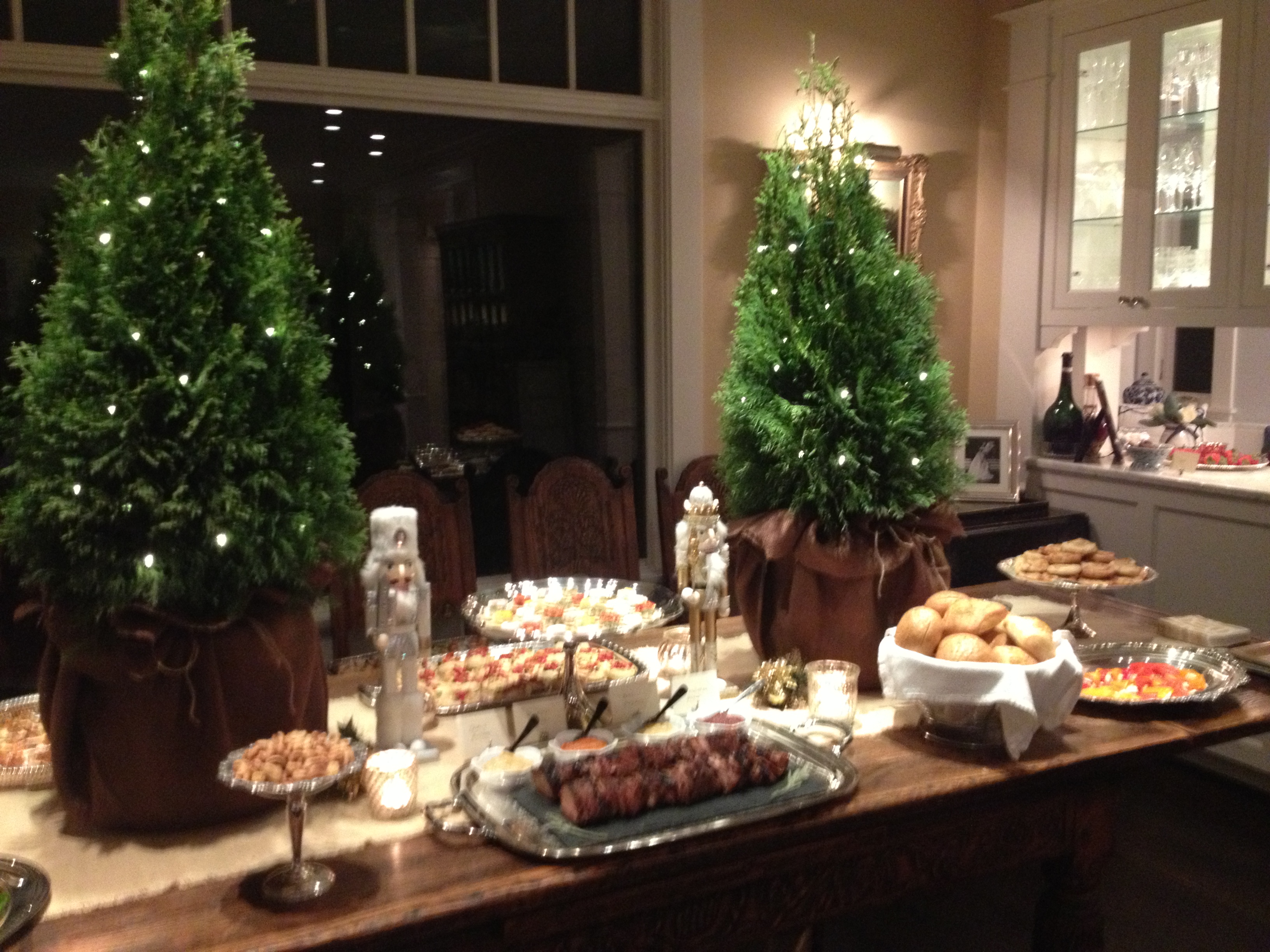
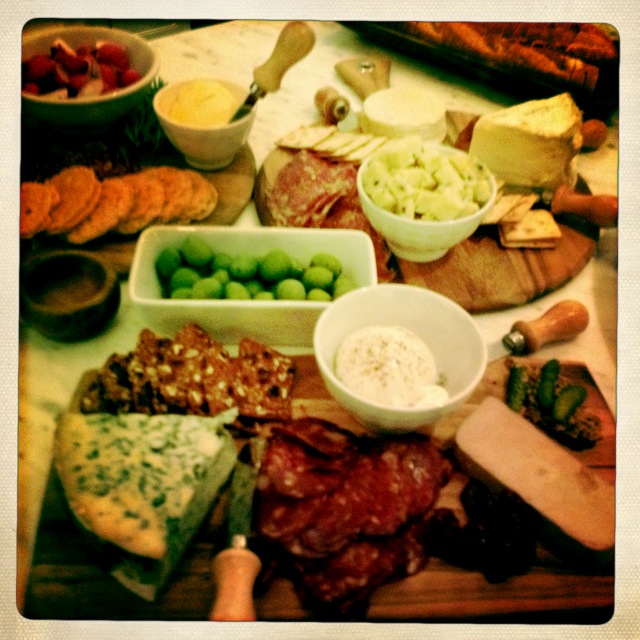
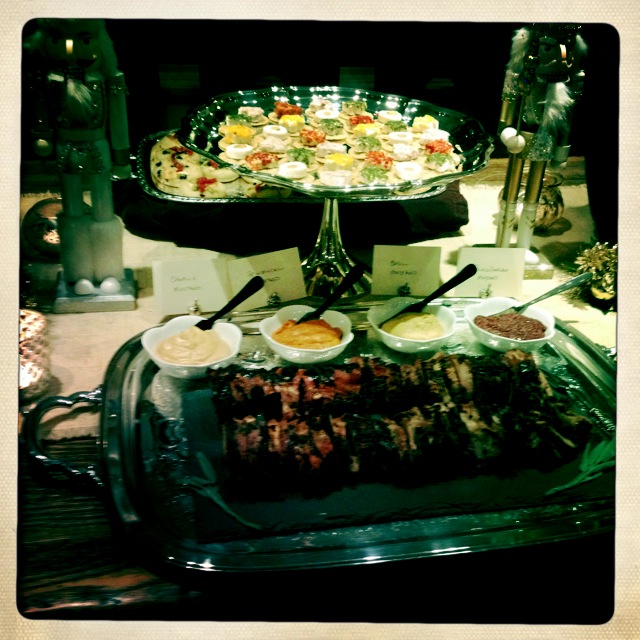
So often, when people open a bottle of champagne, it’s for a special occasion, and it’s rare that you have several side-by-side for comparison.  Therefore, every bottle you open for celebration is likely to be revered as a great bottle, though with time and tasting, there are noticeable preferences that will begin to show.  That’s the philosophy behind our annual champagne tasting – an opportunity to understand more about sparkling wines.  We also tend to put out a pretty big spread – so a big thanks goes to my wife for coordinating all of that!

The setting.
The setting.
Nibbles.
Nibbles.
I never get enough to eat - I'm behind the bar all night!
I never get enough to eat – I’m behind the bar all night!

I have always loved Champagne – and not just for special occasions, even though it seems like that’s when most people drink it.  Champagne is first and foremost wine that just happens to have bubbles; it can be enjoyed before a meal, during a meal and after a meal.  I generally like to start a dinner or party off with Champagne.  The bubbles seem to set the stage and get everyone into a great mood for the evening.

While the party always seem to go by too fast in a blur of good friends, good food and great bubbly, throughout the course of the year, I am always on the lookout for some really nice Champagnes and sparkling wines from all over the world. For the tasting this year, we had 10 different wines, served double-blind, meaning that nobody knew what we would be drinking, other than all 10 wines had bubbles.

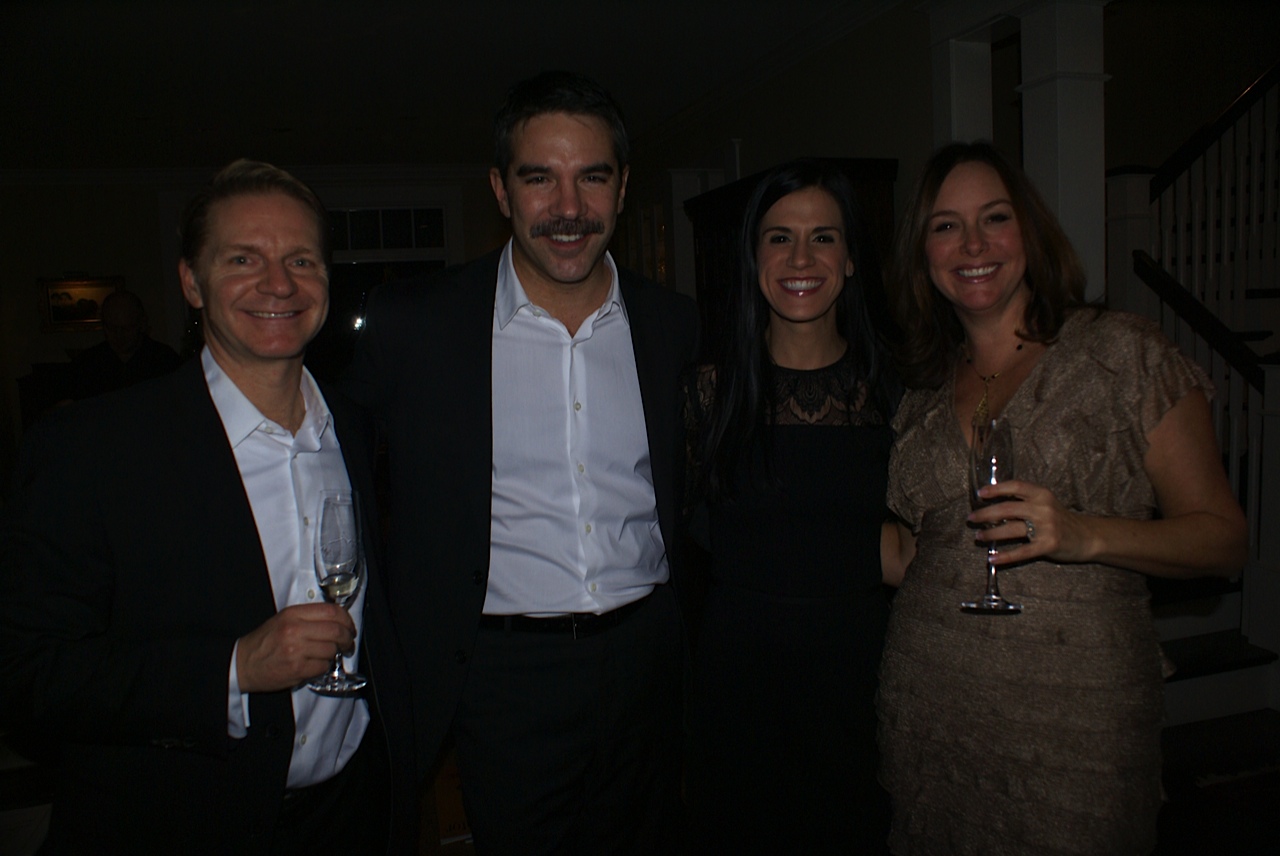
Jeanne McKay Hartmann, Christina Watt and Kerry Prather.
BJ McMahon, Chris Drake, Gina Drake and Laura McMahon.

The majority of the wines we taste are Champagnes from the Champagne region of France.  By law, for a sparkling wine to be called Champagne, it has to come from the Champagne region of France.   I also want to be able to show people there are some very nice sparkling wines made outside of the Champagne region, so people can have a chance to try something they have not had before.

I did tell everyone that the low-end of the lineup was $25, the high-end was $250+ and the average price per bottle was $115.  I served everyone with small pours, so that they could get through tasting all 10 wines with their taste buds intact.  After someone has made it through all 10 wines, they can go back and taste again any or all of the wines to figure out which wines they like and to rank them from best to worst.  At the end of the evening, we have everyone vote with a show of hands for which wine they thought was the worst and also the best.  The results are usually surprising, and very often, ends with one of the most expensive wines ranked towards the bottom.

The big reveal.
The big reveal.

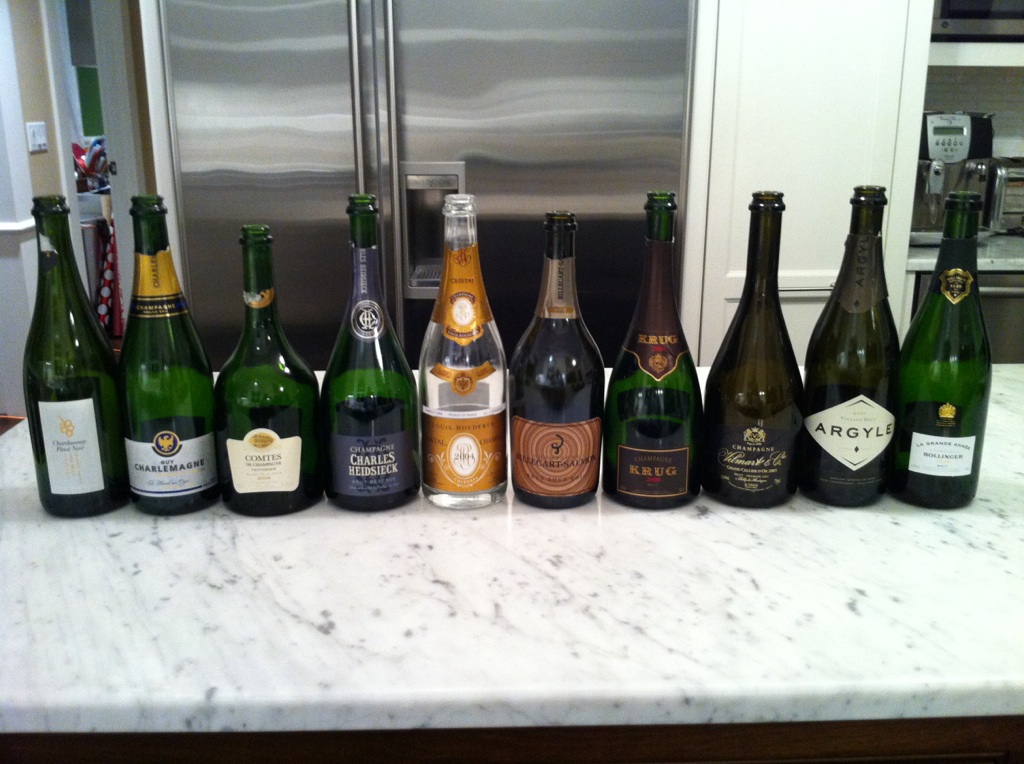
Here is the line-up for this year.  All of the wines were from Champagne, France, unless otherwise noted and were served in this order:

The line-up.
The line-up.

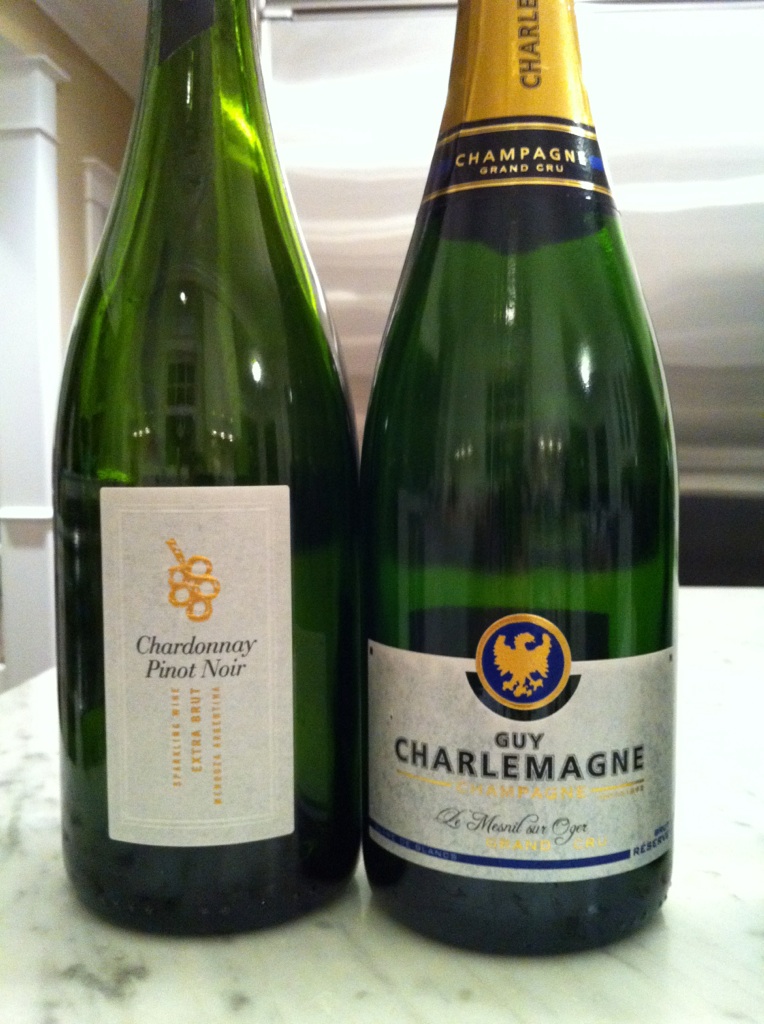
#1 – NV  Tapiz – Extra Brut, Mendoza Argentina,  $25.

#2 – NV  Guy Charlemagne – Brut Reserve Blanc de Blanc le Mesnil sur Oger Grand Cru,  $55.

#3 – 2004  Taittinger – Comtes des Champagne Blanc de Blanc,  $180.

#4 – NV  Charles Heidsieck – Brut Reserve,  $55.

#5 – 2004  Louis Roederer – Cristal,  $240.

#6 – NV  Billecart Salmon – Sous Bois,  $85.

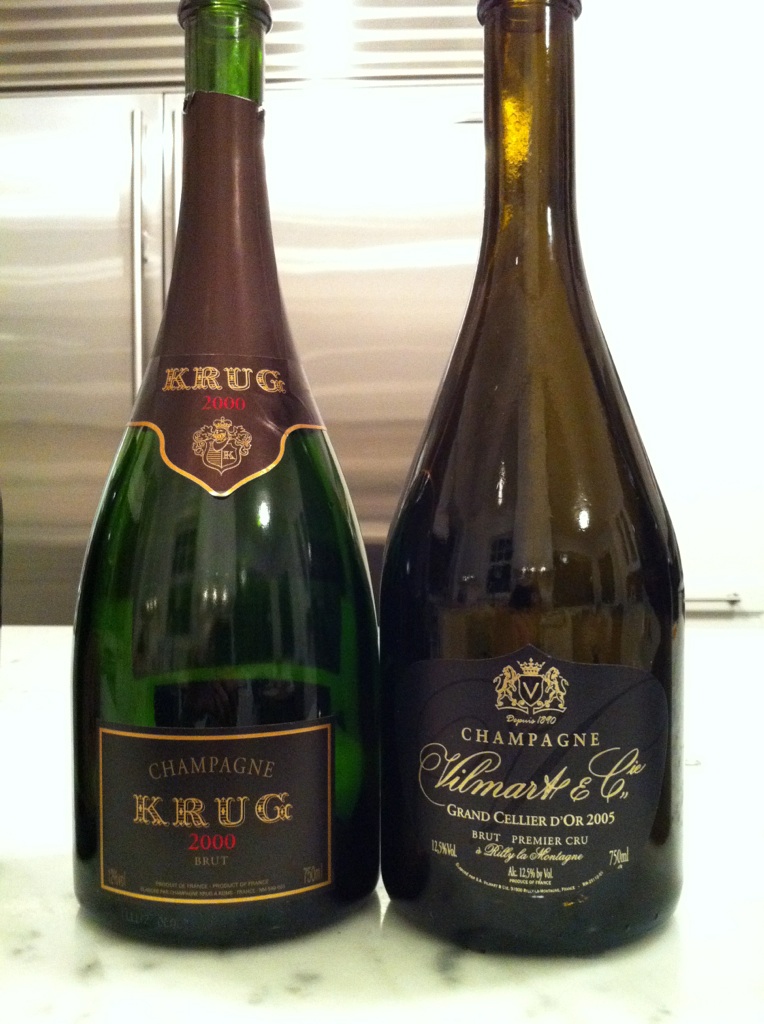
#7 – 2000  Krug – Brut,  $250+.

#8 – 2005  Vilmart & Cie – Cuvee Grand Cellier D’Or,  $90.

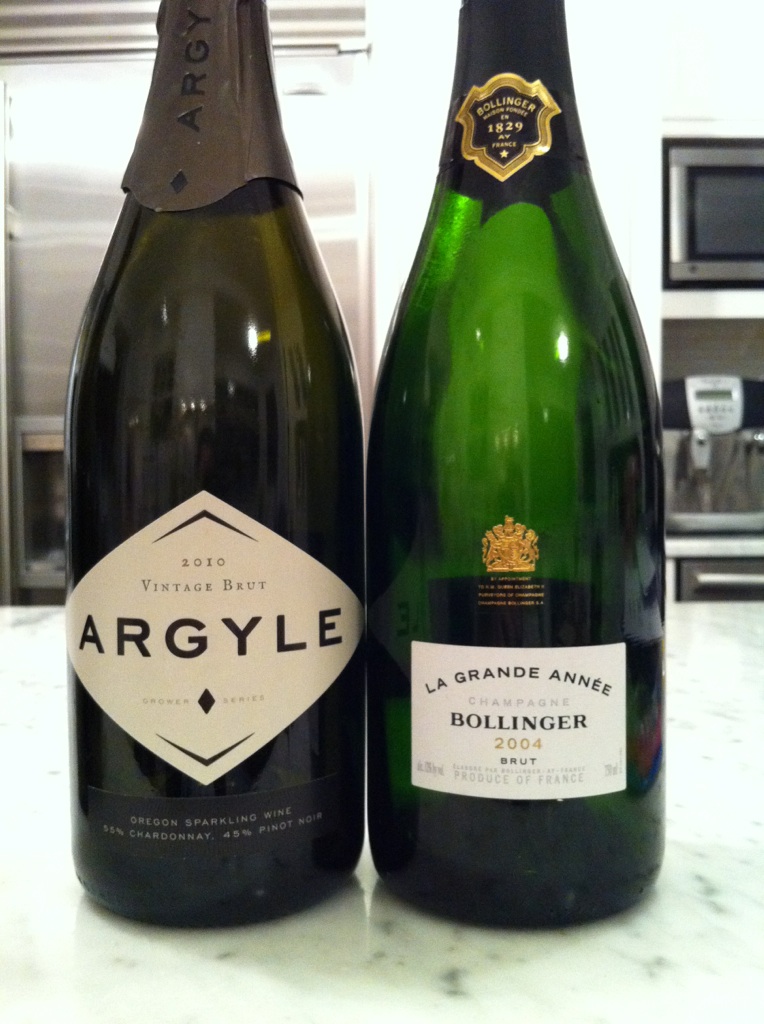
#9 – 2010  Argyle – Brut, Willamette Valley Oregon,  $25.

#10 – 2004  Bollinger – Grand Annee,  $135.

After all of the votes were cast and counted as a group for the worst and the best, the wines ranked out in this order:

#1 – 2000  Krug – Brut,  $250+.

#2 – NV  Guy Charlemagne – Brut Reserve Blanc de Blanc le Mesnil sur Oger Grand Cru,  $55.

#3 – NV  Charles Heidsieck – Brut Reserve,  $55.

#4 – 2004  Bollinger – Grand Annee,  $135.

#5 – 2005  Vilmart & Cie – Cuvee Grand Cellier D’Or,  $90.

#6 – 2010  Argyle – Brut, Willamette Valley Oregon,  $25.

#7 – NV  Billecart Salmon – Sous Bois,  $85.

#8 – 2004  Taittinger – Comtes des Champagne Blanc de Blanc,  $180.

#9 – 2004  Louis Roederer – Cristal,  $240.

#10 – NV  Tapiz – Extra Brut, Mendoza Argentina,  $25.

Here’s a closer look at the bottles served in order:

Numbers 1 and 2...
Numbers 1 and 2…
Numbers three and four...
Numbers 3 and 4…
Numbers 5 and 6...
Numbers 5 and 6…
Bottles 7 and 8...
Bottles 7 and 8…
2013 champagne party bottles 004
And finally, bottles 9 and 10!

While the 2000 vintage is a good but not great vintage for Champagne, the 2000 Krug Brut Champagne is an excellent and well made Champagne, with a long life ahead of it.  The toasty fruit finish goes on and on in the mouth, long after you have swallowed it.  This is just one of the many reasons why I love the Champagnes made by Krug.  While I like many Champagnes from the different Champagne houses, the house of Krug continues to be my absolute favorite.

Over the 17 years that I have been doing this Champagne tasting, Argyle from Oregon has had the best results as a US produced sparkling wine against the French competition.  Argyle produces some very nice wines in a range of prices, all are worth exploring.  This was an interesting year for the tasting, as the wines that would normally present as a more feminine-style (soft, buttery, creamy) champagne, actually all skewed more masculine (doughy, yeasty, toasty), so there were far less polarizing results and hotly debated conversations than normal.

Here is the order on how I personally ranked the different Champagnes:

#1 – 2000  Krug – Brut,  $250+.

#2 – NV  Charles Heidsieck – Brut Reserve,  $55.

#3 – 2005  Vilmart & Cie – Cuvee Grand Cellier D’Or,  $90.

#4 – NV  Guy Charlemagne – Brut Reserve Blanc de Blanc le Mesnil sur Oger Grand Cru,  $55.

#5 – 2004  Bollinger – Grand Annee,  $135.

#6 – 2004  Taittinger – Comtes des Champagne Blanc de Blanc,  $180.

#7 – NV  Billecart Salmon – Sous Bois,  $85.

#8 – 2010  Argyle – Brut, Willamette Valley Oregon,  $25.

#9 – NV  Tapiz – Extra Brut, Mendoza Argentina,  $25.

#10 – 2004  Louis Roederer – Cristal,  $240.

A big surprise for the night was the fact that the Roederer Cristal came in next to last place in the group vote.  While Cristal may not be the style of Champagne that I like the most in general, they are very well-made Champagnes.  I am not sure what happened with the 2004 Cristal, it started off with very nice fruit but fell flat and very short on the finish.  Having had Roederer Cristal on multiple occasions from multiple vintages, my guess is that this had to be an off bottle, which is a bummer.  So, I guess I will have to revisit this Champagne (darn!).  Despite the fact that it had a lackluster showing, I loved how Roederer chairman Federic Rouzaud described the vigor of Cristal as it ages while leading a tasting at the recent 2013 New York Wine Experience: “It makes women look more beautiful, so the men are happy, and then we make more love.  So I’m very confident in our future.”

Cheers to that!

New Insights in Beautiful Bordeaux City

Authored by Christina

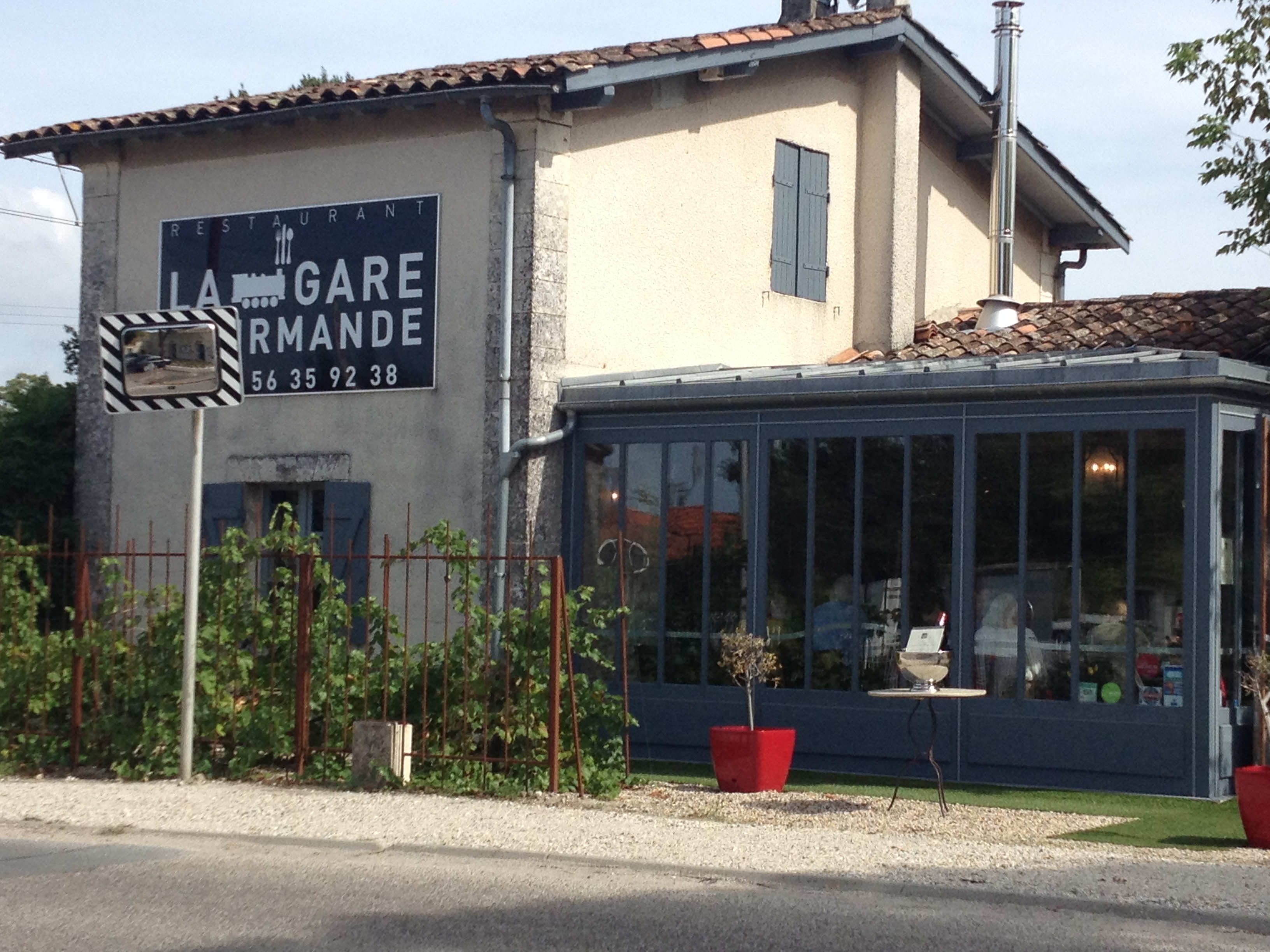
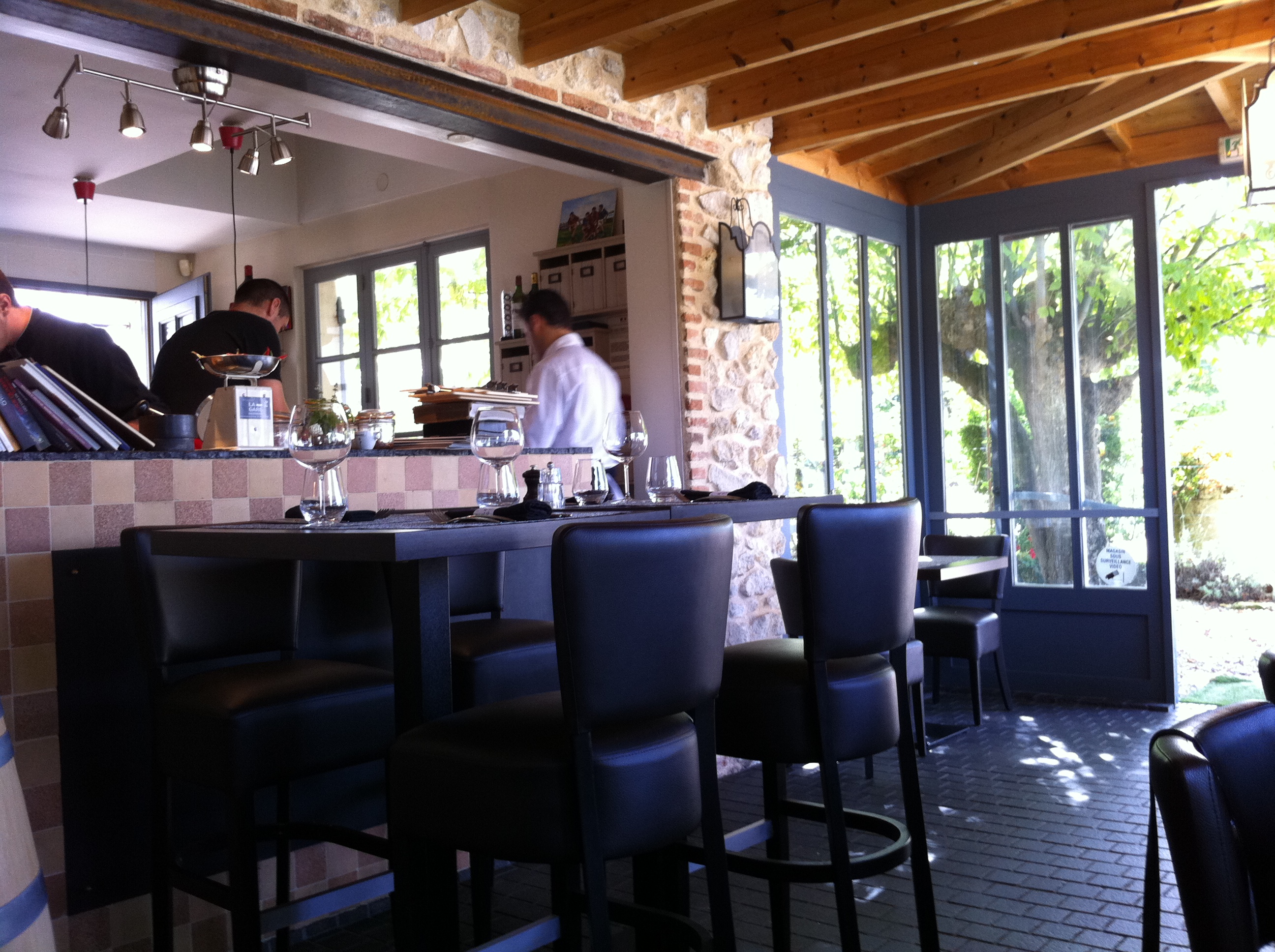
On our way from Bages to Bordeaux we made a quick little stop in Labarde for lunch at the amazing Le Gare Gourmande.  It’s a restaurant converted from a train depot – tiny, but very well appointed.

La Gare Gourmande.
La Gare Gourmande.

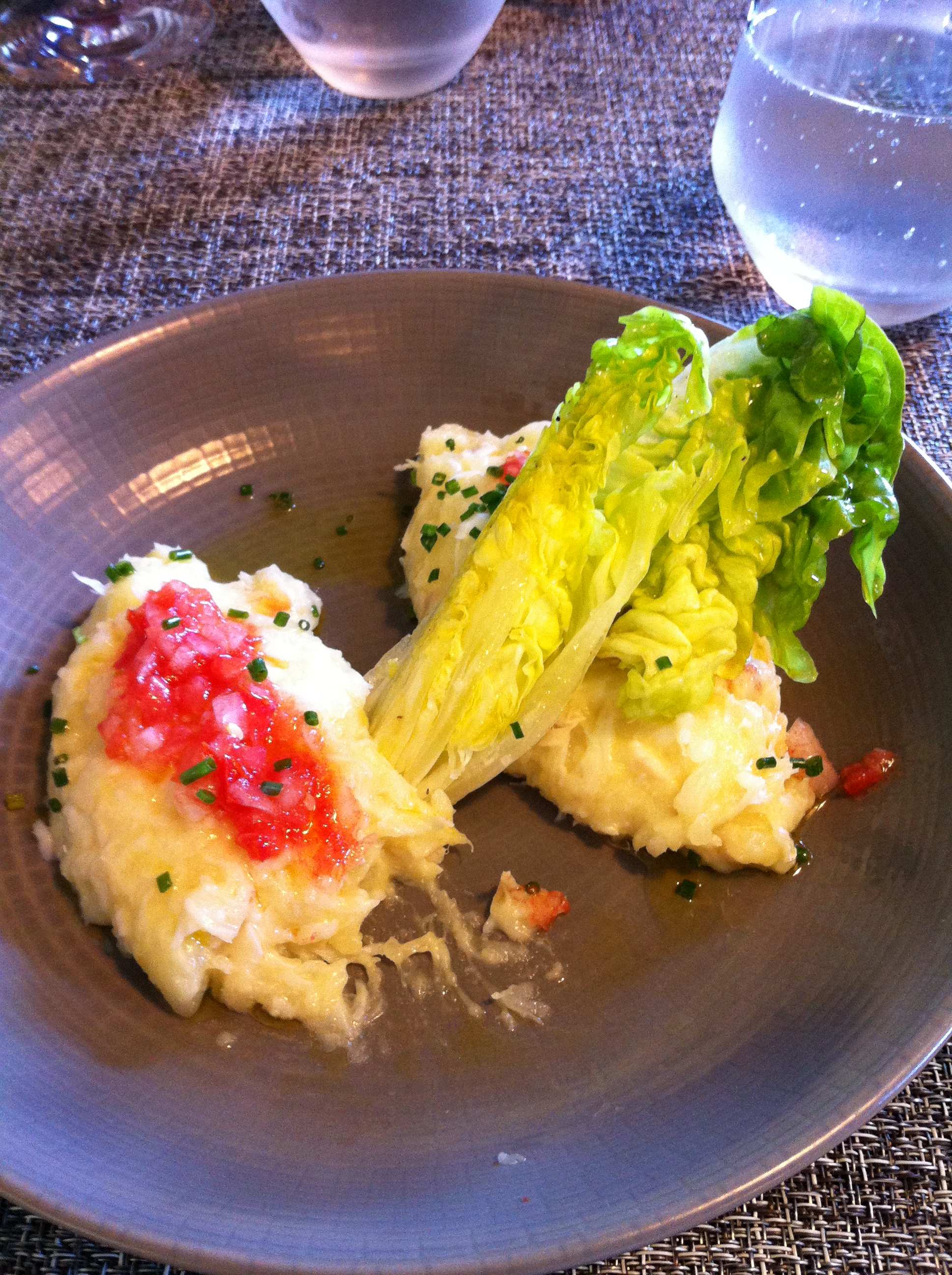
For lunch we enjoyed a dish of shredded white fish with tomato confit with crushed potatoes  – it was very good, and apparently a popular dish, as we then saw versions of it on other menus, though this was the best one we tried by far.  Reminds me of a halibut with tomato confit that I make often at home from the famed Balthazar French cookbook.  Not hard to see the connection there.

The very compact kitchen.  The menu is very fixed - and very fine.
The very compact kitchen. The menu is very fixed – and very fine.
Oops!  We were a little hungry.  It was really good!
Oops! We were a little hungry. It was really good!

We arrived in Bordeaux in the early afternoon and located our apartment for the weekend.  It was right in the heart of downtown Bordeaux on the rue Esprit des Lois.  These accommodations were recommended by our “tour designer” at Bordeaux Saveur.  They called it La Villa Grands Cru; it’s the in-city home of a French cheese shop owner – that’s as much as we can say about that.  What we CAN say is that is was a beautiful apartment looking right down into the city, and a heavenly place to make our home base from, within walking distance of everything we wanted to see.

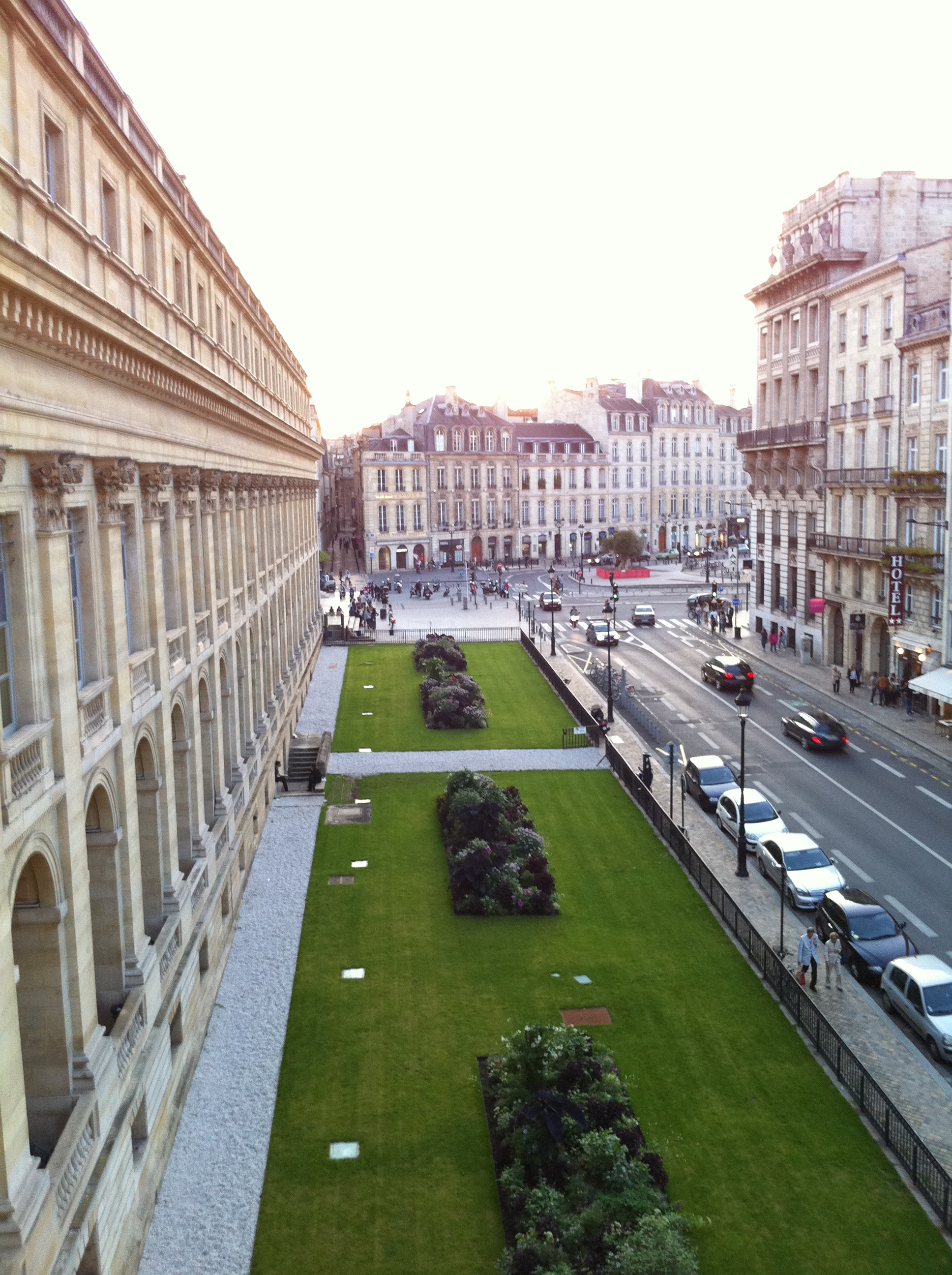
The view from our apartment window. - and a view of my favorite kind of souvenir.
The view from our apartment window. – and a view of my favorite kind of souvenir.

I made a beeline for my souvenir at Hermes, just mere blocks away (the store was only open that one afternoon we were in town).  We walked and shopped the first afternoon, with the only downside being that the shops actually close fairly early by American standards!

The top four windows are part of our home-away-from-home.
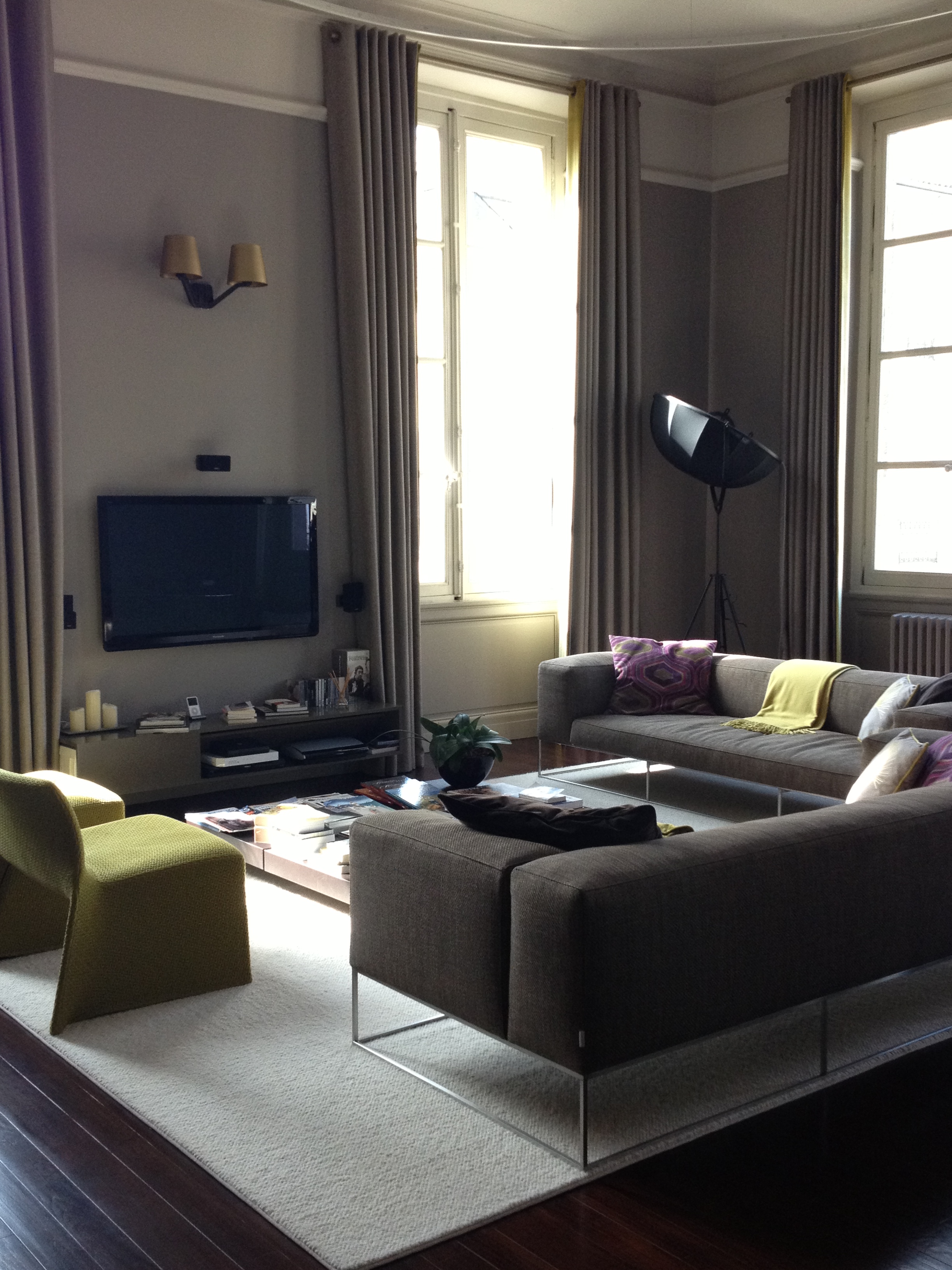
The stunning living space.
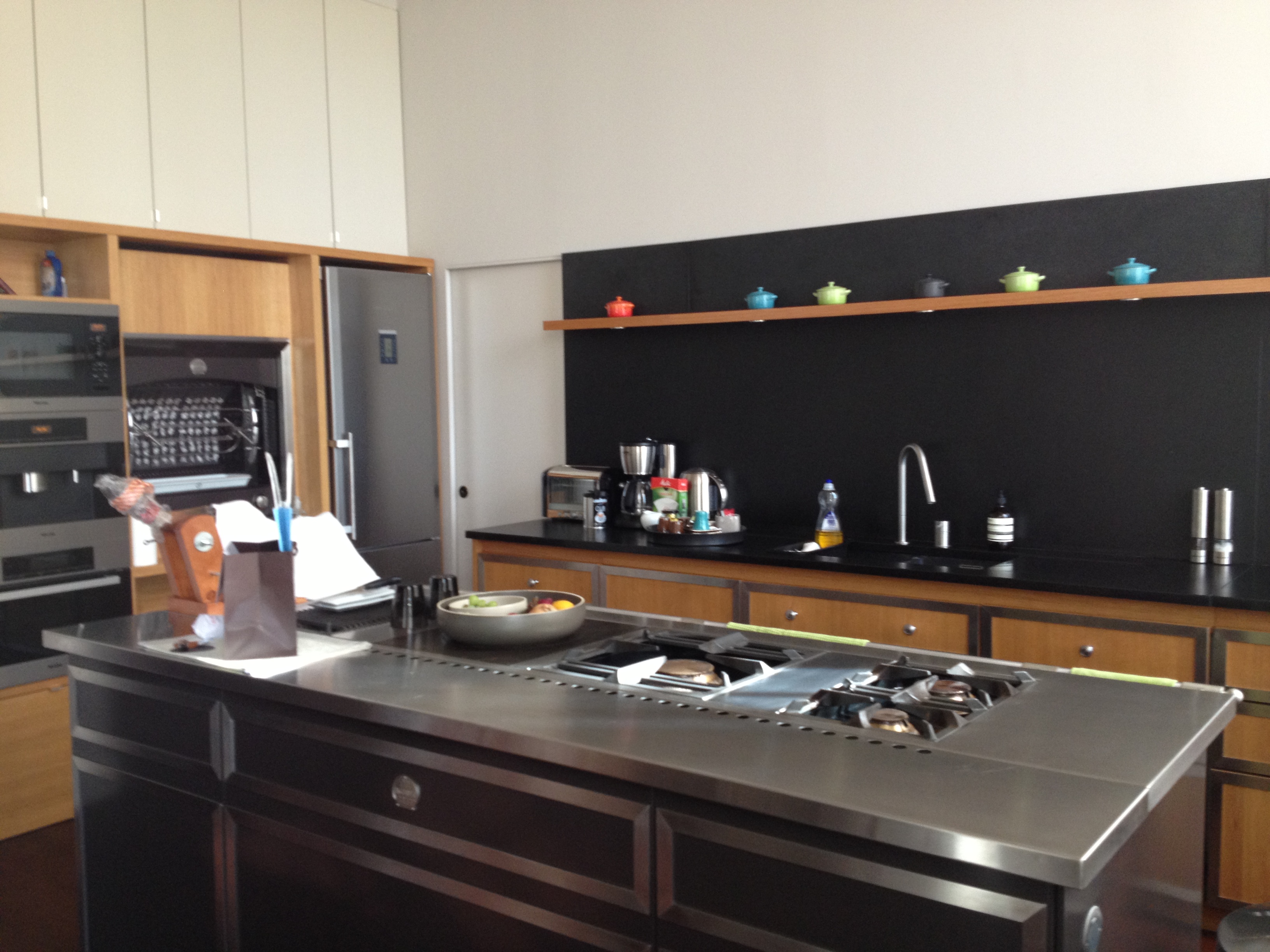
The great kitchen which we were itching to use, but alas, didn't have time!
The great kitchen which we were itching to use, but alas, didn’t have time!
A better view of the view from our apartment with the Opera House on the left.
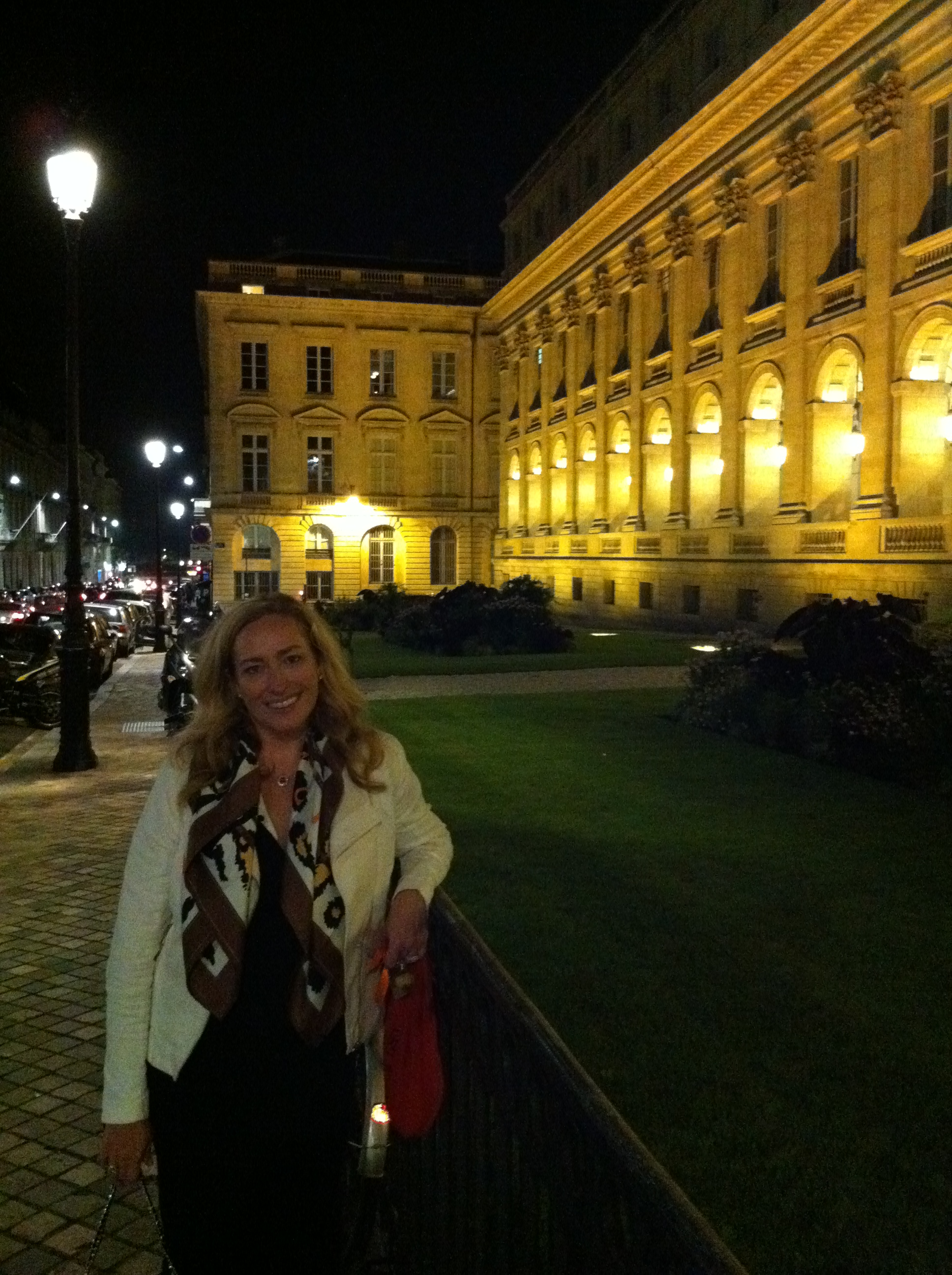
Our apartment by night on the way home from a marathon dinner...
The apartment by night on the way home from a marathon dinner…

We were glad to have time to enjoy our beautiful home-away-from-home before dinner.  We also got the chance to meet the woman who had been coordinating the trip for us – the absolutely charming Clemence de la Ville.  She arrived by bike – seven months pregnant – glowing and gracious.  We were delighted to meet her, and at this point, we had a burning question for her.

“So, by chance Clemence, did you tell the estates that we have a blog?”  (Honestly, we weren’t sure how much blogging we would wind up doing, or whom we would tell about it at this point, as it was such a new thing for us.)

“Oh yes,” she said, without skipping a beat. “I sent it to all of them and told them that you were wine bloggers and would probably write about them.”

Oh.  Mystery solved.  You see, for the past day or so, people had started referencing the blog, and I kept telling Bob that it appeared they were giving us press kits when we left – not the usual marketing brochures.  After more than 20 years in Public Relations, it felt a little funny to be on the other side of the journalistic table – heck – many of our tours were led by PR people – but I also think that the blog led us to have some really rich and insightful conversations with people that we might not have otherwise had.

The blog was started as a way to put the results of our annual champagne party adventures up, and had been evolving into a way to share our wine experiences and recommendations.  I sent it to Clemence originally as background and a bio, really.  What then transpired in Bordeaux was a whole new level of storytelling responsibility, and we realized that we were more than up to the occasion, especially since I’ve spent my entire career setting up media tours, which was exactly what this had become!   Couple that with Bob’s more than 20 years collecting wine, and we realized that we actually make a pretty good team.  We know we have a lot to learn (like how to take better photos and to remember to photograph our food BEFORE we begin to eat it for starters!), but we’re grateful to Clemence for so innocently setting us on this path – we’re having a ball with it so far.

And now you know the rest of the story – and the reason why we feel compelled – and why we are quite enjoying – retelling our trip stories day-by-day, stop-by-stop, glass-by-glass.

Thanks for joining us on the journey!

Speaking of journeys – wait till you hear about our dinner that night…

Day Two Dinner: Restaurant Cordeillan Bages – 2 Michelin *

Somehow, after our day of touring, we managed to grab a little time before dinner at the hotel.  But first, we wandered into the little town near the hotel that was constructed as an idyllic village – the little town of Bages.

The darling boulangerie in the town of Bages.
The beautiful boulangerie in the town of Bages.
We loved this clever doorway in Bages.
We loved this clever window in Bages.

The boulangerie there held a delightful assortment of cheeses, wines, pastries and nibbles.  But none so amazing (in my wife’s opinion), as the Foie Gras Chips.  If they weren’t so fragile, she would’ve smuggled them home in our bags.

Christina still dreams of these chips.

We also forgot to mention the great Cafe Lavinal bistro in the heart of the town – we actually ate there the first night we arrived, but truth be told, we were so tired that Christina had to keep waking me up during dinner.

Cafe Lavinal - a classic french bistro.
Cafe Lavinal – a classic french bistro.
Another view of the Cafe.
Even the gift shop was idyllic - and well stocked.
Even the gift shop was idyllic – and well stocked.
The front of our hotel, a very short walk from the center of town.
A view of the courtyard from our window.

So, technically, on our second full day, but three dinners later, we found ourselves back at our hotel, the Cordeillan Bages, for dinner at their renowned restaurant, run by Chef Jean-Luc Rocha.  The moment you entered, you knew it was going to be a serious white-tablecloth dining experience.

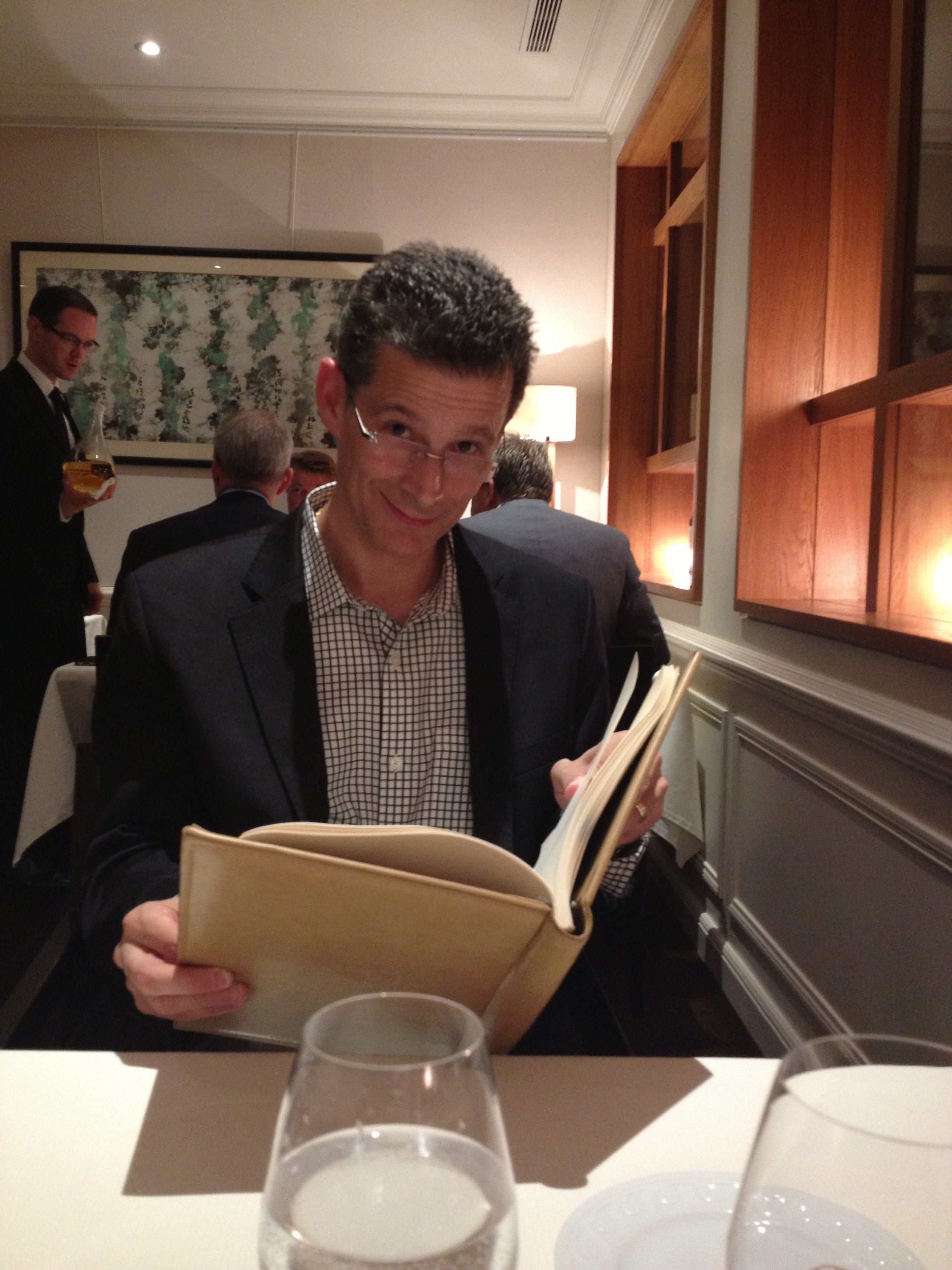
Bob reading his favorite book - the restaurant wine list!
Bob reading his favorite book – the restaurant wine list!

We each had a different glass of champagne to start the evening, and then enjoyed a bottle of red from the Barton estates – we thought it fitting, since we had been there that morning.

The 2003 Languoa Barton.
The 2003 Langoa Barton.

2003 Langoa Barton – Sweet dark red/black fruit combined with baking spices and just enough good acidity to keep it all lively.  The tannins are mostly resolved and the wine has a nice long spicy fruit filled finish.  This is drinking very well right now and over the next decade.

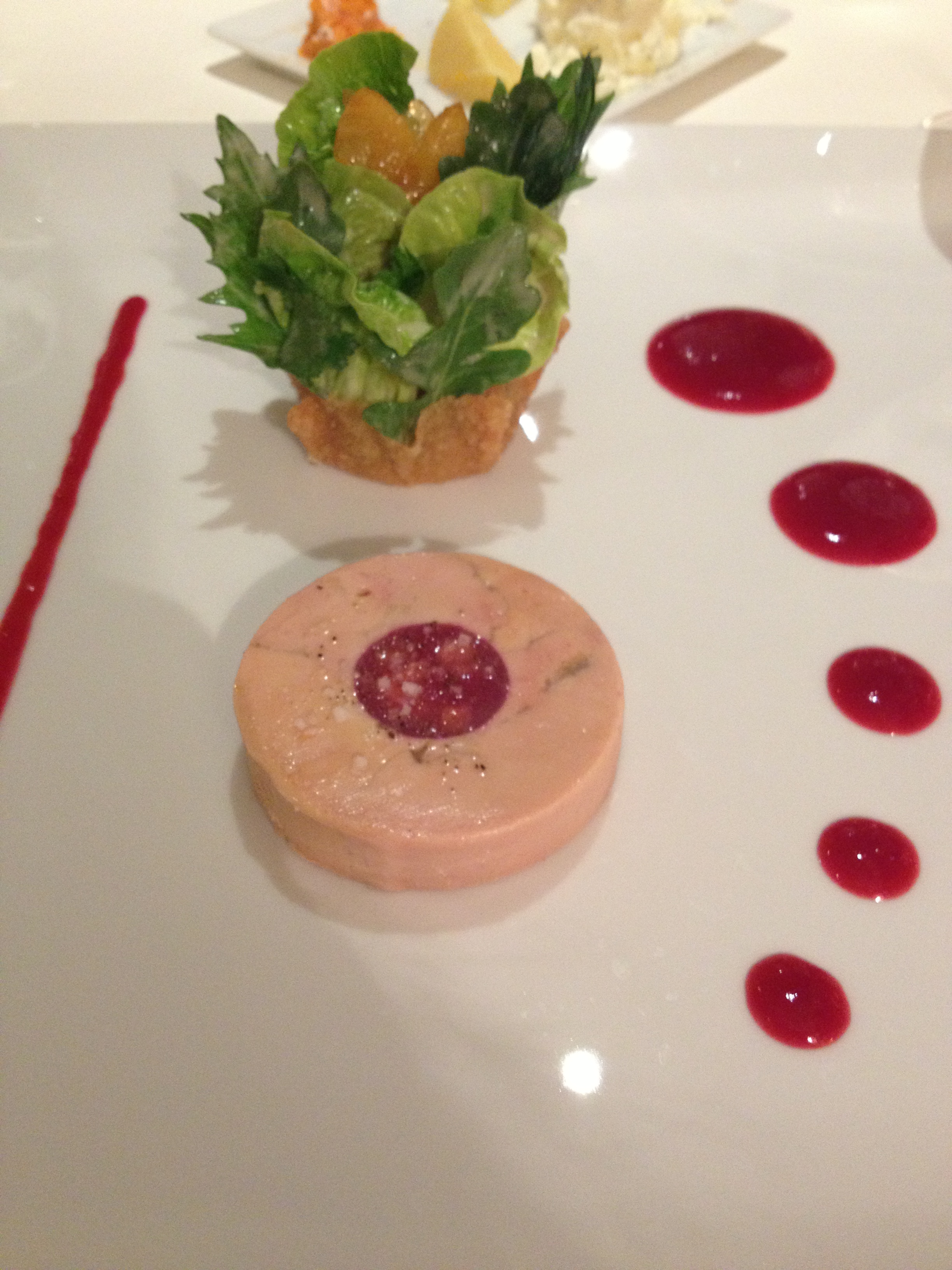
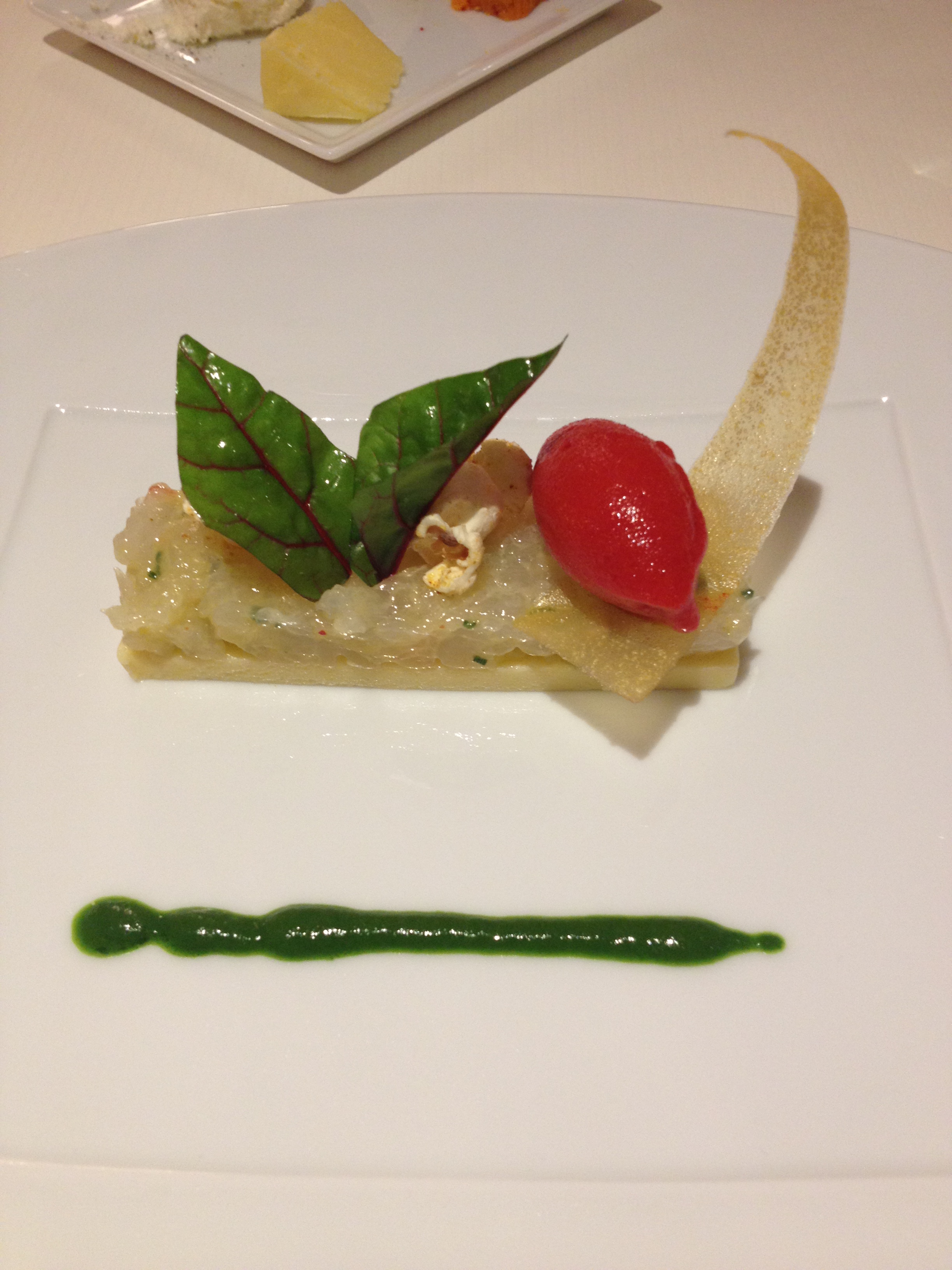
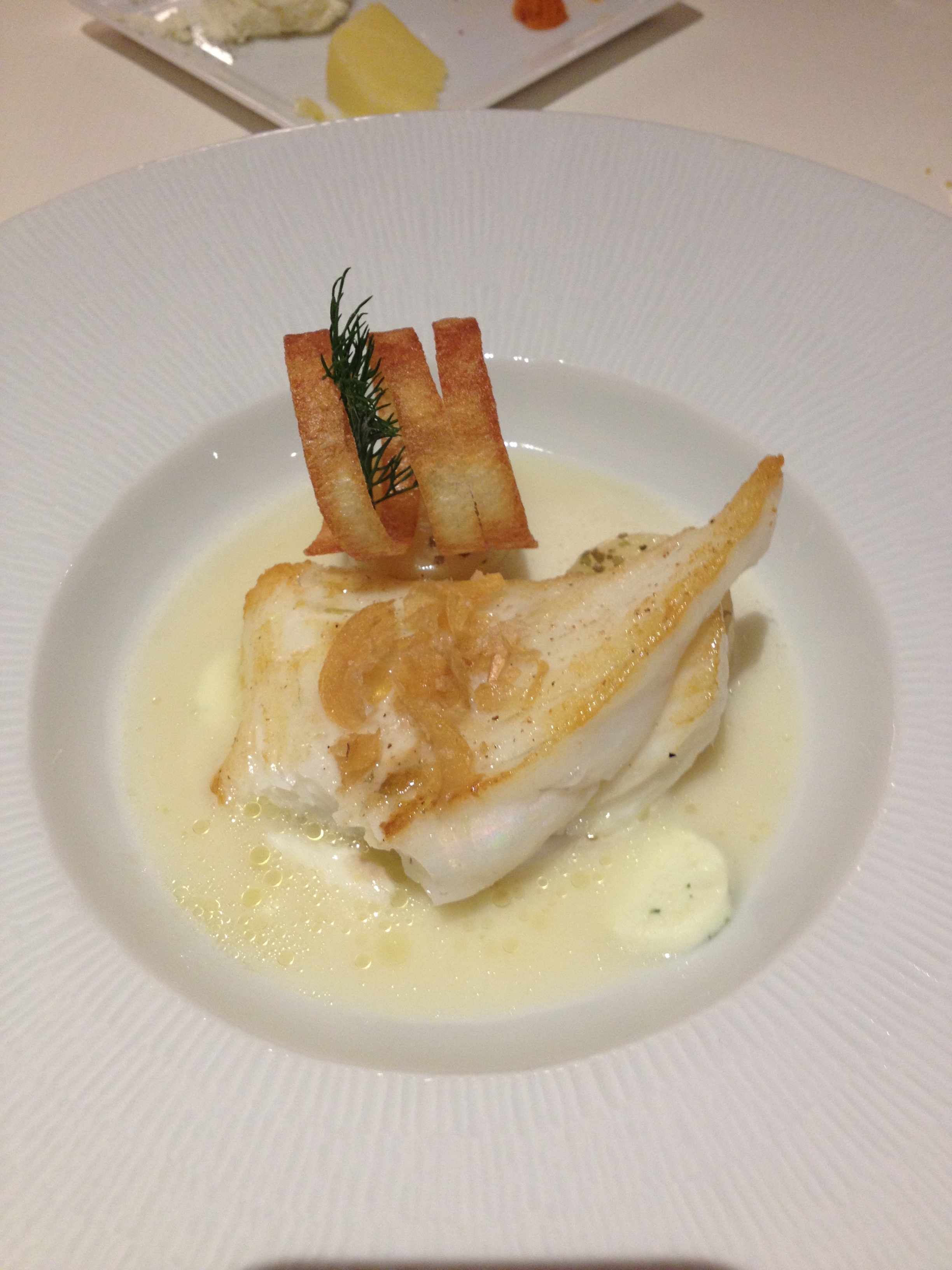
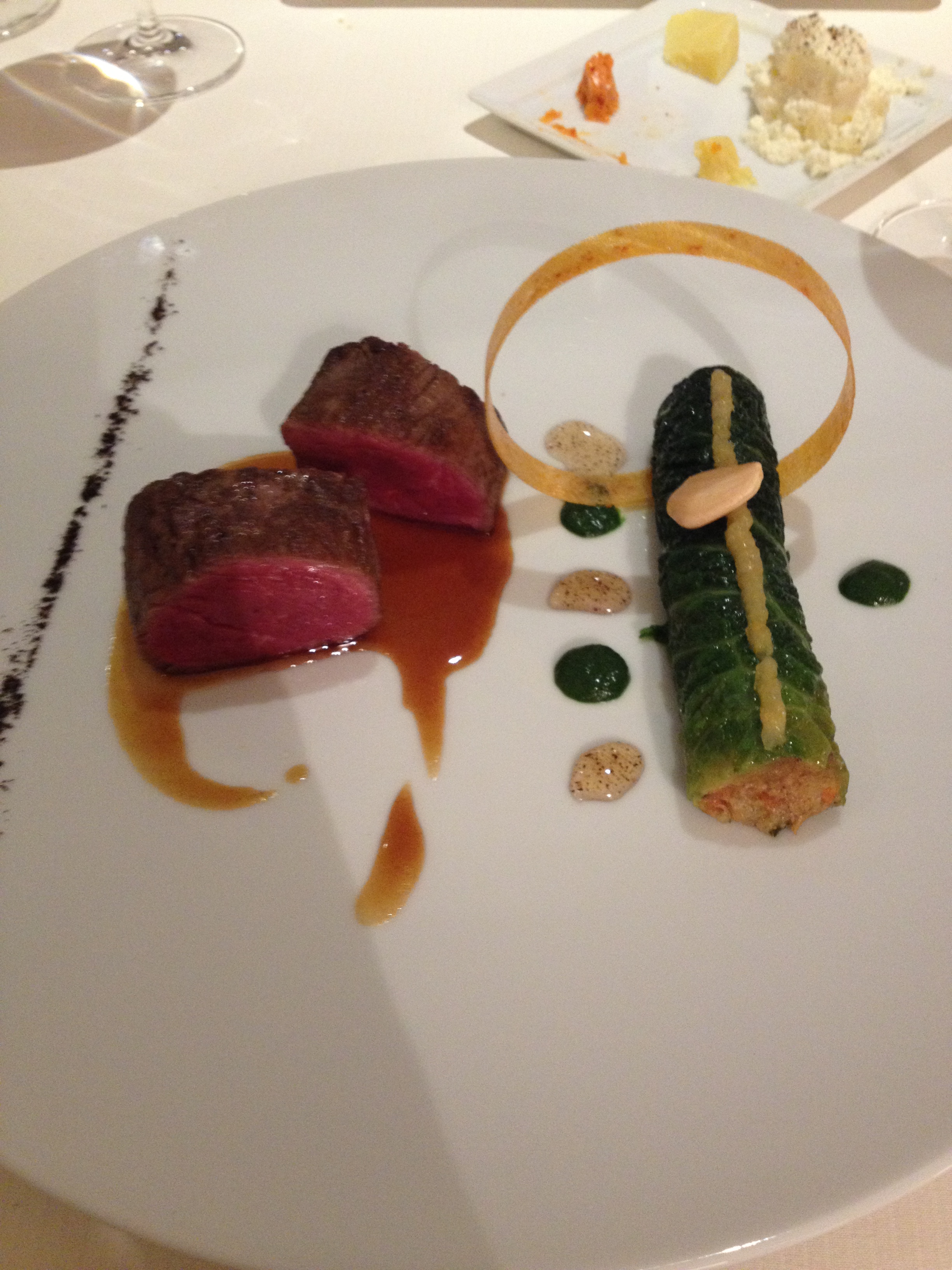
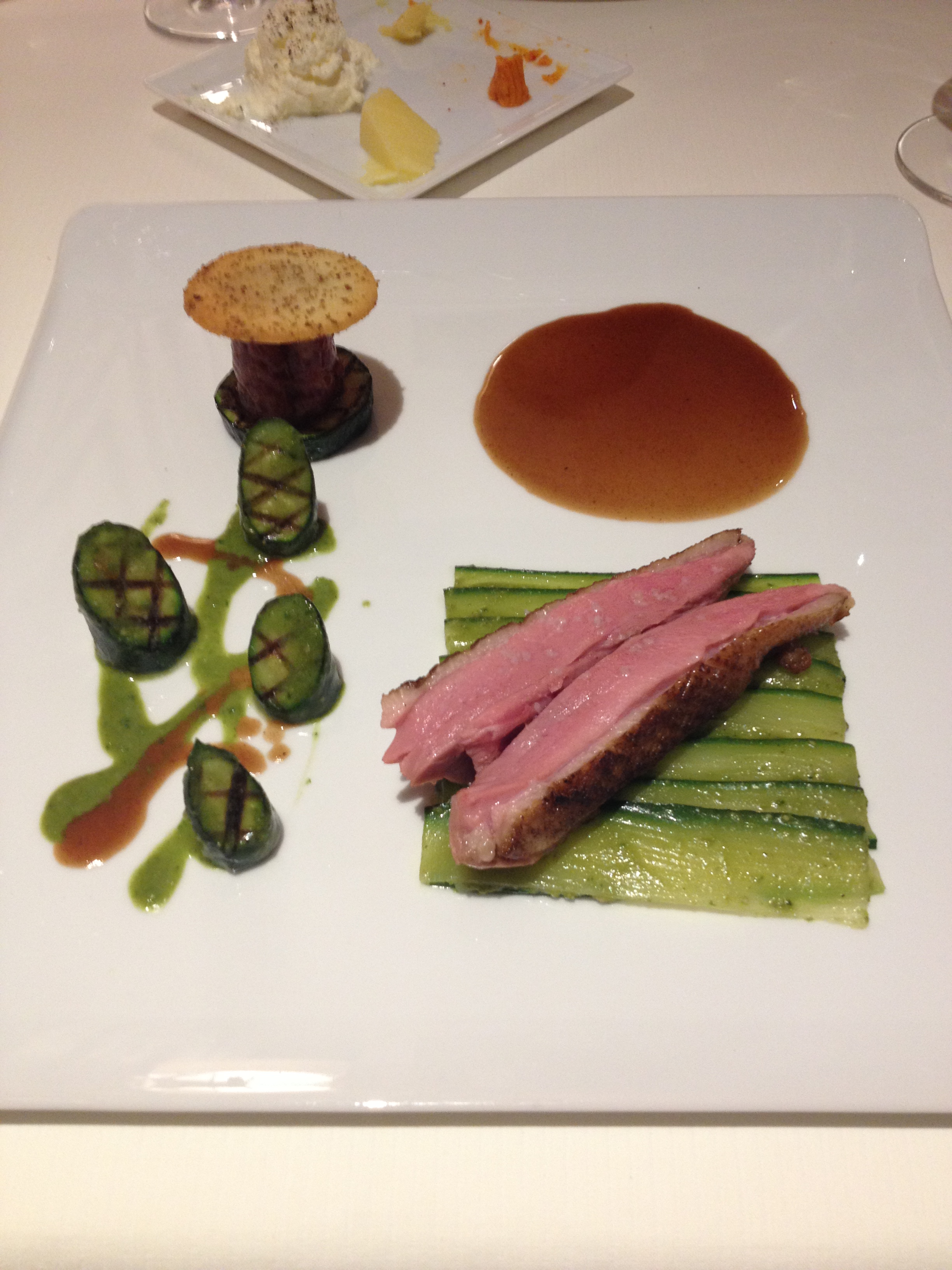
Honestly, at this point, the food all runs together.  We had a fixed-course meal, and Christina declared my dish choices the winners, though they were all truly amazing, and the service was impeccable.

Bordeaux 2013 118Bordeaux 2013 120Bordeaux 2013 121Bordeaux 2013 122Bordeaux 2013 123Bordeaux 2013 124

The food was not only beautiful – like art on a plate, it tasted just as good as it looked.  I’m not ashamed to admit that after the cheese course, we had to call it a night and head straight to bed!  Too much to do the next day…!

Day Two, The Final Destination: Chateau Mouton Rothschild

Chateau Mouton Rothschild in Pauillac, is a large estate that definitely has the tourism part of the wine business in full gear.  Mouton Rothschild was the only Chateau that we visited in Bordeaux that was very commercial on the tourism front.  We were part of a large group touring the wine facility and there were several more large groups waiting.  Our guide was very knowledgeable and personable – and kind, considering we were running a bit late due to our lunch at Lion d’Or.  We drove ourselves on this trip, and all in all, we did fairly well, though we did have a bit of trouble staying on schedule here and there!

Christina at Mouton Rothschild.

The estate is beautiful, but definitely of newer construction.  There’s a self-described focus on art and beauty, with zen-raked pathways and golden stone walls. Naturally, in deference to their labels which rotate art each year, Mouton Rothschild also has very nice museum on site that is worth seeing, though it takes a while to get through it in a group, so you want to plan accordingly.  We weren’t allowed to take pictures in the museum, so the picture of the famous Ram logo is the last we got before entering.

The Mouton "Ram" crest.
The Mouton “Ram” crest.

This clever chateau actually built windows into their wooden vats, so that they could have a better visual of the interiors.  We didn’t get the chance to inquire about why more chateau don’t do this, as it seemed like a smart – and useful – innovation.

The top of the vats at Mouton.
The wooden vats as seen from above.
The wooden vats as seen from above.  The vertical slats are windows into the interior.

While at the Chateau, we were able to taste barrel samples of 3 wines from the 2012 vintage:

2012 Chateau d’Armailhac  – Subtle nose of red fruit, in the mouth tart red fruit with a slight green streak running through it, strong acidity and a dry tannic short finish.

2012 Chateau Clerc Milon  – sweet red/black fruit and coconut on the nose, with a little bit of green bell pepper.  Richer in the mouth, with medium dark fruits, a little wood, good acidity and a medium dry finish.

2012 Chateau Mouton Rothschild  – Richer dark Red and black fruit with a little charred oak on the nose.  In the mouth, rich red fruit combined with blackberries, smooth and full bodied, good acidity and a slight green bell pepper, rich red fruit flavors coming through again on the long dry tannic finish.

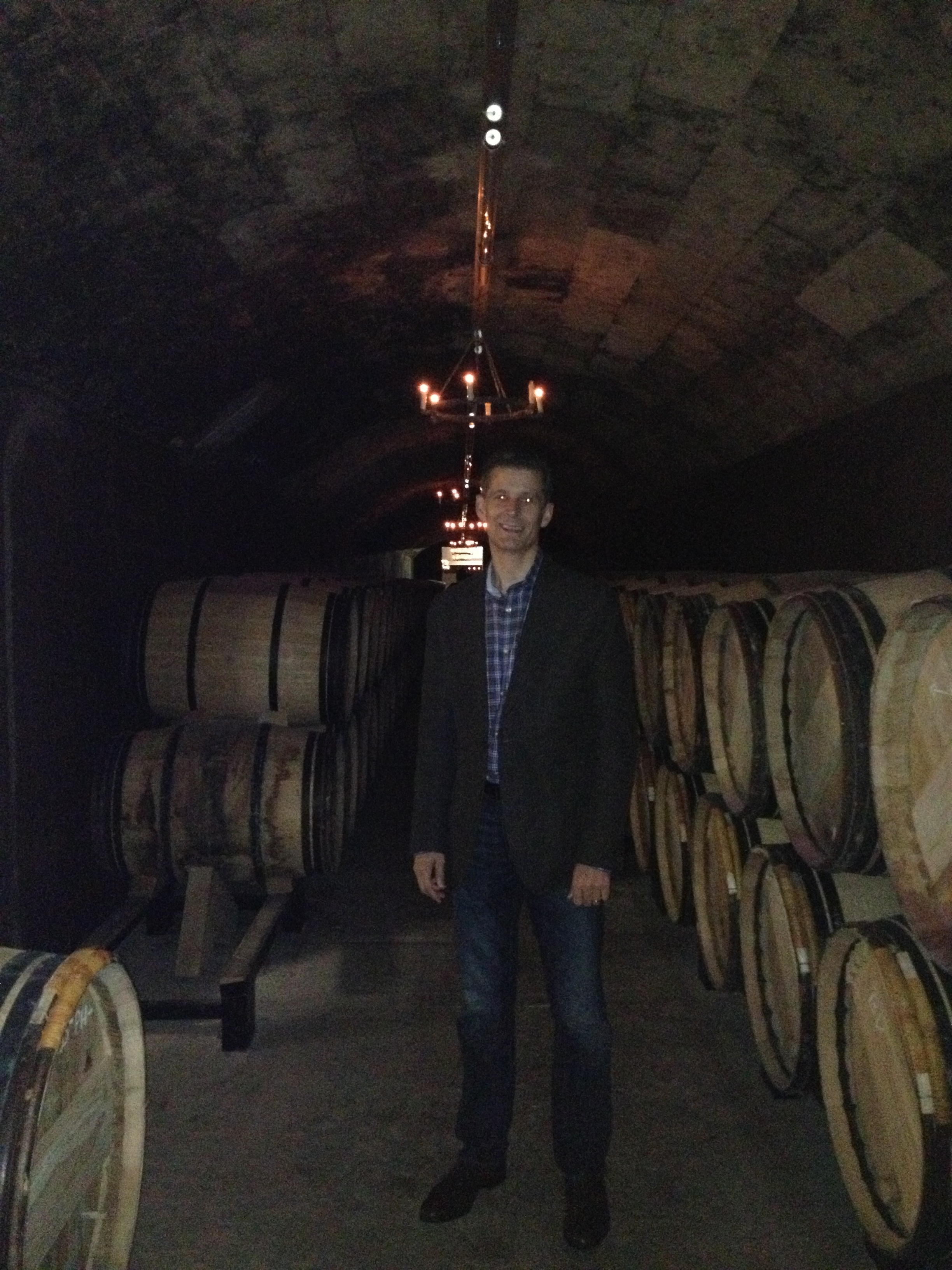
Bob in a cellar at Mouton Rothschild.