We took a short trip to Oregon last fall to visit my wife’s family, and decided to stop by a couple of wineries while we were there. When we asked around, we were told to stop by a small winery called Remy Wines in McMinnville Oregon. It’s a cute little place that’s run by Remy Drabkin, who decided in third grade that she wanted to be a winemaker because she saw how much her parents enjoyed wine and the wine lifestyle. The winery tasting room was carved out of a part of their warehouse facility, but they’ve done a nice job of making it a kitschy-cool little hangout they call the baR (or the R Bar). Remy Wines also serves great antipasto to go with their Italian-styled wines – bread, olive oil, cheeses, cured meats – even our kids were happy.
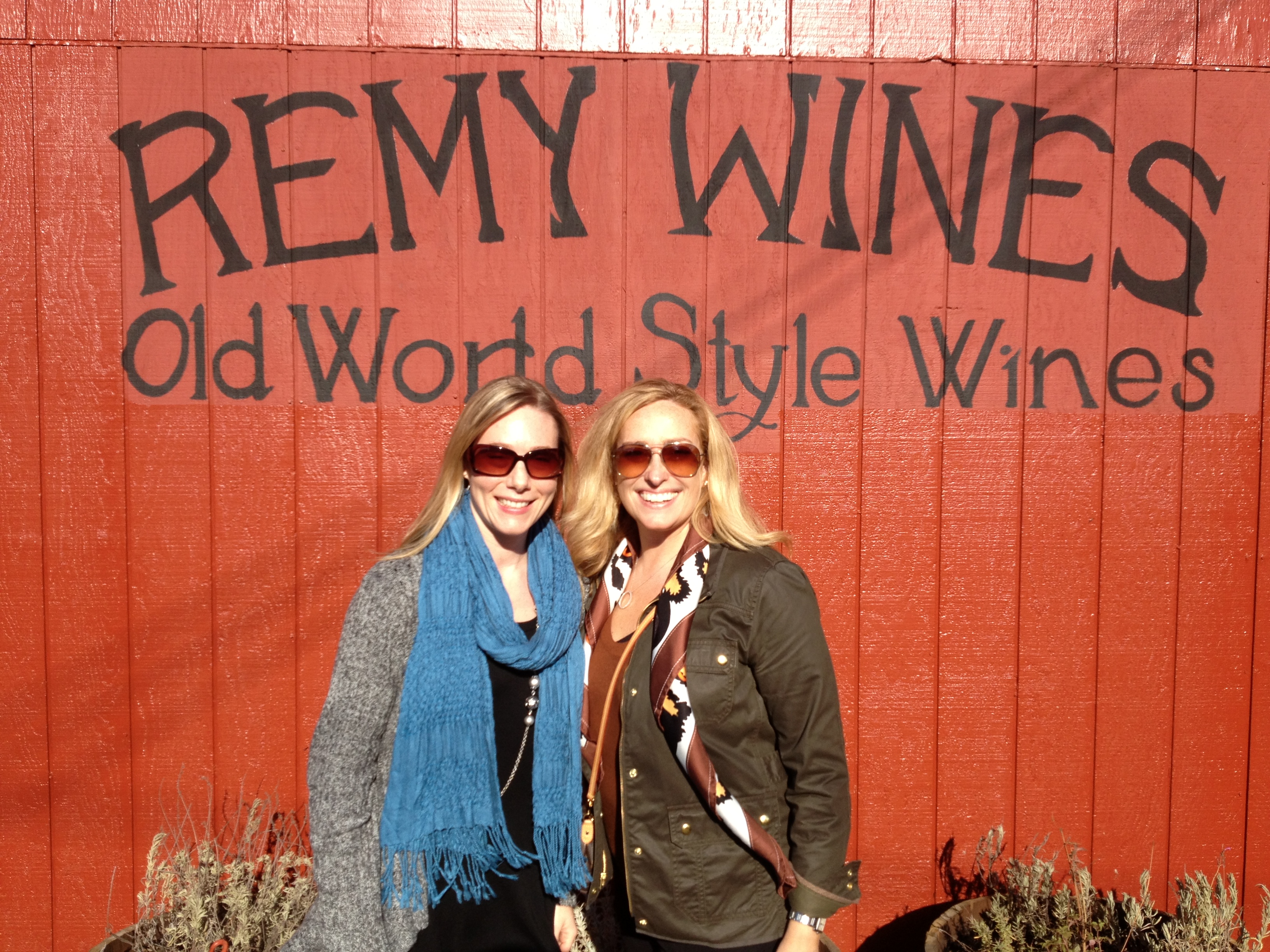
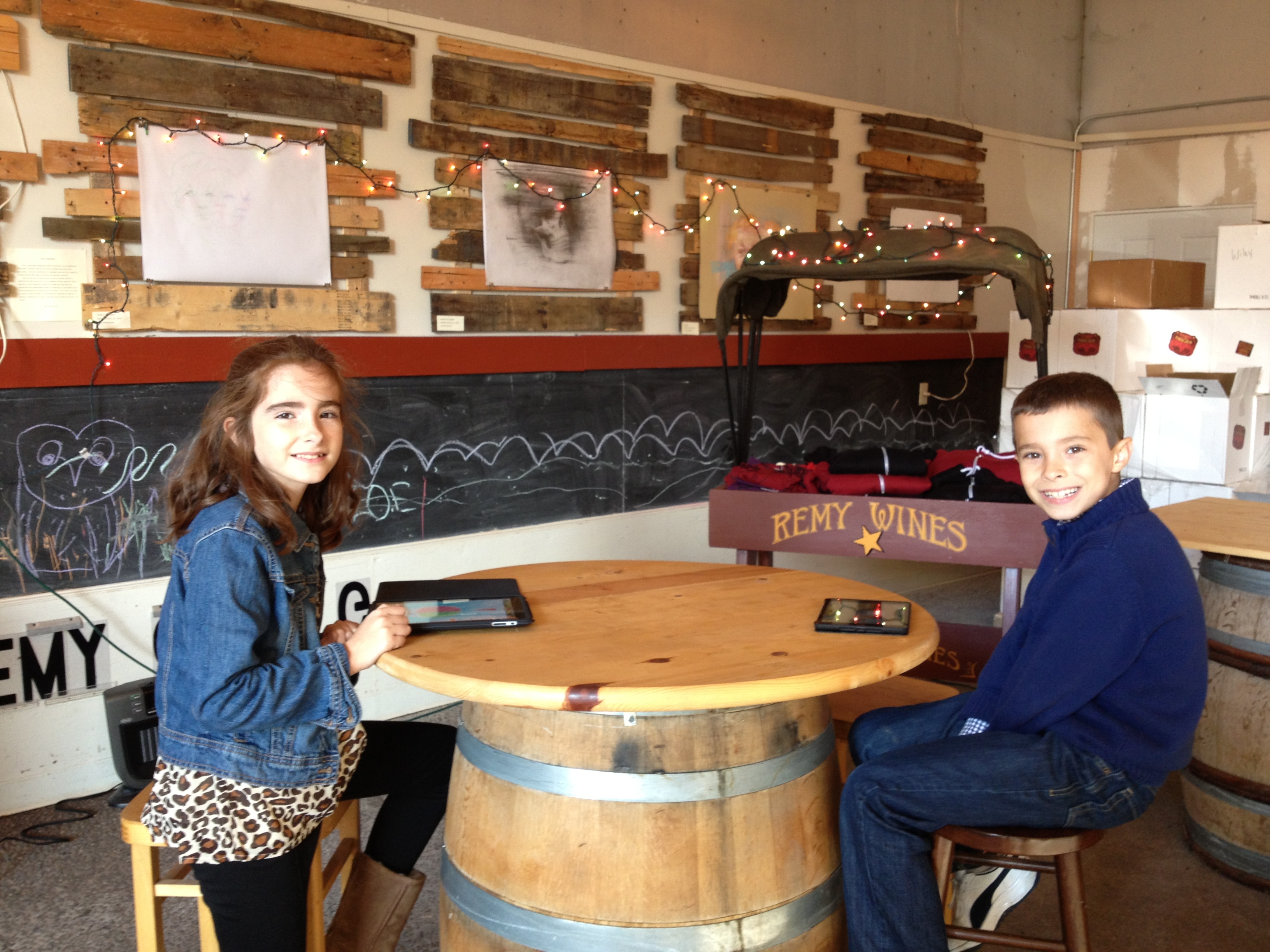
Christina and her sister-in-law, Kerry Prather, at Remy Wines on a beautiful – and windy – fall day.Maybe these third graders will also be interested in wine one day…?The kids were definitely interested in the food!
Yes – you heard me right, we were drinking Italian-styled wines in Pinot Country. I would never have expected to find a winery in Oregon that concentrated on Italian varietal wines, but it was a refreshing change. I really like the Italian varietals with their higher acidity – they’re great food wines. Here are some of the wines that we tasted while at Remy:
2012 Three Wives White, Pinot Gris – Nice semi-sweet white fruit wine for the summer afternoons, nice clean medium finish.
2010 Three Wives Red, Barbera and Sangiovese – Nice sweet red/black fruit that is a little earthy and with juicy acidity that keeps everything lively in the mouth. This is an excellent food wine that has a very nice medium-long earthy red fruit finish.
2011 Ciel du Cheval Sangiovese – Nice red cherry fruit and red licorice in the mouth with decent acidity and a medium slightly dry finish. This is a nice wine, but it doesn’t quite have the complexity that the Three Wives Red has at this point, but it is also a year younger as well.
2010 Rosebud, Barbera – Deeper, darker ripe black bing cherries with a little blackberry, red currant and dusty earth thrown into the mix. This wine has very good juicy acidity that intermingles with the rich dark fruit keeping everything alive in the mouth. Very nice long sweet dark fruit filled finish. This is a really well made wine that will give the Italians a run for their money.
2010 Lagrein – Dark, slightly dry earthy fruit, with good acidity. Medium length dry dark fruit finish. This Italian grape varietal is apparently from the NE area of Italy. I don’t think I have had this one before or at least I didn’t know it. It is an interesting grape, but I do prefer the Barbera and Sangiovese based wines.
Even though Remy Wines is an Oregon winery, most of the grapes come from Washington State on Red Mountain. Remy is making some really good (and affordable) wines and they are a definite place to seek out while you are in the Oregon wine country. I will definitely be going back next time I am down in the neighborhood. Remy Wines is a very refreshing change to the dominant Pinot that is produced in Oregon. Bravo Remy! Keep up the good work.
One of the things I always like to do when I can, is save special bottles that are given to me and open them with the givers. I had been saving a bottle of the 1998 Solaia to drink with our dear friends Heidi and Angel Diaz, who gave me the bottle for my birthday several years ago. Recently, we got to re-gift it to them. (It’s the best kind of re-gifting!) Of course, the Solaia wasn’t the only wine we tasted that night.
Bob Watt and Heidi Diaz with the re-gifted Solaia.
The main course for dinner that evening was Italian inspired and something of my own creation. It has been named by some friends of ours “Bacon on Bacon”. It is essentially a prosciutto wrapped pork tenderloin and is fairly simple to make (see recipe below!).
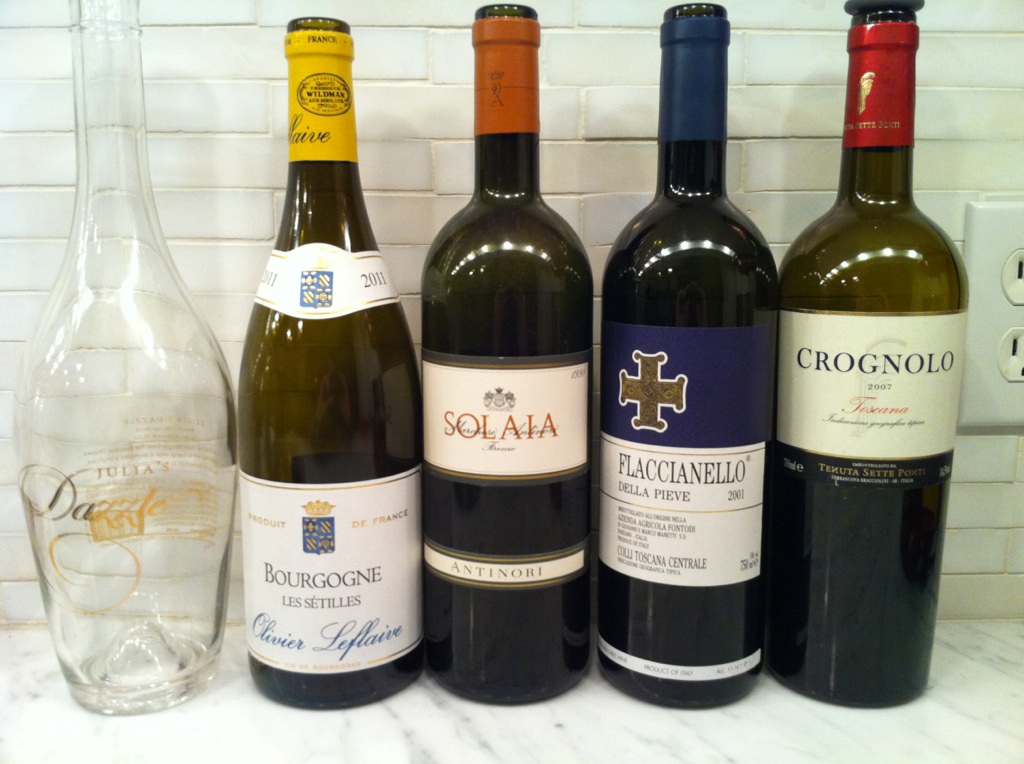
With Italy being the main theme, we started the evening off with white burgundy, then a dry rose, followed by the Solaia, a Flaccinello and a Crongnolo.
Great friends, great wines.
2011 Olivier Leflaive – Bourgogne Les Setilles, France – Very bright lemon mineral nose. Strong lemony stony fruit that is very clean with bright acids. This just makes your taste buds sing in the mouth on the nice medium length finish. I really liked the 2010 version of this wine, but I think the 2011 beats it. This wine is young, vibrant and could age if you can keep from drinking it. (90 pts.)
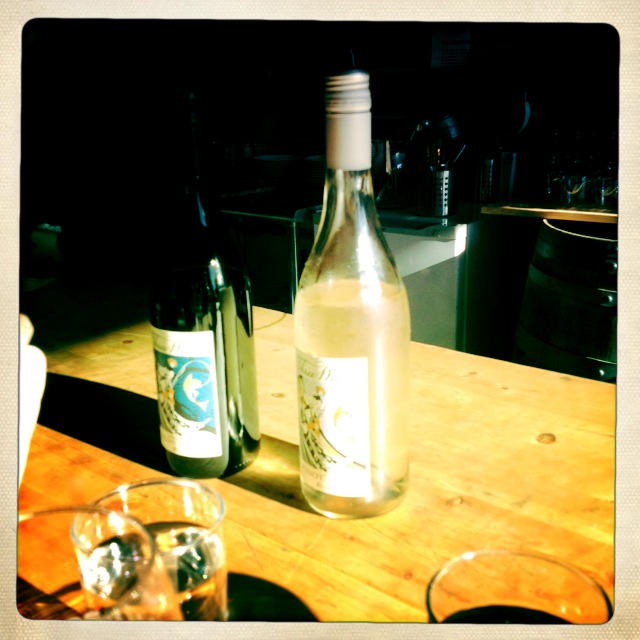
2013 Julia’s Dazzle – Pinot Grigio Rose, Horse Heaven Hills, Washington – Bright copper color, with sweet/tart fruit nose. In the mouth, the wine is slightly off-dry as the sweet melon and strawberry fruit comes through with decent acidity. The wine finishes with a sweet strawberry note on the clean, but slightly short finish. I liked last years 2012 vintage slightly better, because it had higher acidity and a longer finish, so it didn’t come across as quite as sweet as the 2013 does. I also noticed that on the 2012 bottle, it stated on the back label that the wine was made by the Long Shadows Winery in Walla Walla Washington. On the 2013 bottle, the name of Long Shadows isn’t on the bottle, but on the back label in really tiny print it says the wine is produced by Dolan & Weiss Cellars. I am not sure what happened or what the difference is. Maybe the wine was being made in partnership or it was sold or something. Anyway, it was my first rose of the year and will be a good wine for the summer. (88pts.)
1998 Marchesi Antinori – Solaia, Italy – Beautiful nose of dark black fruit and baking spices. In the mouth deep dark red and black fruit, baking spices, burnished wood and a hint of tobacco. There are still some tannins, but they are fine-grained and unobtrusive. The beautiful sweet dark fruit and spice carries through to a nice long, slightly tannic finish. This wine is still young and only at the beginning of the maturity plateau. There isn’t any rush to drink these. Well stored bottles will continue to improve for another decade. This is a wonderful wine. (95 pts.)
2001 Fontodi – Flaccianello Della Pieve, Italy – Dark red and black fruit with a little spice and a freshness on the nose. In the mouth, sweet dark red and black fruit, spices and a damp earthy aspect (but in a good way). Very good acidity makes this wine lively in the mouth. Nice sweet dark fruit and spice on the long still slightly tannic finish. This wine still has some slight tannins to shed, but it is drinking really well right now and has a good decade or more of life ahead of it. Flaccianello is a benchmark wine for what Sangiovese can achieve. This is a beautiful wine. (94 pts.)
2007 Tenuta Sette Ponti – Crognolo, Italy – Sweet dark blackberries and red pie cherries on the nose. In the mouth, the black fruit and red pie cherries combine with a slight bit of coffee and very good acidity. The wine is still young, with tannin to shed, but the sweet dark berry fruit comes through on the medium finish. Given time, I am sure there will be more secondary nuances that will come through. This is a nice Italian wine to pop and pour. (91 pts.)
It’s always fun sharing some good wines with our great longtime friends – especially when the evening ends with a rousing game of ping-pong and a little karaoke (sung by the kids, thank goodness!). Here’s my savory pork recipe now – it’s not very precise, but you’ll get the picture:
Bacon on Bacon
Finely chop a bunch of sage and rosemary. Add several heaping tablespoons of country mustard (with the seeds), and mix in the sage and rosemary. Add a fair amount (several tablespoons) of olive oil to make the mustard and herbs not so dry and pasty. Then salt and pepper the tenderloin to taste on one side and spread the mustard/herb mixture over the tenderloin. Spread capers and pine nuts over the tenderloin as well. Now cover the top of the tenderloin with two pieces of prosciutto and spray it with olive oil. You will want to spray the bottom of the dish you are working in as well, otherwise the prosciutto will stick to it. Turn the tenderloin over and repeat the process.
Heat a large oven-proof frying pan and sear the prosciutto and tenderloin on all sides (approx. 2 minutes per side). Once the searing is done, put the tenderloin in the oven and bake for 30 minutes at 400 degrees. After 30 minutes, pull the tenderloin out of the oven and remove from the pan to rest for 10 minutes. The tenderloin will continue to cook from the internal heat.
While the tenderloin is resting, add some cheap Madeira to the pan (Full and Rich if they have it, but Rainwater will do), approximately 1 cup. Use the Madeira to deglaze the pan you cooked the tenderloin in, so you are scraping all of the little brown bits off of the bottom. Add one piece of torn up prosciutto to the pan as well. Reduce down the Madeira so you end up with only 1/4 of the liquid, approximately 10 minutes. Cut up your tenderloin, put it on the plates and then spoon some of the Madeira sauce over the tenderloin and serve. I prefer to use Madeira over red wine; because it has a much higher acidity that works well with the oil/salt content of the prosciutto.
The last time we were in Italy was in 2002, a year after we were married. We drank a lot of wine on that trip, because the 1997 Brunellos had just been released that January, and I brought a few bottles home with me as well. Christina had found this clever hard-sided, metal case box for me with wheels and a handle – it was a great idea, but at the end of the day, every airline treated it differently, and so every time we landed we spent an inordinate amount of time trying to figure out which carousel the wine box wound up on. We don’t use the box that much anymore, but we still like to schlep home good finds every now and then.
One of the bottles we brought home from Sienna was called Dievole. We spent a nice afternoon tasting in their well-designed little wine shop – the wine isn’t anything over-the-top, but we enjoyed it then, and more than a decade later, we enjoyed it again.
1998 Dievole
1998 Dievole – Novecento Chianti Classico Riserva – Spicy dark red and black fruit on the nose. In the mouth, dark red berries, baking spices and some dry leaves, with a lot of wood spice (but without the wood). Nice long spicy dark fruit finish, with the tannins kicking in on the end. This wine is drinking well now, still young with some tannin, but I don’t think the fruit will out last the tannin. If you have this in the cellar, I would think about drinking them within the next 5 years, as it will start to decline after that. I don’t think it will get any better than where it is right now. (92 pts.)
Not sure if any wine will make it home with us from our next trip, but there’s always room for the possibility…
Cellar Gems are reviews of bottles that are aged in our cellar.
You may not be able to come to Italy with us next summer – but you could taste some Italian wines with us next week…
Serendipitously, next week we’ll be meeting and wine tasting with a delegation from Montepulciano, Italy, where we’ll be visiting. If you happen to be in Seattle next Thursday, March 13 (3:00-5:00 pm), and have a compelling reason to want to be at the tasting (it’s generally reserved for media and the trade), email Ana Scofield at ascofield@balzac.com, and she’ll see what she can do to make it work for the friends of Exact Wines.
But don’t worry – if you can’t make it, we’ll be sure to share our reviews from the tasting with you too!
It was my turn to host our wine group in January, and since my wife and I had been enjoying some inexpensive Spanish tempranillo recently (see the post on it here), we decided to make the wine theme Tempranillo. By making the theme just Tempranillo and not Spanish Tempranillo, I knew we would get some domestic wines as well as the Spanish variety. I have really enjoyed some of the domestic producers of Tempranillo and I wanted to see how they would compare to the Spanish.
To go with the wines, my wife concocted a Spanish chicken and chorizo dish – the chorizo gave the chicken a little kick, but not too much. We wanted the additional flavors to pair with the wines, but didn’t want it to be too hot and spicy and ruin the mouth-feel of the wines and our taste buds. It ended up being a great match.
It was kind of hilarious to watch the reactions of the group as they tasted through the wines in two flights. The first flight was the older, more traditional Spanish Tempranillo, and you could get the age and burnished notes from it, which many in the group liked, though they also seemed to struggle with truly enjoying this varietal. So when we moved to the younger, bolder, more new world versions, they were not shy in judging them more skeptically. My wife and I have actually had some of these “newer” Tempranillos before, and we both agree that they are great wines – but primarily with food, due to their often high acidity. By the time we were on our second flight, we had not only tasted the older wines first, but we had also finished dinner – I’m not sure the second flight of wines got a fair rap that night.
It certainly was an eye-opening tasting experiment, however. I don’t think any of us would have guessed just how different the Tempranillo grape could taste across the board.
Here are the wines we had, starting with a great white:
2005 Domaine Ramonet – Chassagne Montrachet – Vergers – Ripe yellow orchard fruit and what I call flinty mint on the nose. Flinty mint is a smell that I associate with Ramonet’s wines and it really comes out with about an hour of air time. In the mouth, ripe peach and melon, limestone minerality and a fresh minty lift on the long sweet fruit finish. The 2005 is drinking really well today. I have been drinking the 2005’s before the 2004’s, as the 04’s are still a little tight, but I don’t see any reason to wait any further on the 05’s. (94 pts.)
Flight 1
1981 Lopez de Heredia – Bosconia Cosecha – Brick in color, beautiful nose of sweet & spicy fruit, baking spices and burnished wood. In the mouth very smooth, lots of baking spices mingle with ripe red fruits, good acidity still keeping everything lively. Nice long smooth spiced fruit finish. This is a beautiful wine that is drinking very well, holding up and still has time. Fully mature, but in no rush. (94 pts.)
1996 Faustino – Tinto Grand Reserva, Spain – Darker fruit nose with spices and a little Band-Aid. Nice dark fruit and baking spices combine with very good acidity, to give a lively and constantly changing flavor profile. Nice long dark spicy fruit finish, with some tannins kicking in on the finish. This is a big deep wine that still has some tannins but also a great sense of balance. Still young, this wine should be really good after another 5 years in the cellar. (95 pts.)
1996 Hacienda Monasterio, Spain – Dark earthy fruit nose. In the mouth, smooth dark black/red currant fruit and some spice. It is earthy and rustic in character, with tannins kicking in on the medium long fruit finish. (92 pts.)
2001 Marques de Riscal Grand Reserva, Spain – Very nice black fruit and spices on the nose. In the mouth, the black fruit combined with some baking spices has some lively acidity that makes this wine very savory. Nice long, dark fruit and spicy finish, with the tannins kicking at the end. This is a very nice wine that is still very young, but will be beautiful when it reaches maturity. It can be enjoyed now with a lot of air time, but try after 2020. (93 pts.)
Flight 2
2008 Gramercy Cellars – Inigo Montoya Tempranillo, Walla Walla Washington – Dark black/red fruit and spice on the nose. In the mouth, black and red fruit flavors mingle with baking spices and a little earth. Very good acidity makes this a very lively wine in the mouth and gives it a savory aspect to the fruit. This wine has a beautifully long, dark, spicy-fruit finish. There are tannins present, but they are subtle because of the wealth of spicy fruit. I personally think that Gramercy’s 2008 Tempranillo is one of the best Tempranillo made in the US. I have loved this wine since release and I so look forward to seeing what it has to offer after 2020. Greg and Pam Harrington have made some really incredible wines at Gramercy Cellars. This is a wine to search for. (95+ pts.)
2003 Altocedro – Desnudos, Argentina – Sweeter dark fruit on the nose. Very sweet dark red/black fruit in the mouth with very high acidity. Noticeable high-octane fruit and alcohol, 15.9% compared to 13.9% for the Gramercy. This wine seems like a just a combination of smooth sugar and acidic pin pricks in the mouth. Lots of dark fruit, sugar and alcohol on the medium-long finish, with some tannin kicking in on the end. (89 pts.)
2007 Cayuse – Impulsivo, Walla Walla Washington – Very dark fruit with some spice on the nose. In the mouth, rich lush very dark red and black fruit, some baking spices and good acidity, smooth in the mouth. Rich decadent dark fruit and spice on the long finish, with a little tannin at the end. A very nice wine, that is drinking well, but also very modern in style. (93 pts.)
We finished it all off with a nice dessert wine:
2005 Domaine des Baumard Quarts de Chaume, Loire France – Beautiful floral white peach, pear and spice on the nose. In the mouth, ripe white peaches, pear, some melon and baking spices, but with a stony aspect to the fruit. This wine has excellent acidity and a very long stony white peach/pear and spiced fruit finish. This is really an excellent wine that is drinking great and is a little bit more open than the 2004 version. (95 pts.)
It was a wonderful evening, with some very interesting wines and lively conversations. It’s a great group of guys who are always willing to pull something unusual out from the dark recesses of the cellar.
We’ve been in the mode of Bordeaux for a long while, but all of that is about to change! This summer, we are taking the family to spend a month in Italy (with a few days in Paris). This trip was on Christina’s “bucket list,” as she wanted to immerse the kids in the laid-back culinary culture of Italy at an impressionable age. They love food and adventure, and they’ll be nearly 10 when we go, so not only will they be able to enjoy cooking classes with us, they’ll also be well-behaved as we visit a winery or two…!
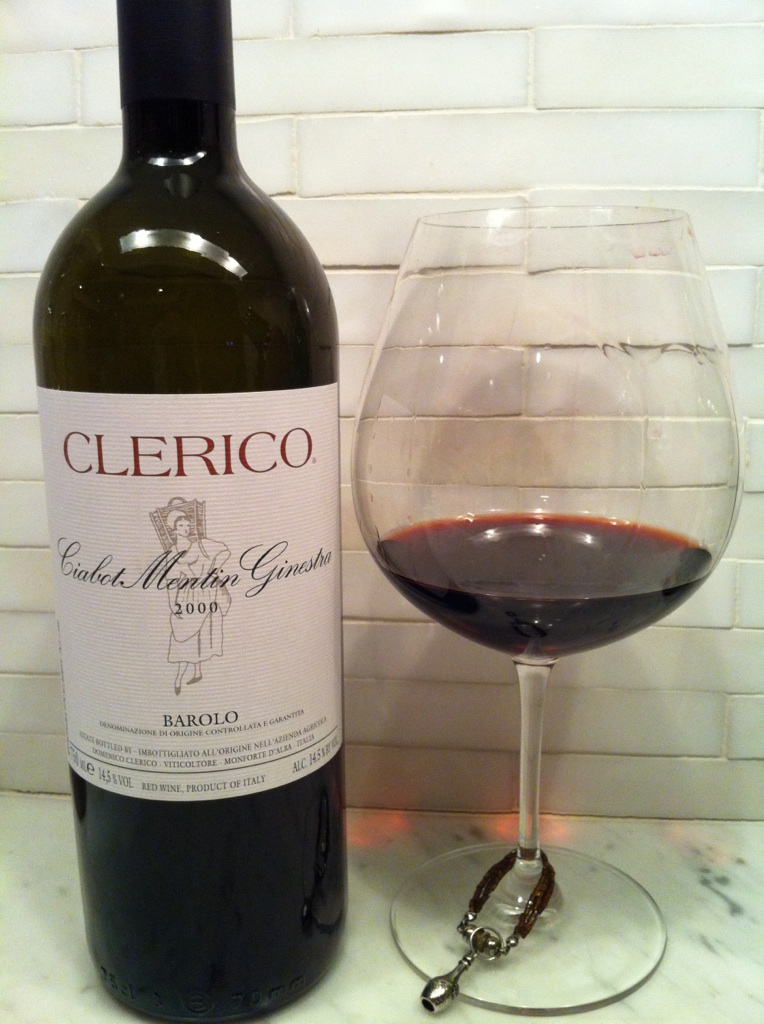
To get in the spirit of things, I pulled out an Italian Barolo to drink on Valentine’s Day. I know this is not from the region of Tuscany where we will be traveling, but it was calling to me. I hadn’t had this wine in quite a while, and I was pleased to see how well it was drinking:
Great Italian Barolo.
2000 Domenico Clerico – Ciabot Mentin Ginestra – Deep dark brooding red/black fruit nose with a little bit of rose and cinnamon adding character. In the mouth, the deep dark red fruit flavors and spices, combine with a little tar and balsamic on the long, tannic, dark-fruit finish. This is a very nice Barolo, that is still young and in need of another 3-5 years in the cellar, but it can be enjoyed now with some air time. I feel that this wine has a lot more to show, if it is only given the time to bloom. I am very happy to have more of this in the cellar. (93 pts.)
As for the trip, we’d love your food and wine recommendations. We don’t leave for a couple more months, so we have just enough time time to make some reservations. We’ll be asking for your opinions – starting with wineries in Tuscany. We’ll be in Sovicille (near Sienna) and Cortona (near Montepulciano) for about two weeks. We have a short list going, and we only have a few days we can actually devote to it with the kids, but we want to hear any favorites you have. What are the top places you’d go? We want to know!
Just when you thought we were done posting about Bordeaux for a while, I thought I’d throw in a review from a couple months back when my wine group did a double-blind tasting of Bordeaux wines from 1990 and prior. My wine group of eight guys has been meeting monthly for about nine years now. The host picks the wine theme and most of our tastings are double-blind. This time, our wonderful host, Bill Schallert, invited the wives to join the group, so my wife, Christina, was happy to come and taste some swill. Since we had just returned a month prior from our two week trip to Bordeaux, we absolutely loved the idea of being able to taste some more mature Bordeaux wines, as most of the wines you get to taste at the Chateaux are on the younger side.
I have always really liked tasting blind, or better yet, double-blind. For those that don’t know the difference between blind and double-blind: a blind tasting is when you know the wines that are being served, but you do not know the order. A double-blind tasting is when you don’t know what wines are being served, but they may meet a category (Bordeaux 1990 and prior), and you also don’t know the order. I like blind tastings because I consider myself a perpetual student of wine, and I don’t want my opinion to be potentially swayed by any labels.
See? You can tell we tasted them blind by the brown wrapping still hanging on to the bottle of Palmer. A good night!
Here are the wines and the order that we tasted them in:
Pre-Flight
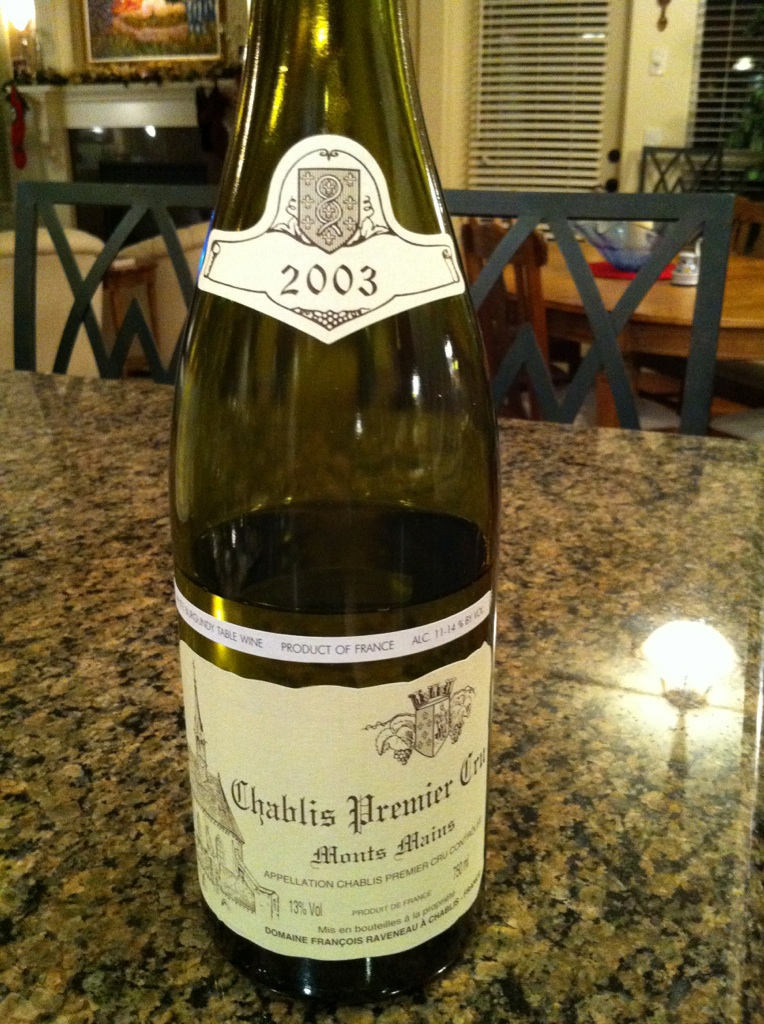
2003 Chateau Raveneau – Monts Mains, Chablis – Nice melon fruit a little sea breeze and oyster shell minerality on the nose. In the mouth, ripe melon, white peach and a little spice, with limestone and oyster shells. Good acidity for a 2003 Chablis, that keeps everything lively on the medium-long spicy white fruit and ocean air finish. Raveneau makes some absolutely wonderful Chablis, even in a hot year like 2003. This was a great way to start. (93 pts.)
This is such an excellent producer of Chablis.
Flight #1
1989 Chateau Pichon Lalande, St. Julien – Classic stinky feet Bordeaux nose with a little bit of Band-Aid jumps from the glass, sweet dark berry fruit, dry leaves, forest floor and baking spices. Medium-full bodied, with good acidity, resolved tannins and a nice long dark fruit finish. This is a classic mature Bordeaux, that is drinking very well right now. The ’89 Pichon Lalande is on a faster track and drinking more mature than most of the other 89’s that I have had. I would venture to say that it will not last nearly as long either. While a lot of the 89’s will continue to improve through 2020, I will probably finish off my ’89 Pichon Lalande before 2020. I don’t see it getting any better than where it is at present. (94 pts.)
1990 Chateau Prieure Lichine, Margaux – Darker berry nose with a little Band-Aid again. In the mouth, darker small berry fruit, black currants, slight bit of spice, decent acidity and surprisingly assertive tannins. Medium-full bodied and a long dark tannic fruit finish, that doesn’t have the sweetness of fruit the first wine had. This is a big and dark wine, but it doesn’t give you the pleasure in the finish. (89 pts.)
1981 Chateau Gruaud Larose, St. Julien – Dark earthy red/black berry fruit nose, with just a hint of green bell pepper, but not in a bad way. In the mouth, deep dark red bing cherry and earthy blackberry fruit, baking spices, slight bit of forest floor and still fairly tannic. Full bodied and a long sweet dark tannic fruit finish. This is a big wine that is surprisingly youthful and still drinking young. I could not believe that it was from the ’81 vintage when it was revealed, it tasted more like a ’96. (93 pts.)
Flight #2
1982 Chateau Palmer, Margaux -Very nice spicy dark fruit and dark chocolate nose. Very smooth in the mouth, small ripe dark bing cherries and blackberries, lots of baking spices, slight bit of forest floor and resolved sweet tannins. Full bodied, sweet/spicy dark red/black fruit just singing on the very long fruit filled finish. This wine is drinking very well today and even beat the ’83 Palmer that I had about a year ago. I don’t see this wine getting any better than it is today, so no reason to wait, but no hurry either if well stored. (96 pts.)
1989 Chateau Angelus, St. Emilion – Very dark cherry fruit and chocolate nose. In the mouth, ripe black bing cherries and very dark bittersweet chocolate, good acidity and with just the slightest hint of baking spices. Full bodied and a nice long very dark chocolate fruit filled very tannic finish. This wine was very tannic and seemed a little closed in on its self, it just was not singing. You could see the huge potential, but it was begging for another decade in the cellar to really show its stuff. I know the person who brought the wine bought it on release and it has been well-stored since, so maybe it just needed a lot more air and/or more years in the cellar. (95 pts.) now with upside.
After tasting the 1989 Angelus, I mentioned to my wife “This wine tastes like a wine we just had in Bordeaux,” it just seemed so distinct. The others at the table heard me mention this to Christina, so they asked me what I thought the wine was. I said I didn’t know the vintage, but the characteristics of the wine reminded me of the ’05 and ’06 Chateau Angelus we had a month ago. I was shocked to see it was an ’89 Angelus, but glad to see that my flavor memory recall was working. I guess I learned something on that trip (and practice makes perfect, right??). The ’05 and ’06 Angelus wines were some of the highlights of our wonderful trip.
1989 Chateau Lynch Bages, Pauillac – Dark cherry and bitter chocolate nose. Smooth in the mouth, with dark black cherries, bitter sweet chocolate and some spice. Good acidity and still very tannic on the long dark fruit finish. This wine must have been resting in a very cold, dark cellar and is in need of another 5+ years to show what it has to offer. A very nice wine, but will not give up what it has right now. (93 pts.) with upside.
1983 Chateau Magdelaine, St. Emilion – Dark cherry fruit and spice with some dark chocolate on the nose. Very smooth in the mouth, beautiful ripe dark bing cherries, lots of baking spices and a little forest floor adds to the wonderful complexity. Fully resolved tannins, medium-full bodied and an absolutely beautiful long sweet dark spicy fruit finish. This is my first time having wine from this producer and they knocked it out of the park with the ’83. This is a gorgeous wine today, so if you own it, open a bottle. You won’t be disappointed. (96 pts.)
2005 Chateau Rieussec, Sauternes – Sweet pineapple, some melon and honey on the nose. Very sweet pineapple in the mouth, with some spiced honey and decent acidity. The very sweet finish is long but the honey aspect is just a little too cloyingly sweet for my taste. It is a nice, well-made wine, but I would prefer a little more acidity to counter the sweetness. (92 pts.)
All in all, it was a very nice evening with a great group of guys (and girls). Wouldn’t mind repeating it again soon…!
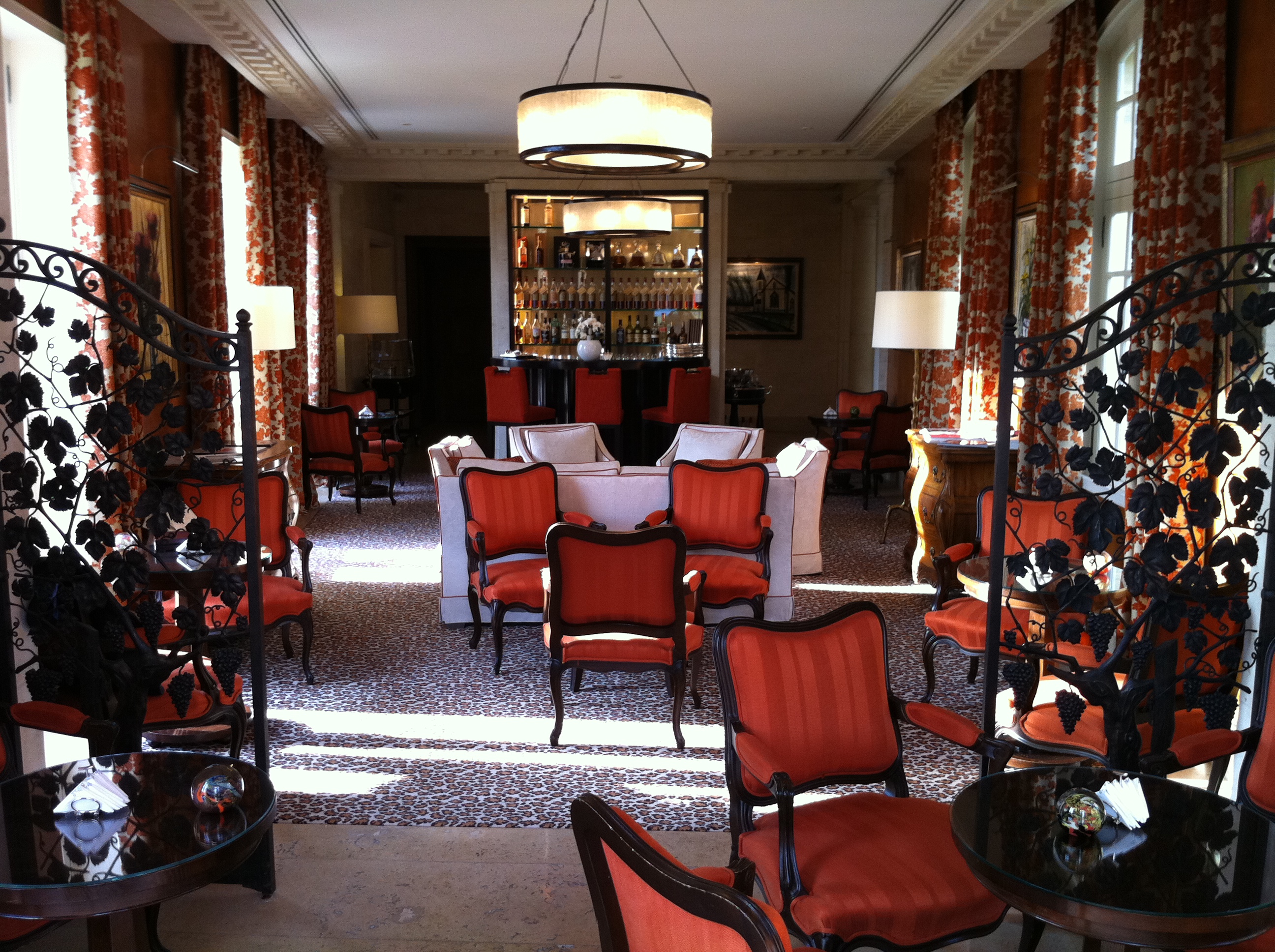
After our hours-long cooking class, we were wishing we could’ve stayed in St. Emilion for the night, but it would’ve put us even farther from the airport bright and early the next morning. So instead, we spent the rest of the afternoon shopping in town until a driving rain forced us into the hotel lounge two hours before dinner, where we happily played backgammon, drank cocktails and soaked up the beautiful atmosphere of the hotel (we have a running score tally on backgammon that goes back years!).
Making a serious move.Christina in the beautiful lounge.I took several pictures of this room…Christina said her designer friends would appreciate it.View looking back towards the bar.The view looking out onto the terrace.
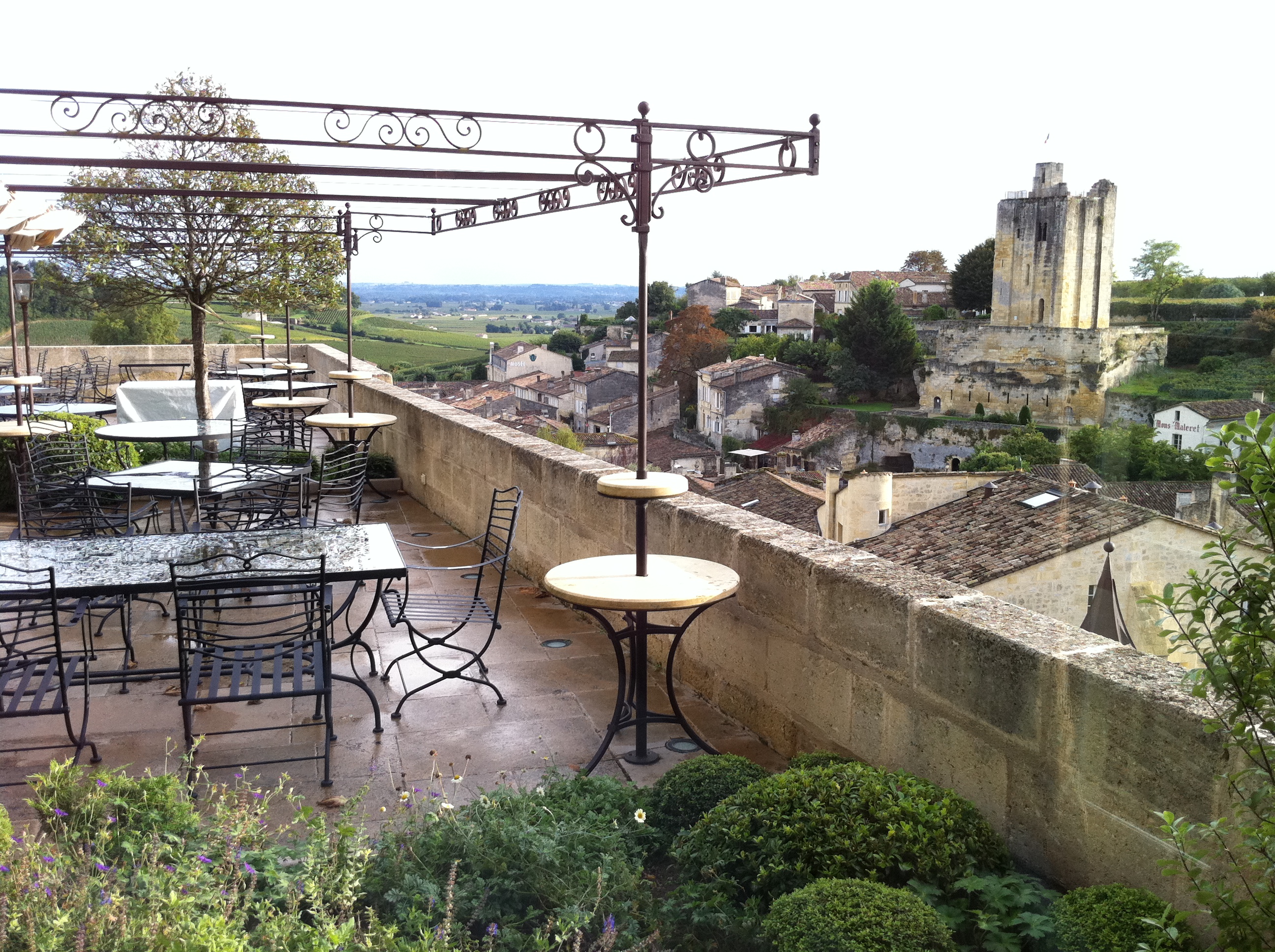
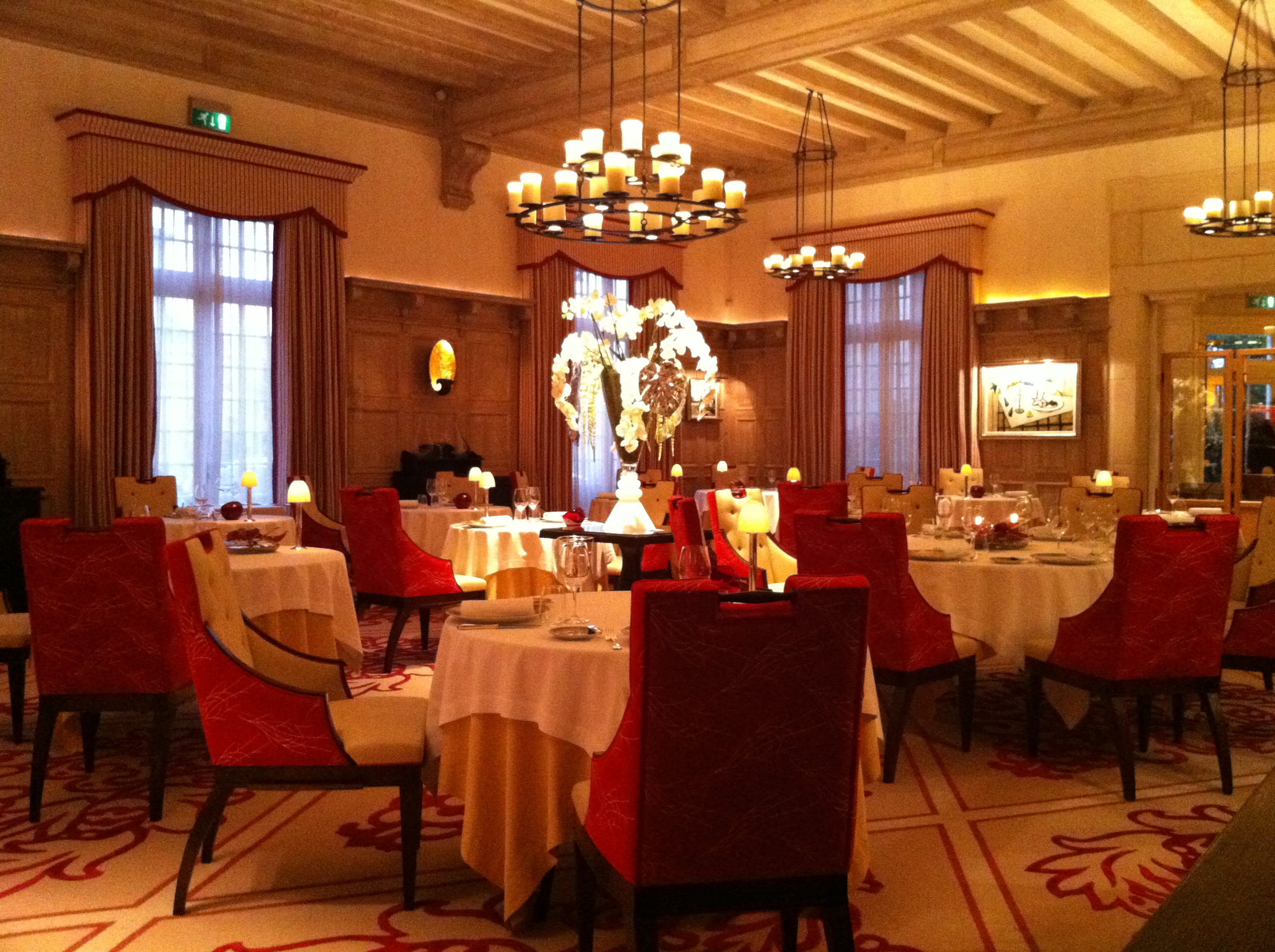
At one point, we thought we might have dinner on the spectacular terrace of the hotel in the evening, but the on-again, off-again rain that day pretty much nixed that option. The main dining room of the hotel was quite a sumptuous and posh affair. From our vantage point, we admit, we also had a great people-watching view.
We booked the reservation thinking we’d be eating out here on the terrace.It would’ve been great to look out over this view.
But the best views were probably of the waitstaff. Clearly, this establishment takes its service seriously – you could tell by the level of attentiveness and attention to detail. We went easy on the wine that night – all the activities of the day and the long drive back to our hotel made that an easy decision, though somewhat bittersweet, as it was our last night of the trip.
The formal dining room.
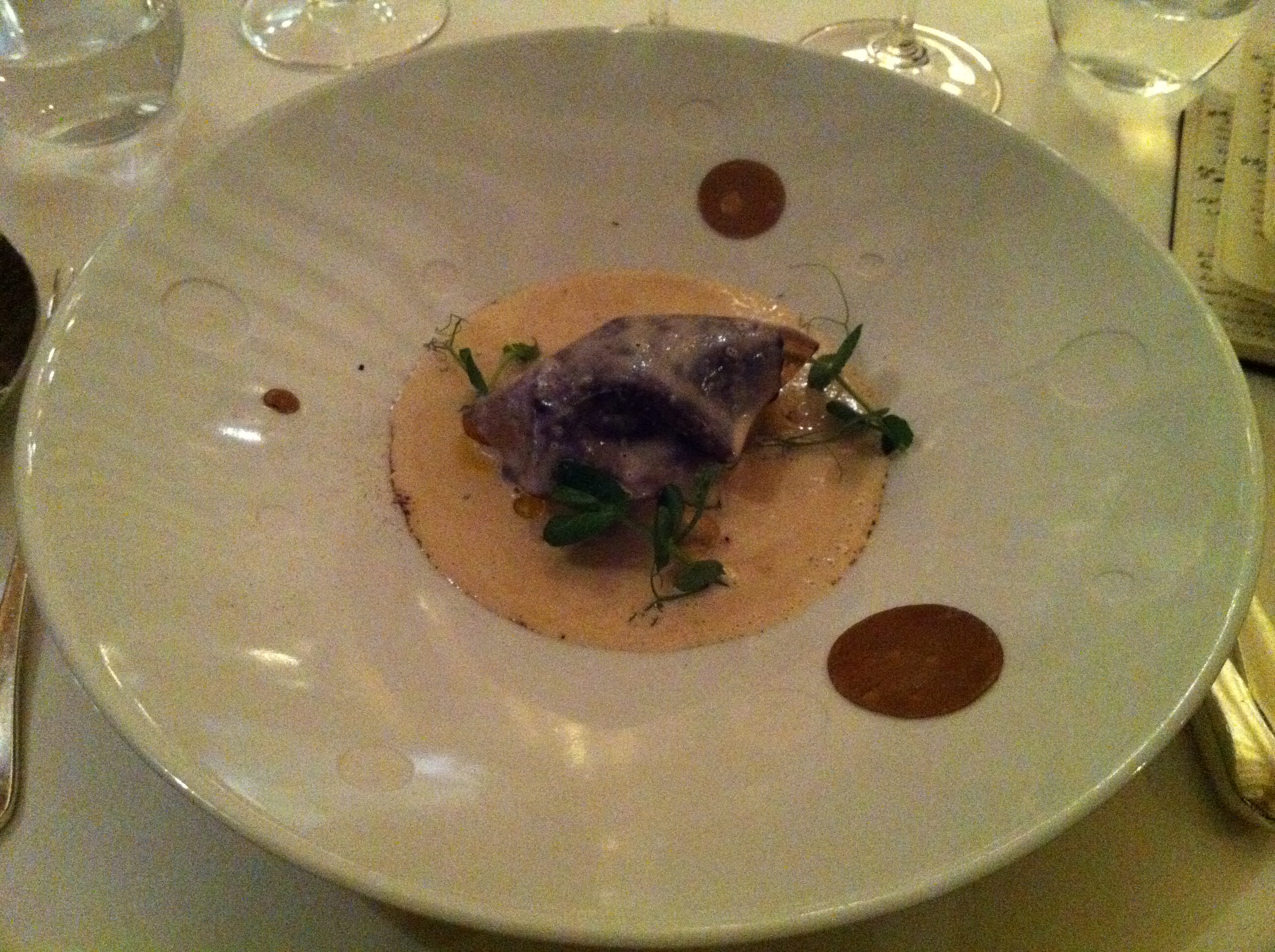
The food was meticulously prepared and delicious, though we do have to say, it was as expected, but nothing we had that evening seemed to elevate our dining experience in any transcendent way. We had three different wines from their pairing menu with dinner:
2012 Chateau Turcaud Bordeaux Blanc – Very bright lemony white fruit that is very clean and fresh. This is a nice dry wine with a long stony white fruit finish and brisk acidity keeping everything lively in the mouth.
2007 Chateau Milens, St. Emilion – Dark blackberries, dark chocolate and subtle minerality. Good acidity but slightly drying tannins in the mouth. Medium bodied and a medium length black fruit finish. This is a good inexpensive red Bordeaux wine with a lively finish, but it just lacks the polish of the better classified Chateaux.
2009 Chateau Lyonnat, St. Emilion – Black in color with a red rim. Deep rich dark blackberries and black currants, with a little minerality coming through. Medium bodied and good acidity, with noticeable but very fine tannins. Silky smooth in the mouth, with a medium-long black fruit finish and a snap of acid and tannins at the end. This is a very nice wine that is lively in the mouth and still just a baby. I would imagine that you could find it for a bargain of a price, especially compared to the other 2009 classified Bordeaux wines.
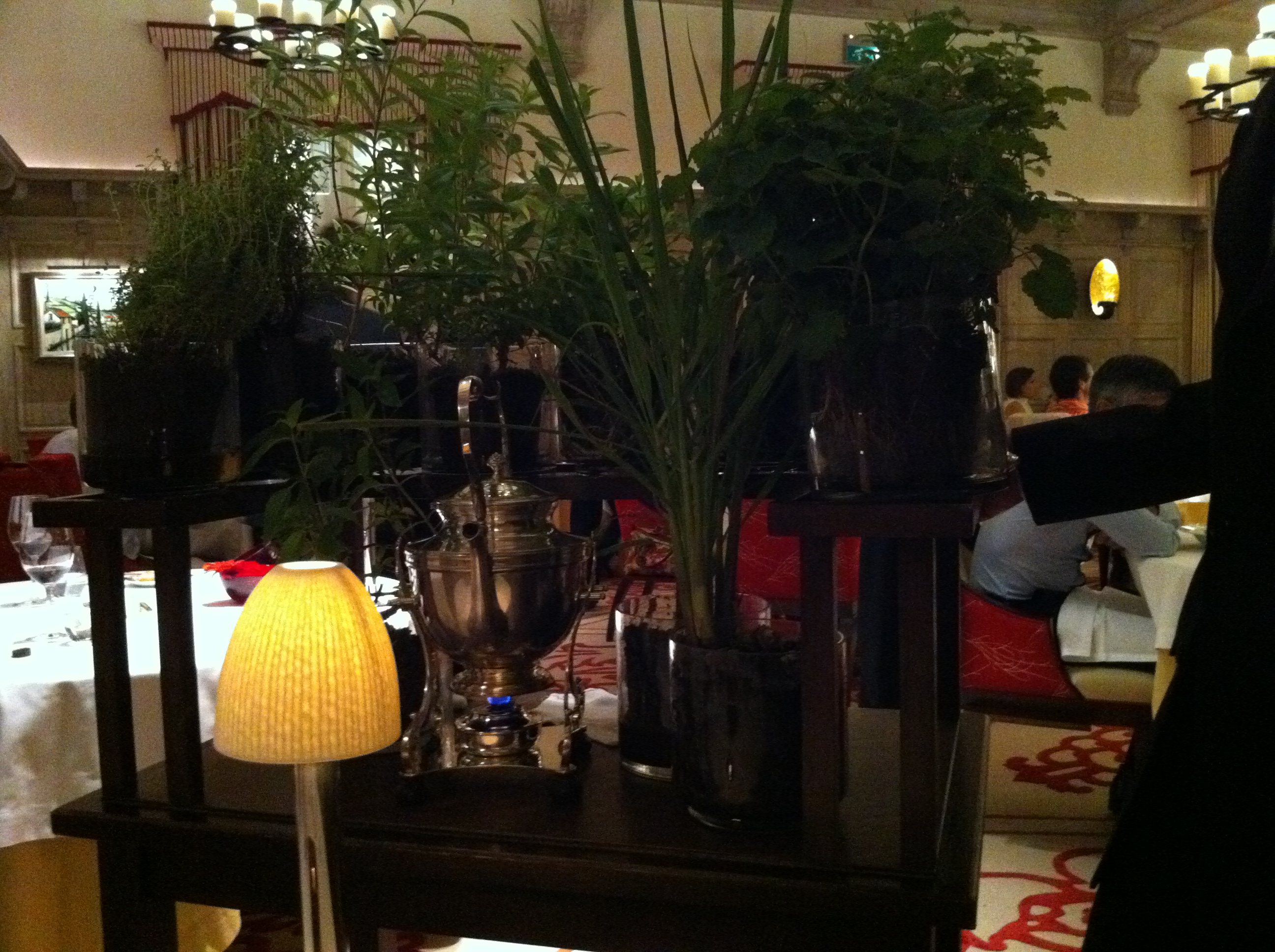
Turns out there were two table-side experiences offered here in a way we hadn’t seen presented before. In addition to the ubiquitous cheese trolley, this restaurant also had the most fanciful dessert trolley with enormous lollipops and glass cylinders full of candies in every color of the rainbow – our kids would have swooned over it. My wife wound up falling in love with the tea trolley, however. I can honestly say that I have never seen a tea trolley to this extent before – you could have used the trolley as a duck blind. They offered a variety of fresh herbs, which they picked from pots on the trolley and brewed at the table. Her lemongrass tea was pretty fantastic, I admit.
The kids would’ve loved this candy cart.Christina loved this tea trolley.
All good things must come to an end, I suppose. So, for now, this is the end of our Bordeaux travel tales. But of course, we have another adventure close at hand – we look forward to telling you more about it very soon! In the meantime, there’s plenty of wine to drink and fun experiences to share here at home…
A beautiful place to spend our last evening in Bordeaux.
We admit, when we pulled up to Chateau Soutard, we were pretty impressed with the size of the Chateau. A cooking class here? Sign us up! Alas, due to the renovations, we found ourselves in the car on a winding road following a member of the staff to another smaller chateau owned by the estate where we would be cooking that day. Truly, it was a charming place, and we warmed up to it, and Chef Phillipe, right away. It didn’t hurt that the sun had suddenly come out, and the whole kitchen was bathed in a golden yellow glow.
A smaller home on the estate, where we did our cooking class.Pretty grounds.The sunlight streaming into the kitchen.
Chef Phillipe was a former restauranteur in Paris at some very notable places, and most recently has begun training other chefs and restauranteurs in how to run a successful food service business. He also teaches some cooking classes on the side to fortunate folks like us.
Bob Watt and Chef Phillipe Scandrol.
A good-natured and efficient man, Chef Phillipe made us feel at home in the kitchen right away. Almost too much so in the beginning though. After pouring us a glass of wine, he pulled out a device that he said he found on a trip to the States. He saw it on a TV infomercial for $19.99, and found it to bring home to France. Sometimes known as a “slap chop,” he started by demonstrating that we could cut vegetables using this device with different blades to ensure uniform sizing and quick dicing. I have to say, he would make a wonderful spokesperson for the tool. While we were a little taken aback at first (“What is this? I thought we were here to learn to cook?!”), it didn’t take long before we saw the genius of the device. I admit, we did buy one back at home, and, well, I used it last night!
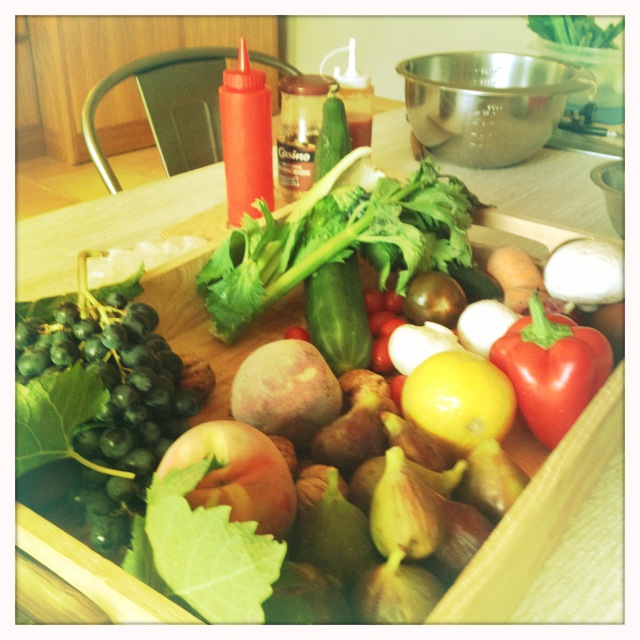
The chop wizard.Beautiful fresh produce – perfect for perfecting our “slap chop” skills!Delicious farm-fresh goat cheese for the tartare.
All of that said, it was a funny ice-breaker, and we did go on to use our knives plenty. As a starter we made a fresh fish tartare, which he filleted with skill. We used a variety of ingredients to mix our own sauces, and wound up in a taste test to see whose concoction was best. (We’ll call it a tie.) We formed the tartare into molds and put the finishing touches on a simple salad to accompany the tartare.
Glad this wasn’t my job!Whose tartare recipe wins? There WERE subtle differences.The finished tartare in molds, ready to be put in the refrigerator to set up.
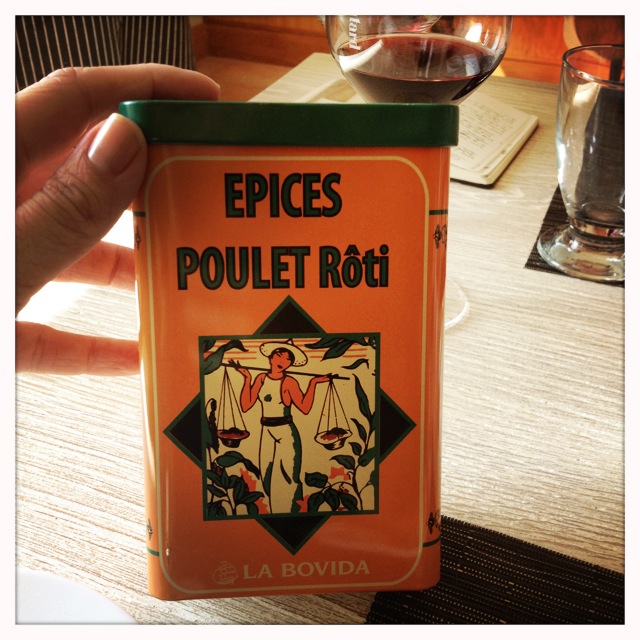
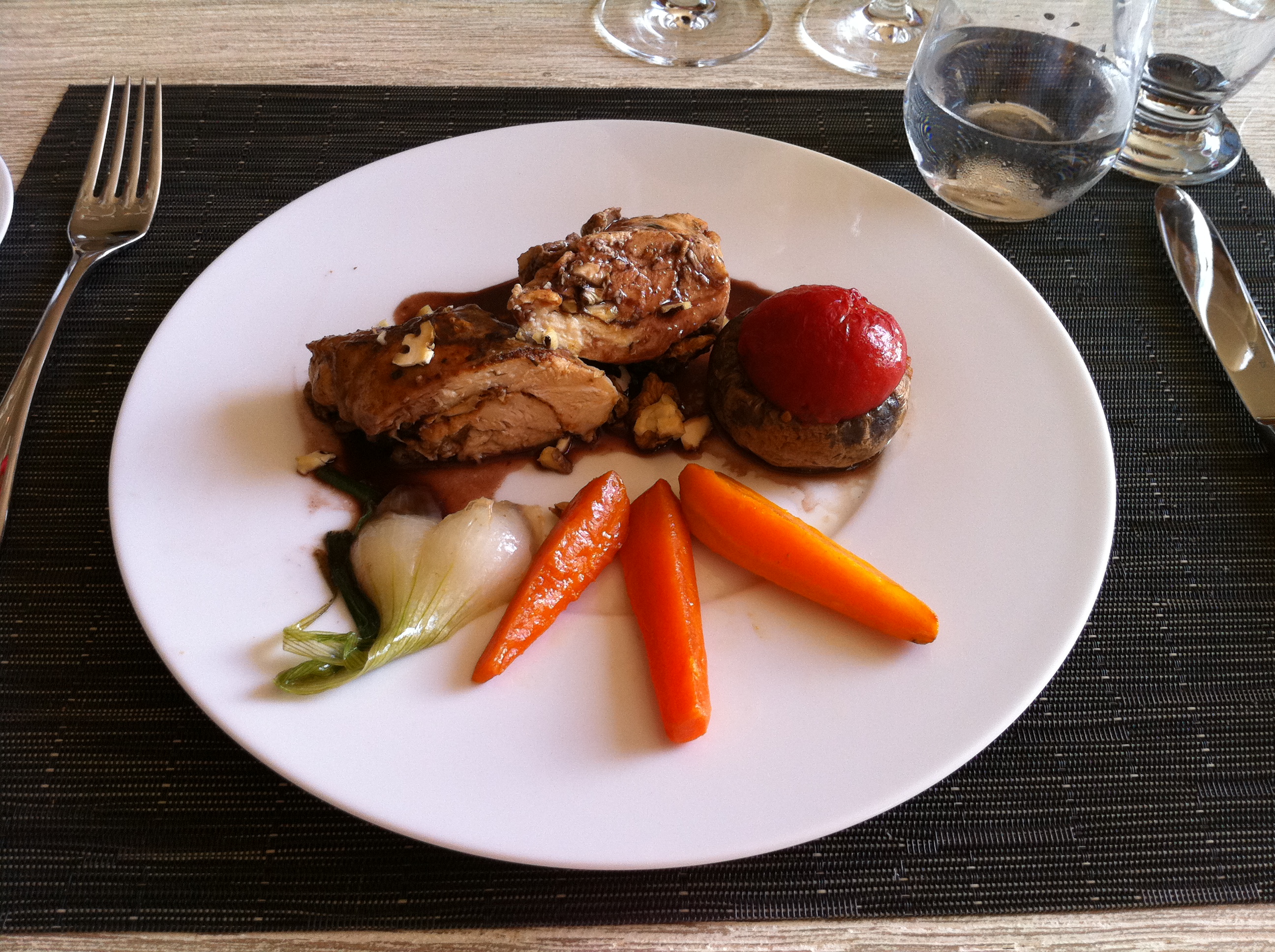
For the main course, we cut chicken breasts in half, coated them with this delicious spice rub, Epices Poulet Roti and stuffed the breasts with walnuts. (French friends, if you get me more of this spice rub, I would be so grateful! Friends in the States, if you know where I can find it here, let me know – I’m almost out of what we brought back!) We then wrapped the chicken breasts in sheep’s stomach to hold them together for cooking. That was a first for us…!
Sheep’s stomach to be used as the binding for the chicken. Not as bad as it sounds…Epices Poulet Roti – I need more!
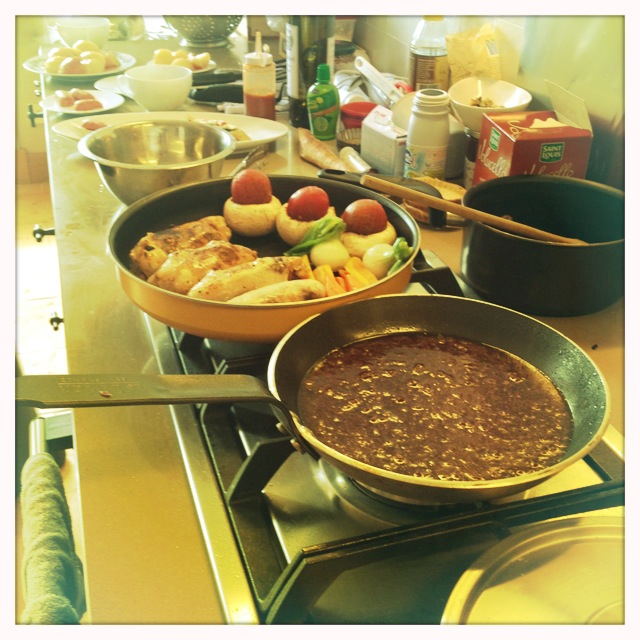
Chef Phillipe had pre-made a divine red wine reduction sauce to go over the chicken, and we stuffed mushrooms with tomatoes and sauteed baby carrots to accompany the chicken.
Work in progress.
While we waited for the chicken to cook, we retired to the salon and enoyed a snack that Chef Phillipe had prepared. The chorizo on toasts was just perfect. The drizzle had just the right touch of spice – we were both eyeballing the last one and each other – we split it.
More please. Toasts with chorizo and goat cheese.
Pretty soon, we sat down to lunch. Despite our begging and insistence, Chef Phillipe would not join us at the table, so we enjoyed his creations and his company while he and his assistant kept busy prepping more food. The tartare was super-fresh and light and flavorful, and the salad was a perfect side. We also had two different vintages of Chateau Soutard with the meal.
2003 Chateau Soutard – Sweet dark red/black fruit, medium bodied and smooth in the mouth. Ripe blackberries with a lot of secondary flavors coming through, like spices and earthy forest floor. This wine has a medium-long fruit finish and seems to be fast evolving. I would drink this wine in the near term.
2005 Chateau Soutard – Nice perfume of flowers and dark red fruit. Tastes like a warm dark blackberry and black currant fruit pie. Slightly rustic flavors of dry leaves coming through in the mouth. Smooth and medium bodied and slight tannins present on the medium-long dark fruit finish. While enjoyable and good food wines, in general, the wines of Chateau Soutard don’t seem to have the elegance and polish that a lot of the other classified growth Bordeaux have. But now that Michel Rolland is on the scene, we’ll be interested to see how these wines evolve in the future.
Fresh fish tartare with a simple side salad.
The chicken, though simple, was superb – I have actually made it several times at home now. The wine that accompanied the chicken dish in particular was a great match – they had clearly thought through this pairing well.
The chicken was deceptively simple and delicious.
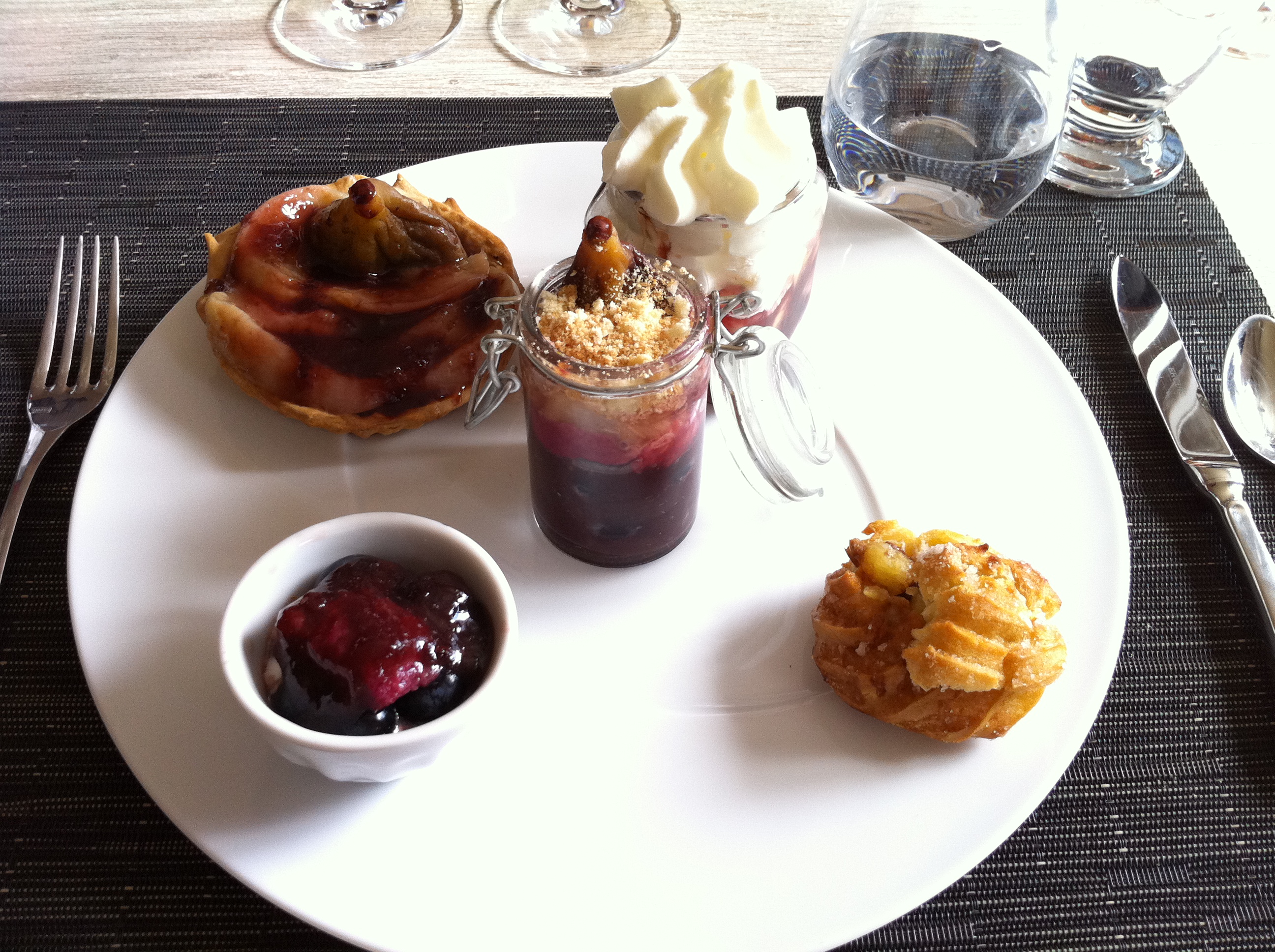
As if this wasn’t enough food, Chef Phillipe had prepared not one but FIVE desserts for us to sample. NOW we know what they were working on while we were eating away. Ooh la la, but they were good.
You have got to be kidding me! So good!
At this point, it was nearly 3:00 pm, it was very humid, and we were basking (and baking!) in the sun from the open window in the kitchen. Admittedly, we were wondering if we could wander upstairs to one of the bedrooms for a nap! Instead we said our merry goodbyes and headed back into town, where we whiled away the afternoon doing one of our favorite things…
It was a bittersweet end to our tour – when we woke up on our last day, it was rainy and gray, after a most glorious week of sun and unseasonable heat. The drizzle of rain was very reminiscent of home in Seattle, and we admit, we weren’t too excited to head back to that weather! But today we had something fun to look forward to – a tasting at the beautiful Chateau Soutard in St. Emilion, with a cooking class to follow which was booked at the recommendation of our tour operator.
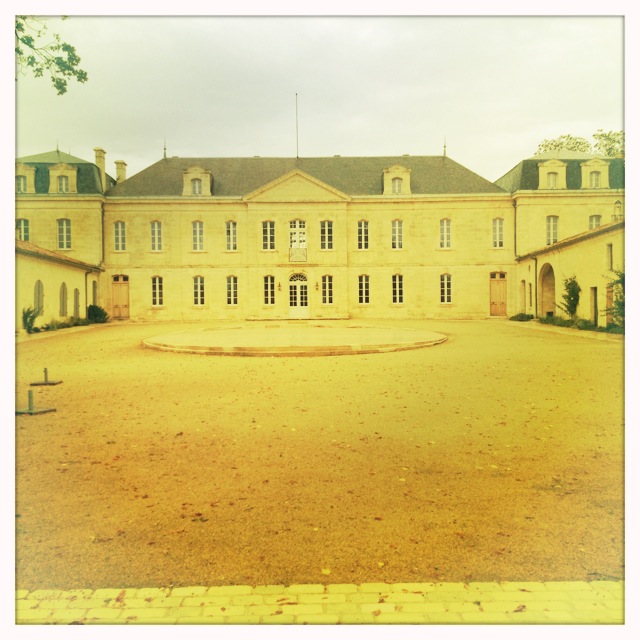
Chateau Soutard. The hipsamatic photo app does a good job of disguising the rainy, gray beginning of the day.
Chateau Soutard is an impressive estate, quite large and imposing. It was one of the places that they said there were talks underway about opening the Chateau up as a hotel in the future, which seems it could be a good way to accommodate more tourism in these areas, while also better utilizing the estate properties that must be so expensive to keep up. Ch. Soutard was undergoing many renovations on the main estate while we were there, so we were not able to go inside the Chateau itself, which was a bit of a surprise and had us wondering – where exactly were we going to be cooking that day?
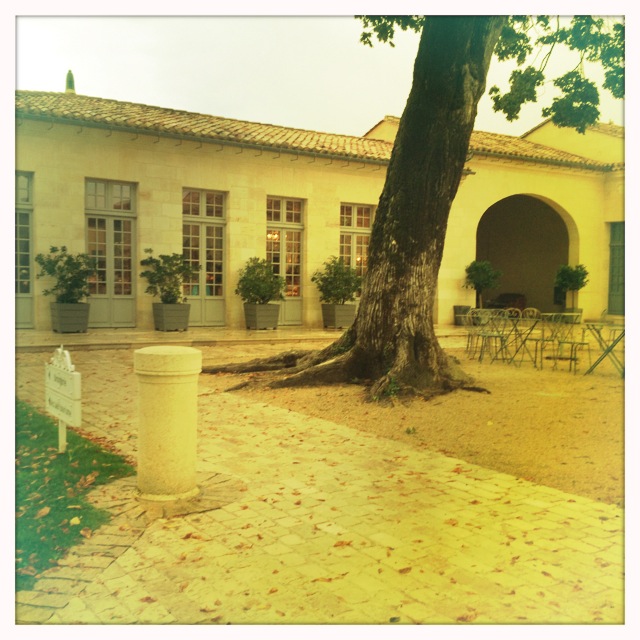
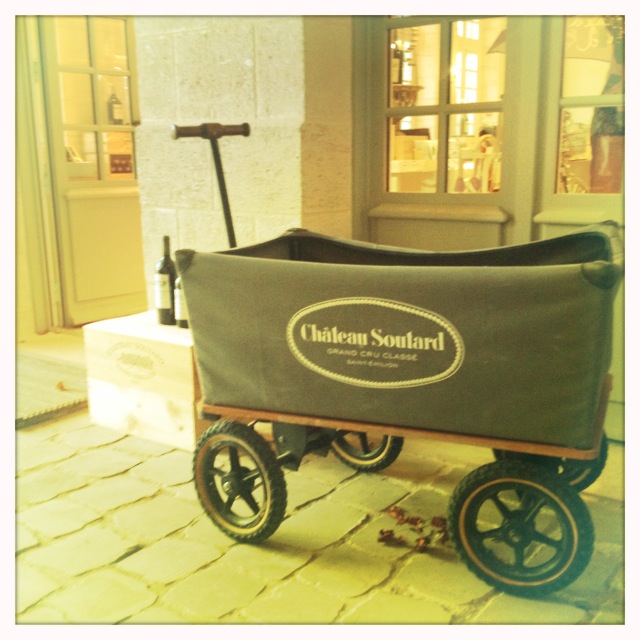
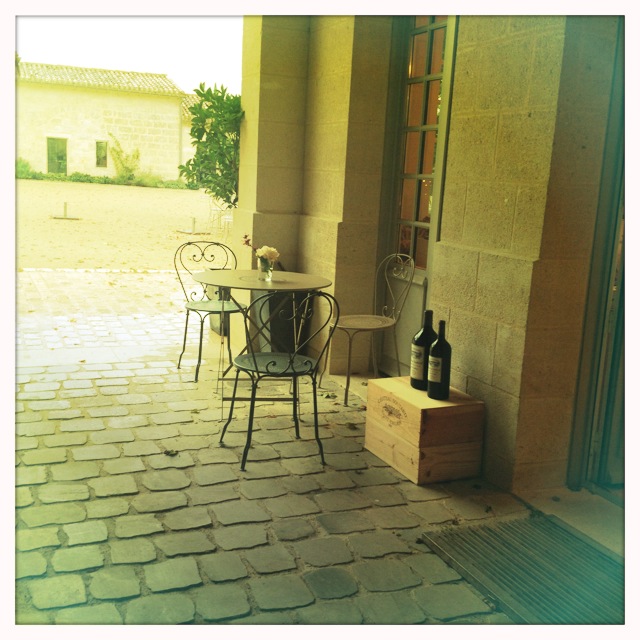
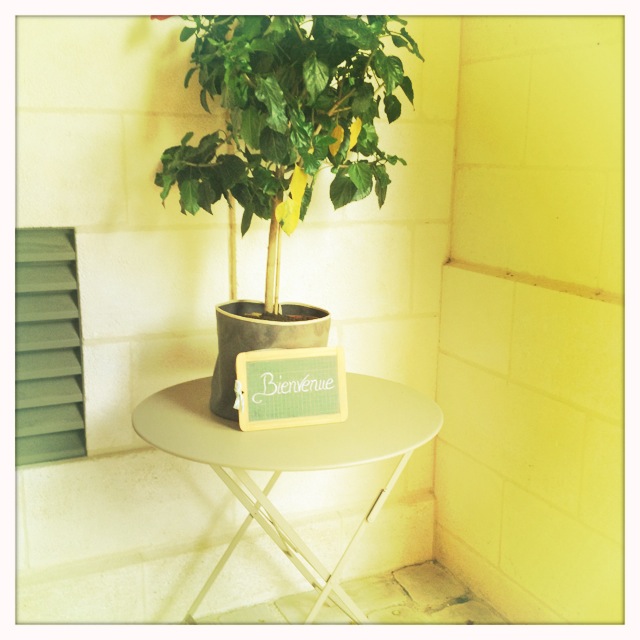
The gift shop and tasting room area. We were wishing it was a nice day so we could be outside to enjoy the grounds for a while.Bob enjoying his coffee.
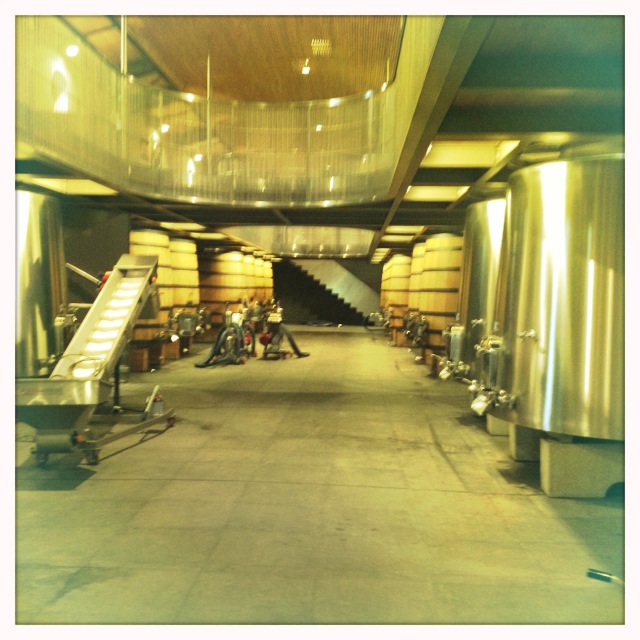
Our guide, Daniel, was very charming and enthusiastic, very much a student of wine making himself. Chateau Soutard began getting recognition for its St. Emilion wines in the middle of the 18th century. It was owned by the de Bogeron family from 1890 until 2006, which it was purchased by La Mondiale, the French insurance company, who also already owned Chateau Larmande and Chateau Grand Faurie. The new owners began renovations immediately to modernize the wine making facilities, constructing new gravity fed tanks and new cellers. Like many in the area, Chateau Soutard also employs Michel Rolland as a consulting winemaker.
The new state-of-the-art vat room.
Chateau Soutard’s vineyards are planted on limestone, clay and sand. Much of the limestone for building the estate was also taken from the surrounding areas. The vineyard has a typical blend for St. Emilion of 70% Merlot and 30% Cabernet Franc.
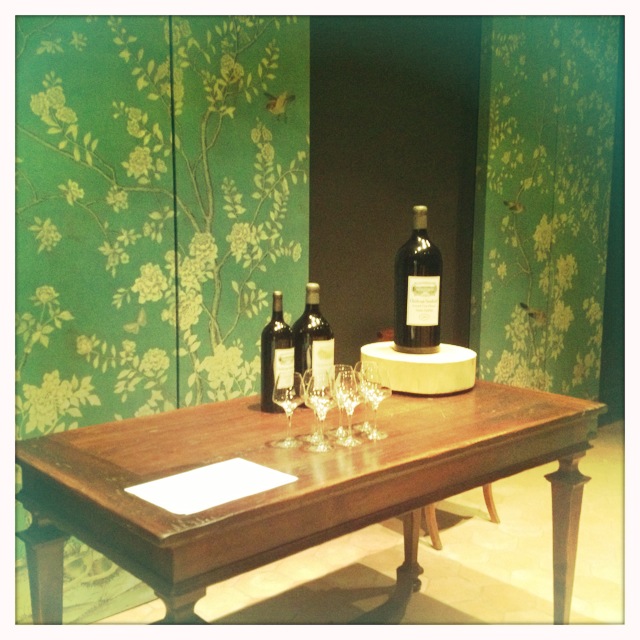
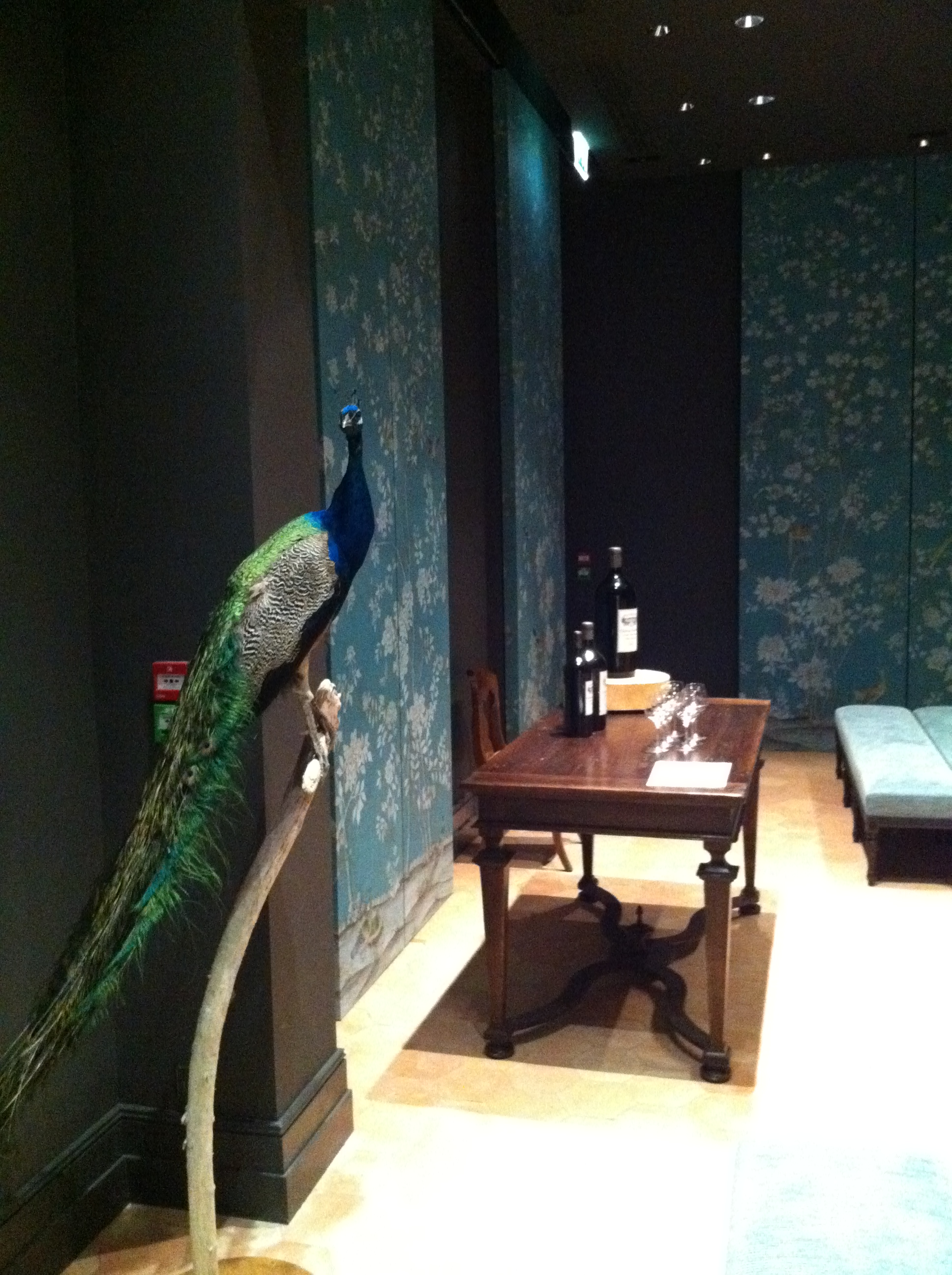
The elegant tasting salon.Another view – with the peacock.
Here’s what we tasted:
2000 Laremande – Beautiful floral red fruit nose. Red fruit in the mouth, with some acidity and slightly dry tannins on a shorter finish. This wine was a little simple.
2010 Chateau Soutard – Darker, sweeter black fruit, good acidity and some fine tannins. Medium-full bodied, but with a surprisingly light fruity finish of medium length.
2006 La Grand Faurie La Rose – Dark, earthy, red-black fruit, rustic character, medium-bodied and medium length.
Following our tasting, we were ready to begin our cooking class at Chateau Soutard, which seemed a fitting way to wrap up our tour, since we started with a cooking class on our first day at Chateau Phelan Segur. Next up, Chef Philippe and his unconventional cooking methods…!




















 Exact Wines