Day Eight, Final Stop: Charming Chateau Guiraud

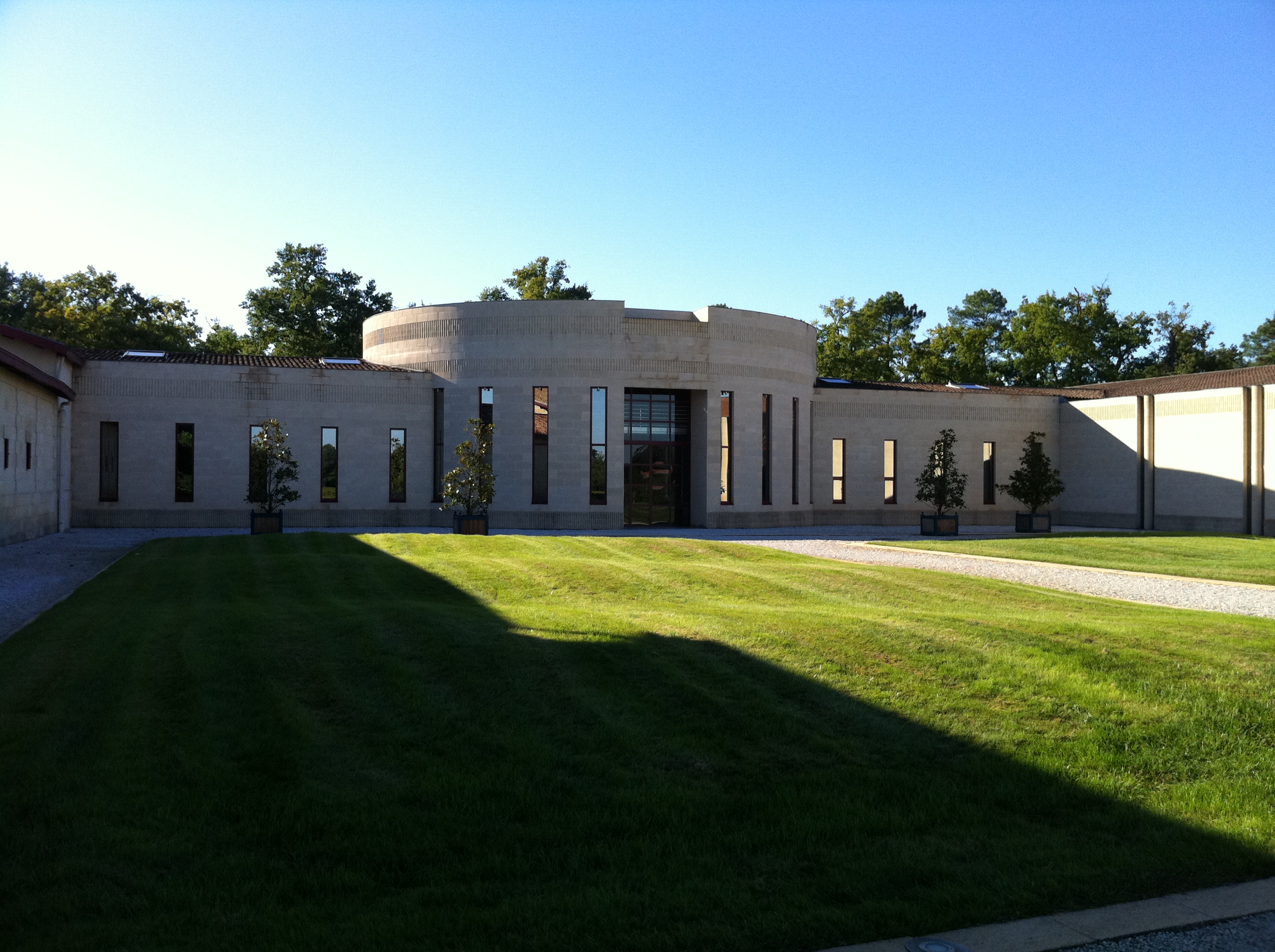
There was something almost magical about our final destination for the day, Chateau Guiraud. Maybe it was the time of day (mid-afternoon), and the way the sunlight played off the facade of the stone building, but it seemed a very warm and welcoming place, not quite as imposing as some other Chateau in the region.

The charming Chateau Guiraud.

We actually found this to be a good metaphor for the entire visit at Guiraud. Our lovely guide started by telling us stories about the history of the Chateau. It began as the “Noble House of Bayle,” when it belonged to the Mons Saint-Poly family. In 1766, Pierre Guiraud, a Bordeaux merchant of Protestant faith purchased the estate. The Guiraud label is one of the only black labels on a Sauternes bottle from the region, and this was apparently somewhat deliberate, as the new owners were considered the black sheep of the area. They were not local, not Catholic, and their political views also greatly differed from the prevailing local sentiment. On his death in 1799, Pierre’s son Louis, succeeded him. It was under Louis Guiraud that the estate was saved from a severe devaluation which had begun in 1793, becoming a famous château well-known for its wine. On Pierre’s death in 1837, his son Pierre-Aman inherited a well-established property. Within 80 years and three generations, various families succeeded each other as owners of the estate. The legend was born in 1855 when Château Guiraud became a Premier Grand Cru de Sauternes.
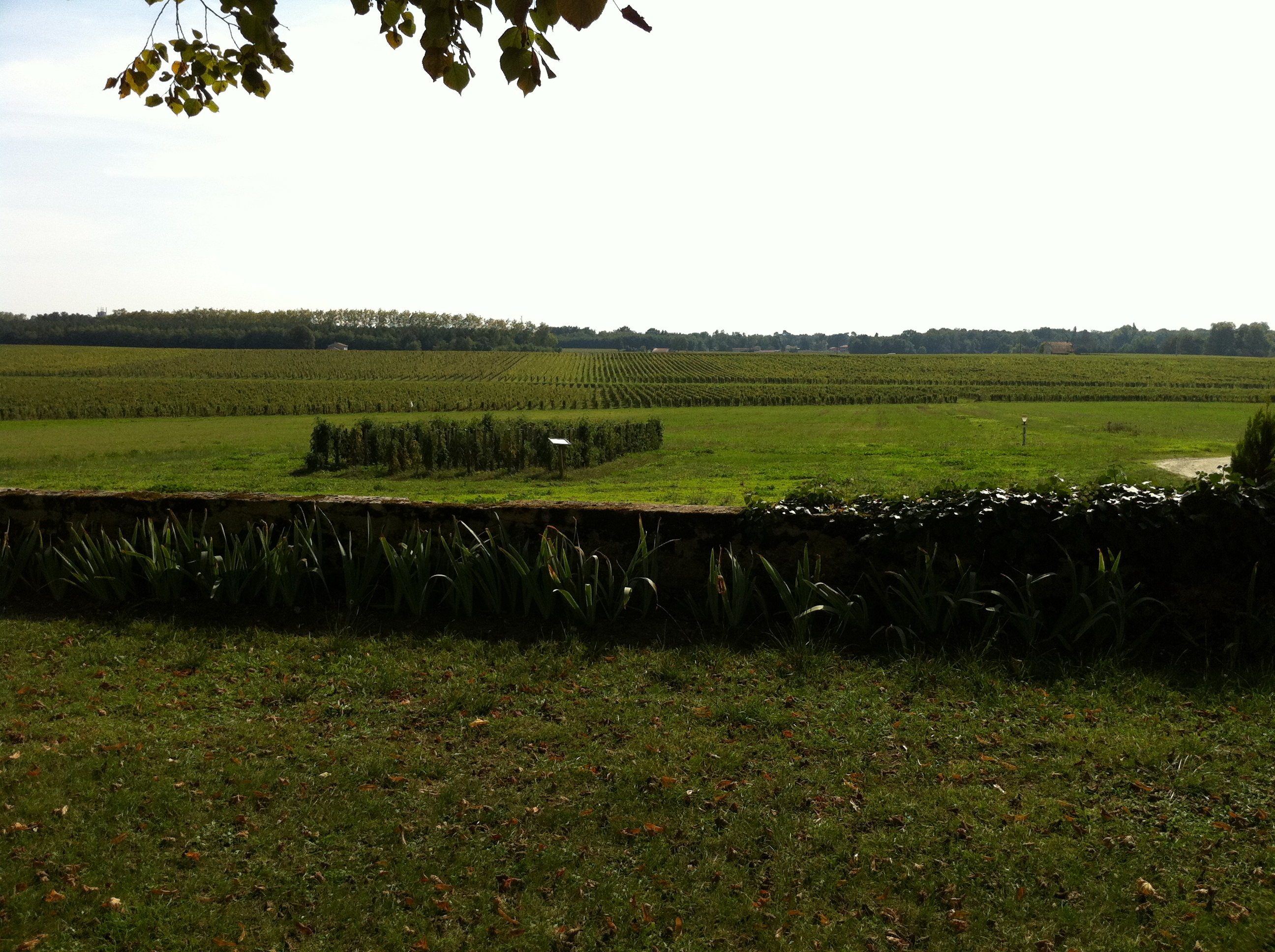
The estate.
The estate.

Also according to the Guiraud website, during a dinner in early 2006, Robert Peugeot, an industrialist, and three wine makers, Olivier Bernard of Domaine de Chevalier, Stephan Von Neipperg of Château Canon La Gaffelière and Xavier Planty, the estate’s director, decided to buy Guiraud. They signed a purchase contract on July 20, 2006, thereby uniting their shared passion for wine, gastronomy, nature and hunting.

Chateau Guiraud had just begun to harvest.
Chateau Guiraud had just begun their harvest.

Chateau Guiraud had begun harvest the day we arrived, so we were lucky enough to meet the estate’s director, Xavier Planty. We were also lucky to taste some very nice vintages from Guiraud:

2010 Petit Guiraud – Very bright light fruits with a good dose of spice and very good acidity, lively in the mouth. Medium bodied and long spicy fruit finish. This is an excellent 2nd wine.

2003 Chateau Guiraud – Ripe peaches, apricots and spicy orange marmalade, very good acidity for the vintage. Very long finish of peaches, a little orange rind and spicy honey. This is an excellent 2003 Sauternes.

It was fun to watch Christina taste these wines. She had a very positive reaction to the 2003 Chateau Guiraud, and I will say I found it to be a more complete wine than the rest of what we tasted that day as well. In general, I have not liked the Sauternes from the 2003 vintage. I have found them lacking in acidity and a little too cloyingly sweet for my taste. What I discovered, is that Chateau Guiraud uses the 30% – 35% Sauvignon Blanc in their blends, where most Chateaux only use 0% – 15%. This extra percentage of Sauvignon Blanc give the wines of Chateau Guiraud more acidity than the other Chateaux in Sauternes. Knowing that I prefer Sauternes with higher acid, it makes me very happy that I have a fair amount of wine from Chateau Guiraud resting in the cellar. The 2001 Chateau Guiraud is an excellent Sauternes and a very good value for the quality.

The tasting room.
The tasting room.

Ah, what a day. Now we were headed back to the hotel. We spent most of the next day lounging about at Les Sources de Caudalie – and having a few fun new adventures – can you say underground cellar? Stay tuned…

The stunning trees lining the drive at Chateau Guiraud.
The stunning trees lining the drive at Chateau Guiraud. Hard to leave such a pretty place…

Day Six, Final Stop: Domaine de Chevalier

I was very much looking forward to visiting this next estate.  At this point, Christina was probably getting tired of hearing me talk about how great their wines are – especially their whites.

Domaine de Chevalier was ranked as a Grand Cru Classe for both red and white wine in the classification of Graves wine in 1953 and 1959.  The Chateau is owned by the Bernard Family and is run by Olivier Bernard, whose family bought the estate in 1983 and totally renovated it.  The particular site for the estate is unusual in Bordeaux, in that it is surrounded by pine forests, which makes this site cooler than most of the surrounding areas.  This coolness in the vineyard, while more prone to damaging frost, gives the red and white wines a crisp freshness to their character.

One of Olivier’s sons, Adrien, works mainly in Shanghai, China, promoting their wines throughout Asia for 7 months of the year.  We were fortunate enough to catch Adrien while he was back in Bordeaux, so he gave us the tour of the estate that afternoon.  They had just dipped a toe into harvest that morning, and were constantly assessing the state of the grapes at this point.

Domaine de Chevalier.
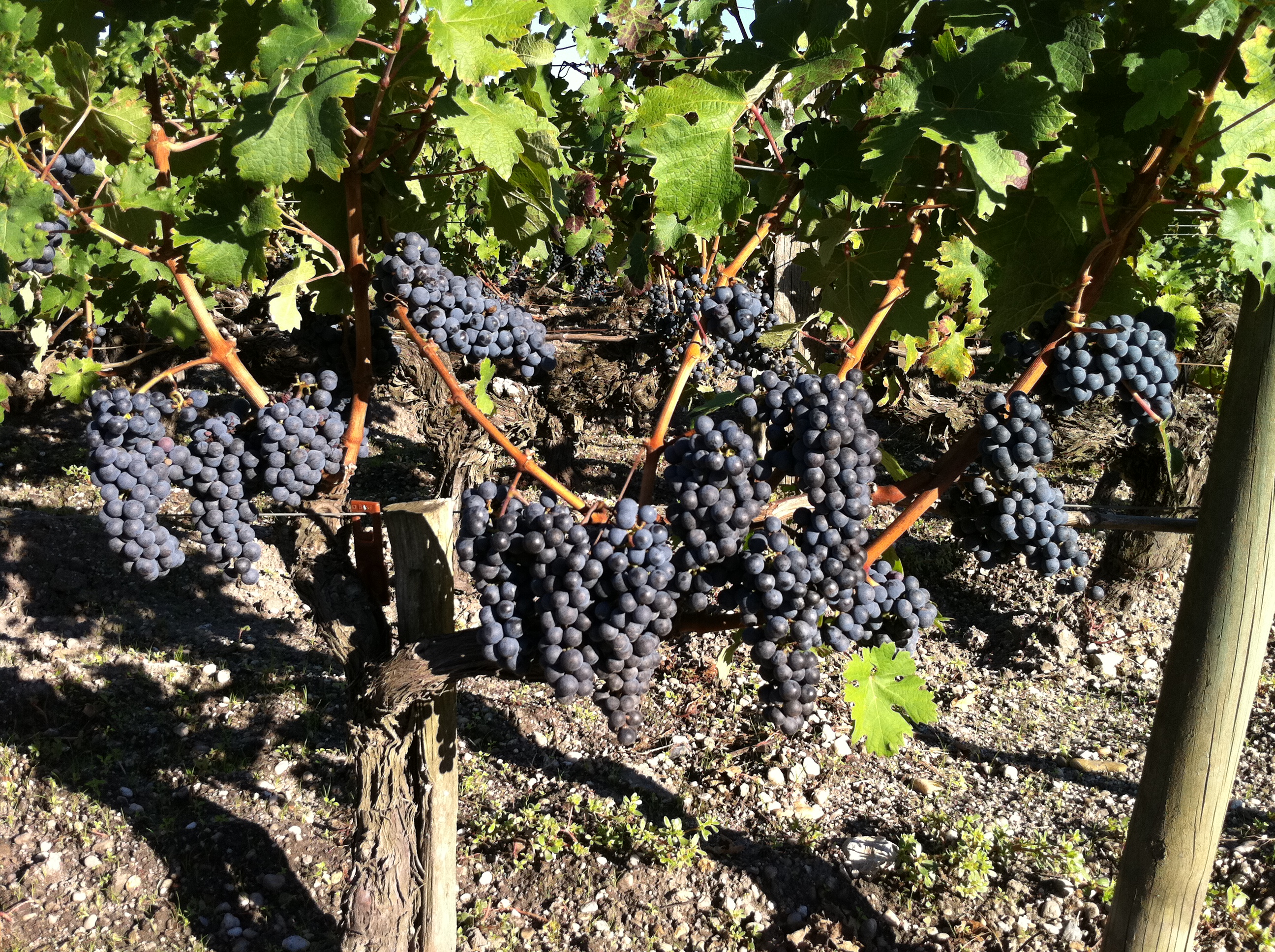
The grapes at near harvest.  The estate had begun to pick some fruit that morning.
The grapes at near harvest. The estate had begun to pick some fruit that morning.

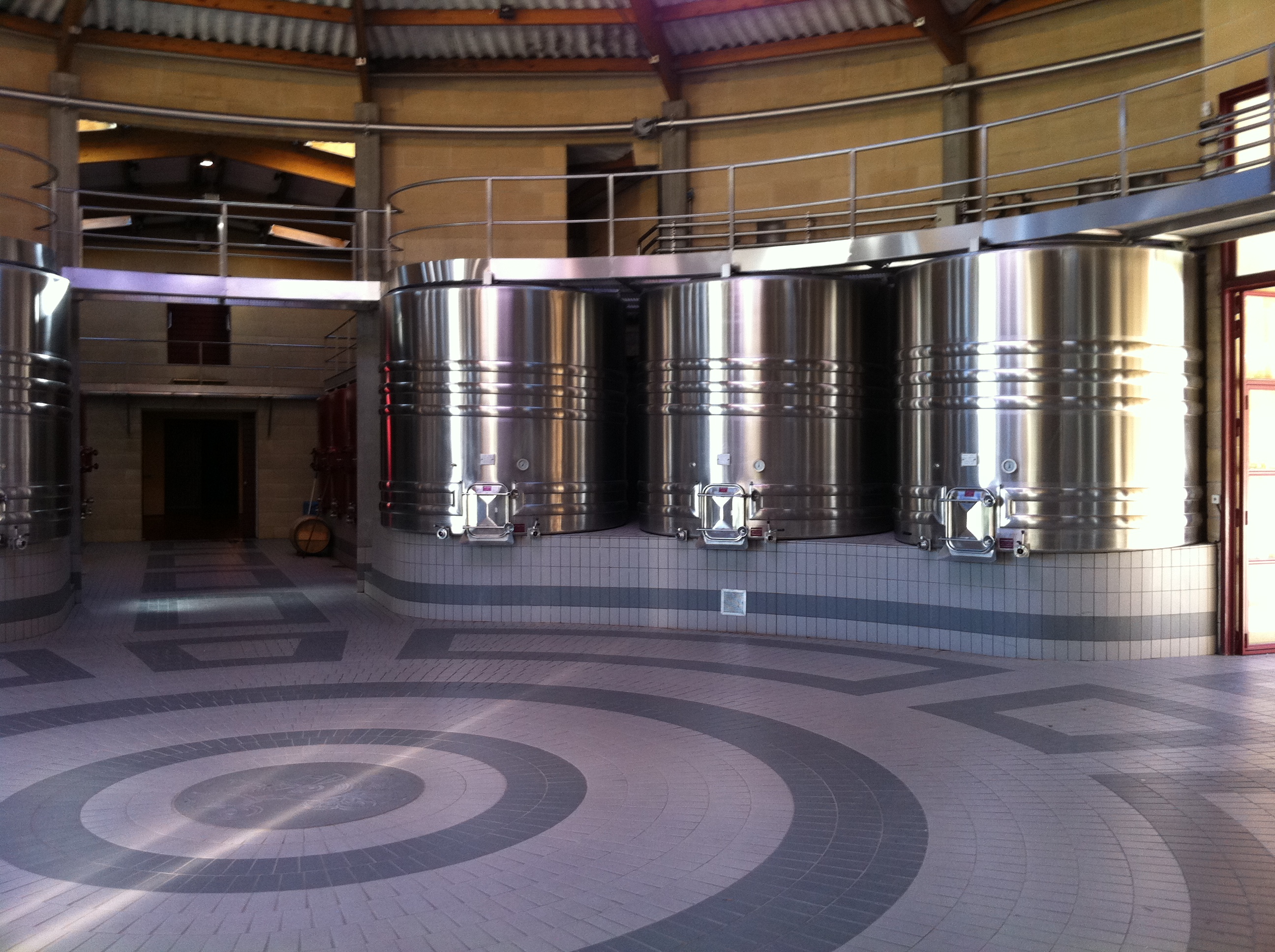
Domaine de Chevalier is a beautiful limestone estate that was rebuilt and expanded once the Bernard family purchased it.  The main vat room is a big circular room with the stainless steel vats along the outside wall and a large oculus window in the center of the domed ceiling.  The estate uses both concrete and stainless steel vats that are wider than they are tall, this is to increase the amount of contact the juice has with the skins that float up to the top, which is called the cap.  All of the different vineyard lots from the estate are vinified separately.  The estate is also experimenting with fermenting in a very large wooden egg (approx. 8 feet tall including stand), which commanded attention  as we toured.

The occulus vat room with a window at the top.
The stainless steel vat room with a window at the top.
The concrete vats.
The concrete vats.
The egg.  A bad picture, but hopefully a good experiment for the estate.
The egg. A bad picture, but hopefully a good experiment for the estate.

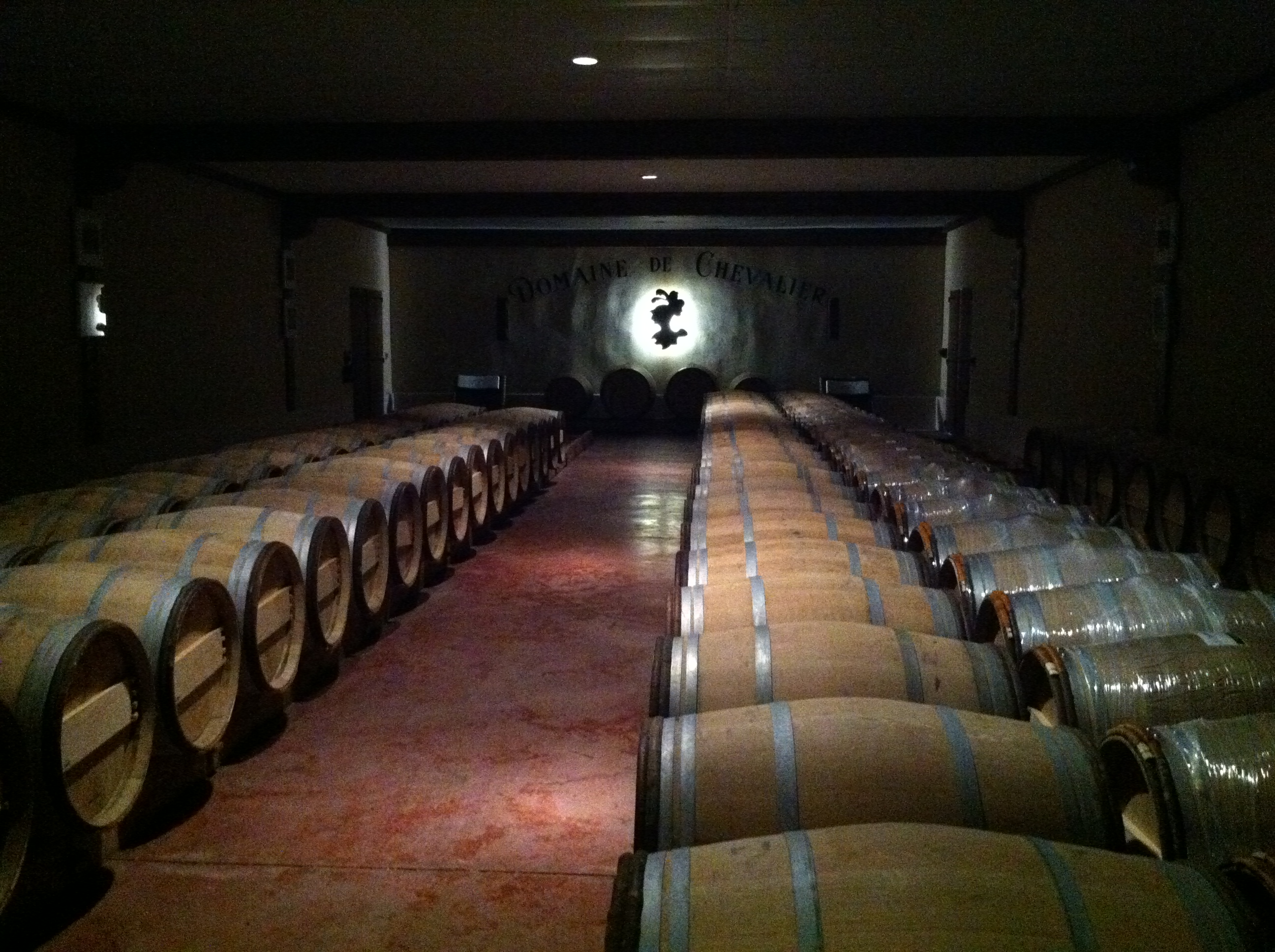
Domaine de Chevalier uses less new French oak than most Chateau in Bordeaux.  The estate ages their red wine in 50% new French oak barrels for approximately 18 months depending on the vintage.  The white wine is aged on its lees in 30% new French oak barrels, also for approximately 18 months, depending on the vintage and sugar levels.  The estate uses Stephane Derenoncourt and Denis Dubourdieu as consulting oenologists.

Bordeaux 2013 2852

Bordeaux 2013 2855

2007 Domaine de Chevalier (Rouge) – Very floral red fruit and spice on the nose, in the mouth sweet red and black fruit, bright acids, good minerality and fine tannins, medium-full bodied, long sweet fruit finish.  A very nice traditional Bordeaux style wine.

2012 Domaine de Chevalier Blanc – Very bright and floral white orchard fruit, with a touch of stony minerality on the nose.  In the mouth, sweet white peach and melon, bright acidity and some stony pebbles, with a nice long melon and lemony mineral finish.  This is a beautiful 2012 white Bordeaux.

An old cellar room, converted into an event space.
Adrien uncovering a few treasures in the cellar.
Adrien pointed out a few treasures in the cellar while he told us about a recent party at the estate.

Domaine de Chevalier makes some very nice red and white wines that age very well.  The estate produces about 100,000 bottles of red wine and 18,000 bottles of white wine.  Even though the estate produces more red than white wine, they are probably best known for their dry white wine.  The estate produces one of the best dry white wines in all of Bordeaux, which will age for decades.  Both the red and white wines from Domaine de Chevalier are wines to look out for.  They are really nice Bordeaux wines that are still very reasonably price for the quality that you get in the bottle.  I very much look forward to drinking more of their red and white wines in the future.

Bordeaux Bound

Next week, my wife and I head to Bordeaux, sans children – for a highly-anticipated trip of wine tasting (a big thank you to my in-laws for staying with our kids!).

Although those in the industry would call our tour a “death march,” we’re quite excited by the itinerary we have lined up.  The extraordinary team at Bordeaux Saveurs has helped us put together this remarkable tour, complete with a few cooking classes on estates, as well as numerous great meals.

Over roughly two weeks, we will visit:

  • Chateau Phelan Segur
  • Chateau Cos d’Estournel
  • Chateau Pontet Canet
  • Chateau Leoville Barton
  • Chateau Lascombes
  • Chateau Mouton Rothschild
  • Chateau Lynch Bages
  • Chateau Haut Brion
  • Chateau Pape Clement
  • Domaine de Chevalier
  • Chateau Pichon Longueville Baron
  • Chateau Pichon Longueville Comtesse de Lalande
  • Chateau Palmer
  • Chateau Suduiraut
  • Chateau Y’Qeum
  • Chateau Guiraud
  • Chateau Haut Bailly
  • Chateau Smith Haut Lafite
  • Chateau Troplong Mondot
  • Chateau Angelus
  • Chateau Figeac
  • Chateau Soutard

We will stay at the Cordeillan Bages hotel for the first part of the trip, then in a private apartment in Bordeaux proper over the weekend, and finish out our stay at les Sources de Caudalie, which friends tell us is heavenly.  A big thanks to dear friend and awesome travel agent Kelly Bonewitz at Woodside Travel for her assistance pulling things together – we can’t wait to give a full report on our adventure!

Speaking of which, we have never blogged remotely before, so we’ll have to see how it goes.  Given how much we’ve packed in, the updates will probably happen once we return, jet-lagged and happy…and dreaming of our return!